Most people recognise Bryggen from the row of red, yellow and white wooden buildings along Bergen’s harbour. But once you’ve seen the waterfront, take one of the narrow passages between the buildings. The lanes and courtyards behind the façades give you a much better sense of how this old trading district was laid out.
Here’s something that surprises many visitors: the district is older than the buildings. Much of what you see today dates from the rebuilding that followed the great fire of 1702. The work followed the older plan, so the layout is medieval even where the timber isn’t.
You can see Bryggen on a short walk through central Bergen or spend half a day here if you add a museum and a stop at Bergenhus Fortress. Here’s what to look for, what the UNESCO listing covers and how to put together a visit.
What Is Bryggen in Bergen, Norway?
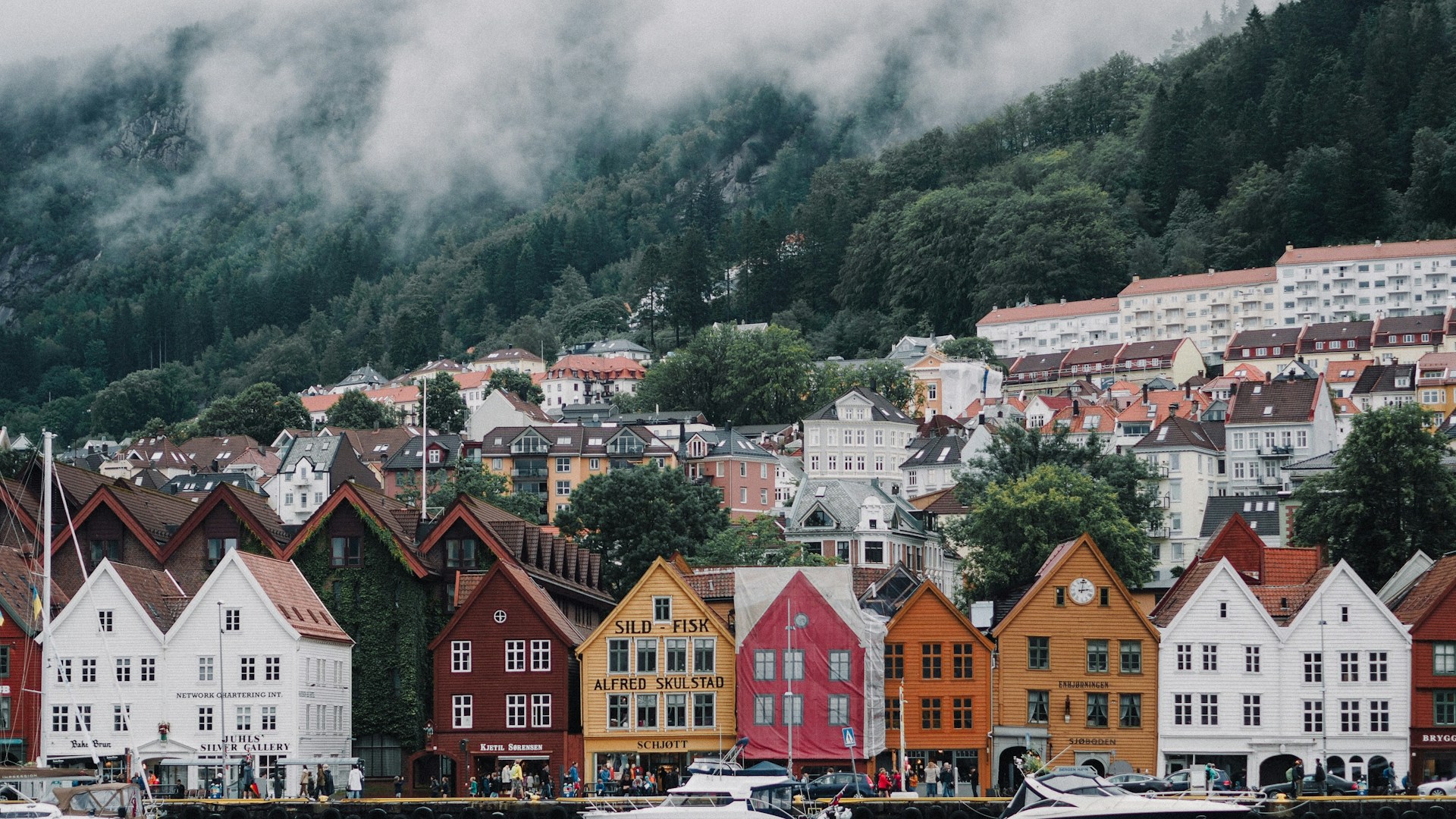
Bryggen is Bergen’s historic wooden wharf on Vågen, the harbour inlet in the city centre. It’s the name of the old trading district, rather than the entire harbour. The colourful buildings along the water are the most recognisable part, but the passageways, yards and buildings behind them are part of the experience too.
This is where Bergen began. The city was founded around 1070, and its earliest buildings stood at Bryggen.
The waterfront makes more sense when you picture it as a place of work. Merchants needed somewhere to unload, store and sell their goods. The buildings extend back from the harbour in long rows, with narrow passages running between them. Walk one of those passages and you can see how much of the district is hidden from the street.
What Does Bryggen Mean in Norwegian?
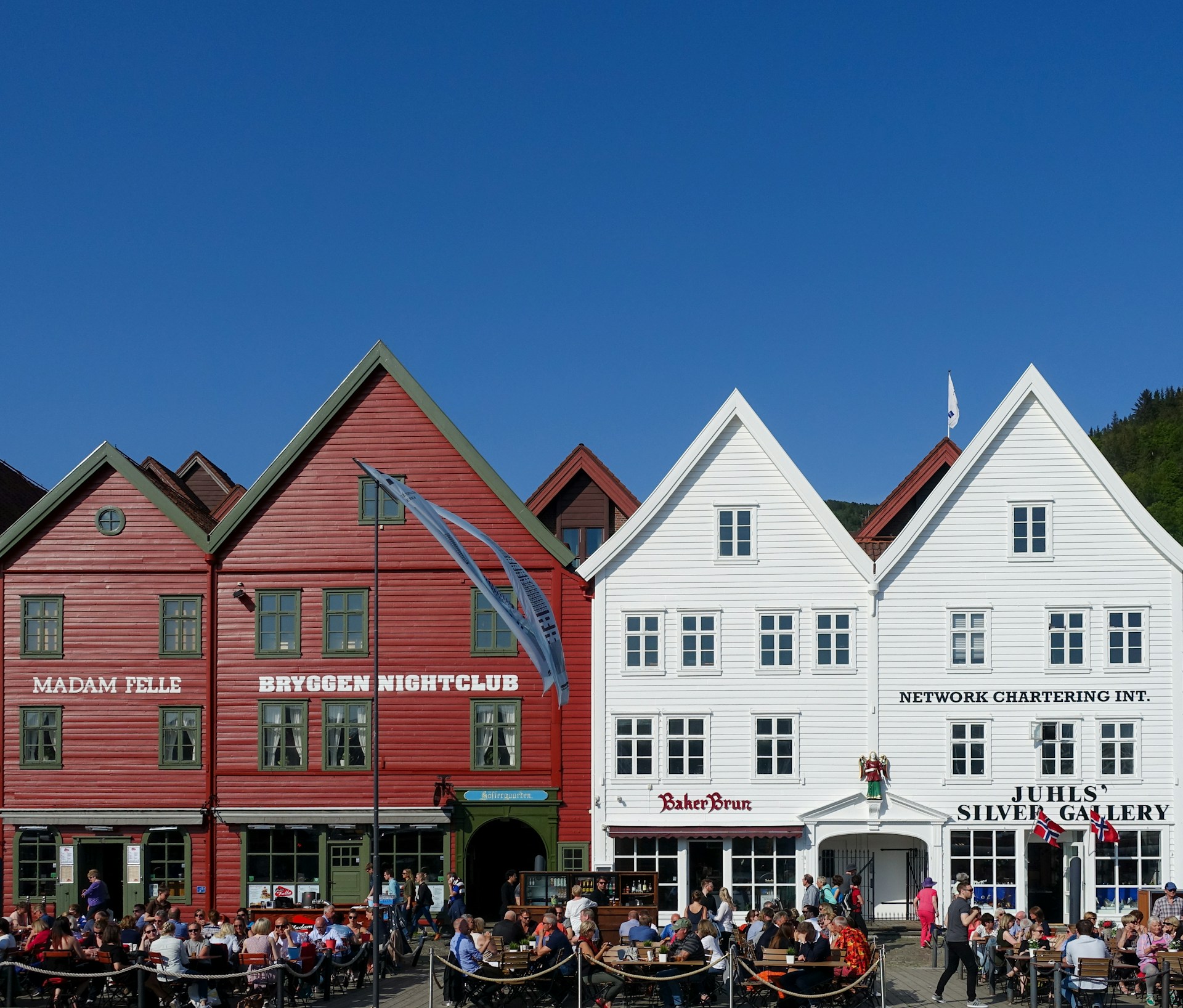
The Norwegian word brygge can mean a wharf or quay. Bryggen means “the wharf.” In Bergen, the name refers to this particular stretch of historic waterfront.
You may also come across the older name Tyskebryggen, or “the German wharf,” a reference to the Hanseatic merchants who worked here.
Is Bryggen a UNESCO World Heritage Site?
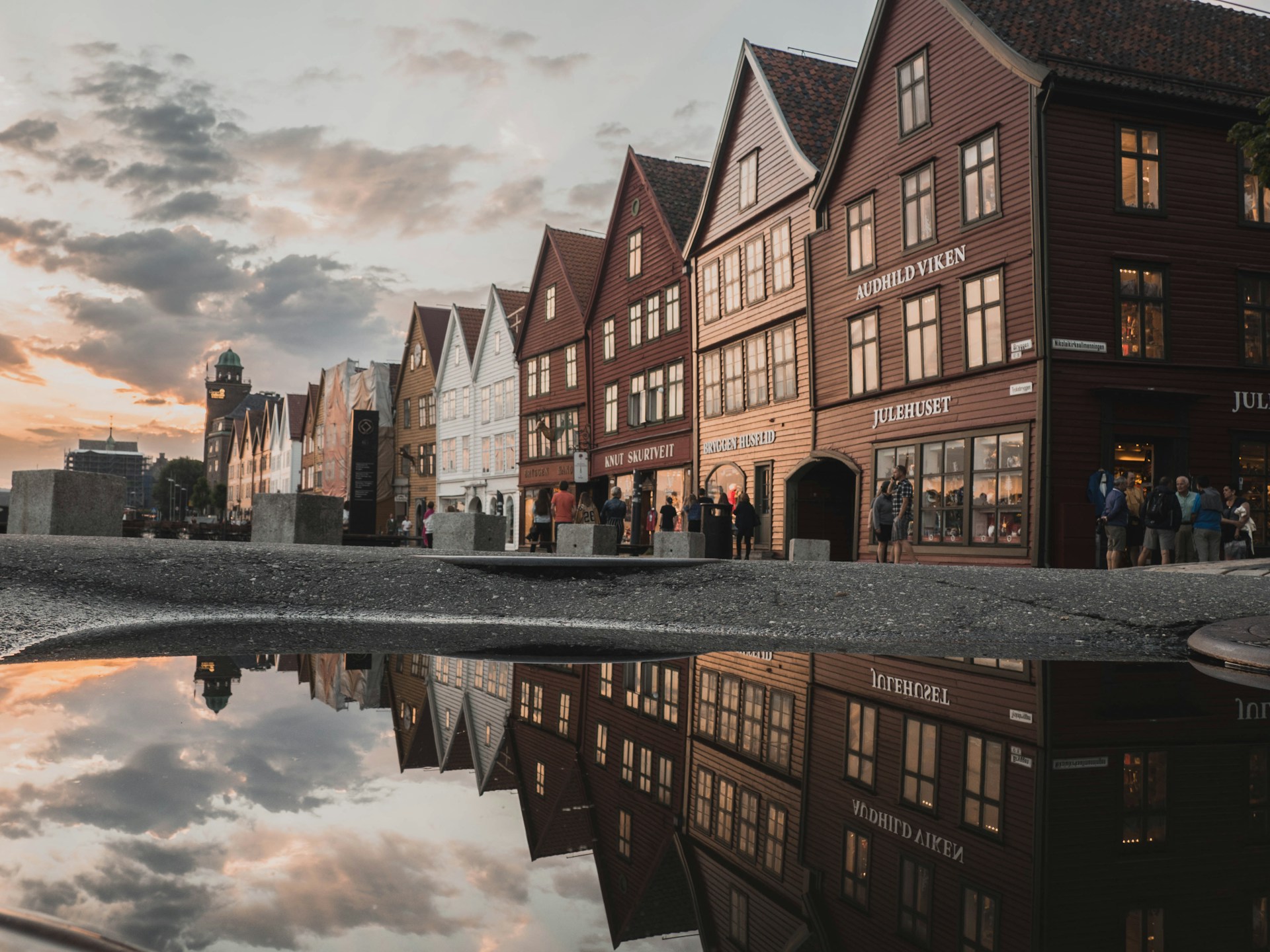
Yes. Bryggen was added to the UNESCO World Heritage List in 1979. The listing recognises the old trading district as a surviving example of a wooden urban quarter shaped by Hanseatic commerce. The layout and building traditions are as much a part of its significance as the façades.
Bergen was an important trading centre in the Middle Ages. Merchants connected to the Hanseatic League traded goods such as dried fish from Norway and grain from abroad. Stockfish, or air-dried fish, linked Norwegian fisheries to markets elsewhere in Europe. The Hanseatic Museum’s exhibitions at Schøtstuene explain how that trade shaped life on the wharf.
Did you know? Bergen was one of four main overseas trading posts of the Hanseatic League, alongside Bruges, London and Novgorod. Bryggen is the only one of those trading quarters that survives.
One detail that’s easy to miss: medieval in origin doesn’t mean every building you see dates from the Middle Ages. Fires damaged or destroyed parts of Bryggen over the centuries. Rebuilding followed older layouts and methods, keeping much of the character of the district intact. Around 62 buildings remain.
The History of Bryggen in Bergen, Norway: A Short TImeline
- Around 1100: An early pier is built on the site.
- Around 1350: The Hanseatic League establishes its trading office in Bergen.
- 1702: Fire destroys the older wharfside buildings. Rebuilding follows the earlier layout.
- 1754: The Hanseatic office ceases operation, and the properties pass into Norwegian hands.
- 1944: An explosion in the harbour damages roofs at Bryggen.
- 1955: Another fire destroys part of the district. The archaeological excavations that followed uncover hundreds of thousands of objects.
- 1962: The Bryggen Foundation is established to preserve the buildings.
- 1976: Bryggens Museum opens.
- 1979: Bryggen joins the UNESCO World Heritage List.
Local detail: The 1955 fire was a loss for Bryggen, but the excavations that followed revealed another side of the wharf: traces of the people who had worked, traded and lived there centuries earlier.
What to Do in Bryggen in Bergen, Norway
1. See the colourful buildings from across Vågen
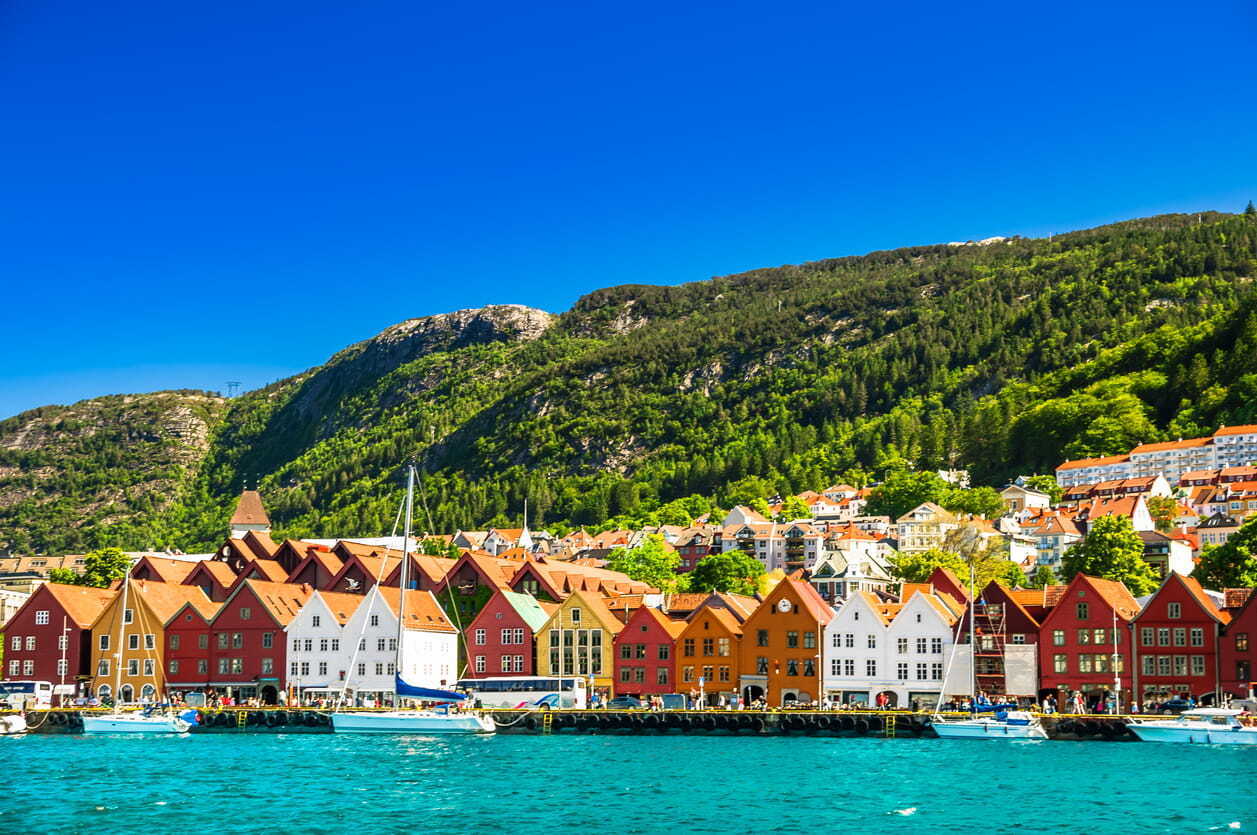
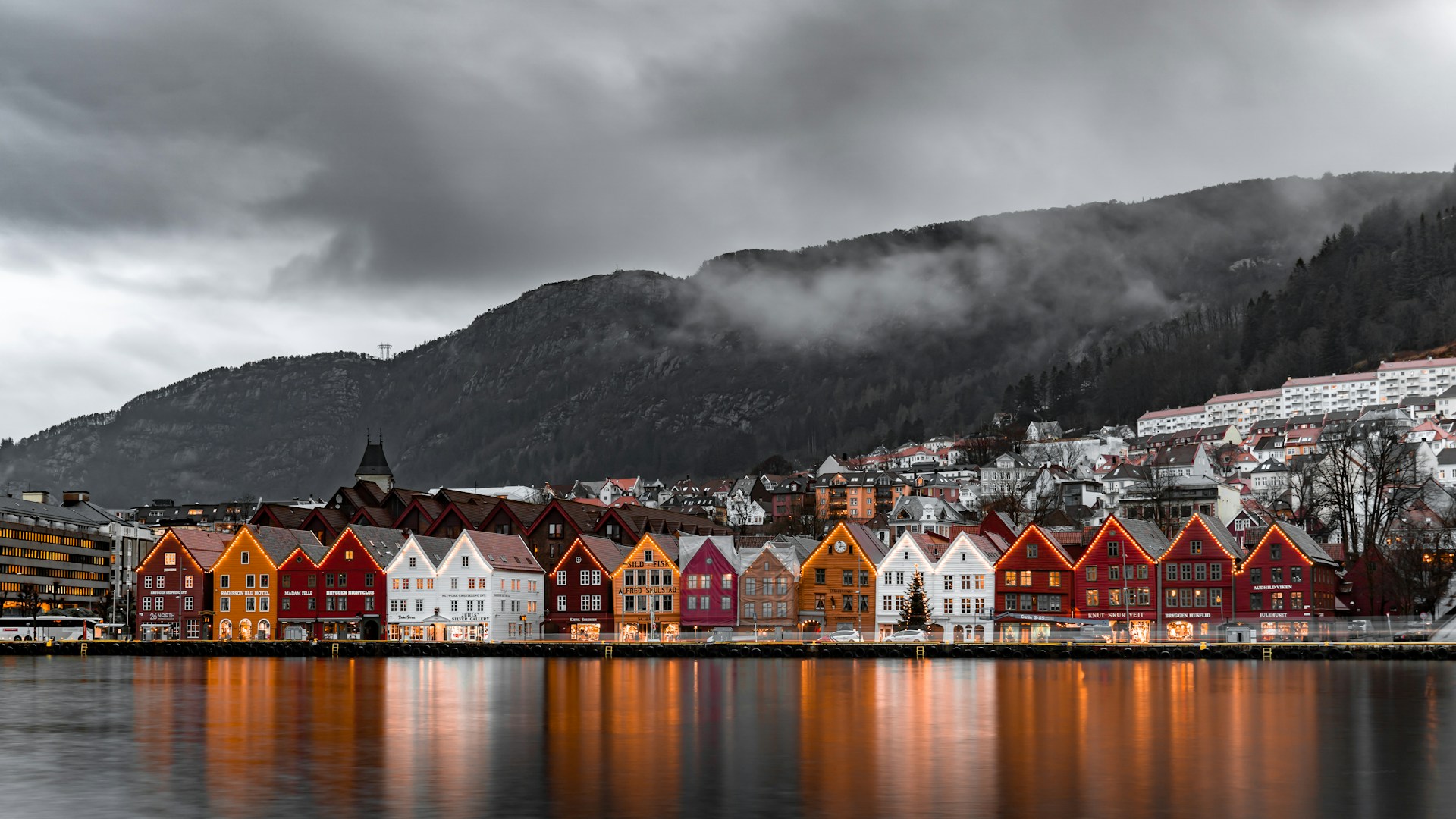
Start across the water if you want to see the whole row. From that distance, it’s easier to pick out the different rooflines and see how the buildings fit into the harbour. For a closer look at the timber and gables, walk around to the Bryggen side.
Look closely and you’ll notice the rows lean. The gabled buildings are built from timber, with wooden cladding and galleries along the passages. Some of those details are easier to see once you step away from the waterfront.
If you’re coming from the Fish Market, you can get a view across the water before following the shoreline to the wharf. There’s no need to make the photo stop a separate outing.
Why does it all lean? The timber ages, and the ground beneath Bryggen can settle. Conservators monitor groundwater because changes below the surface can affect the archaeological layers and the buildings above them.
2. Walk the passages behind the façades
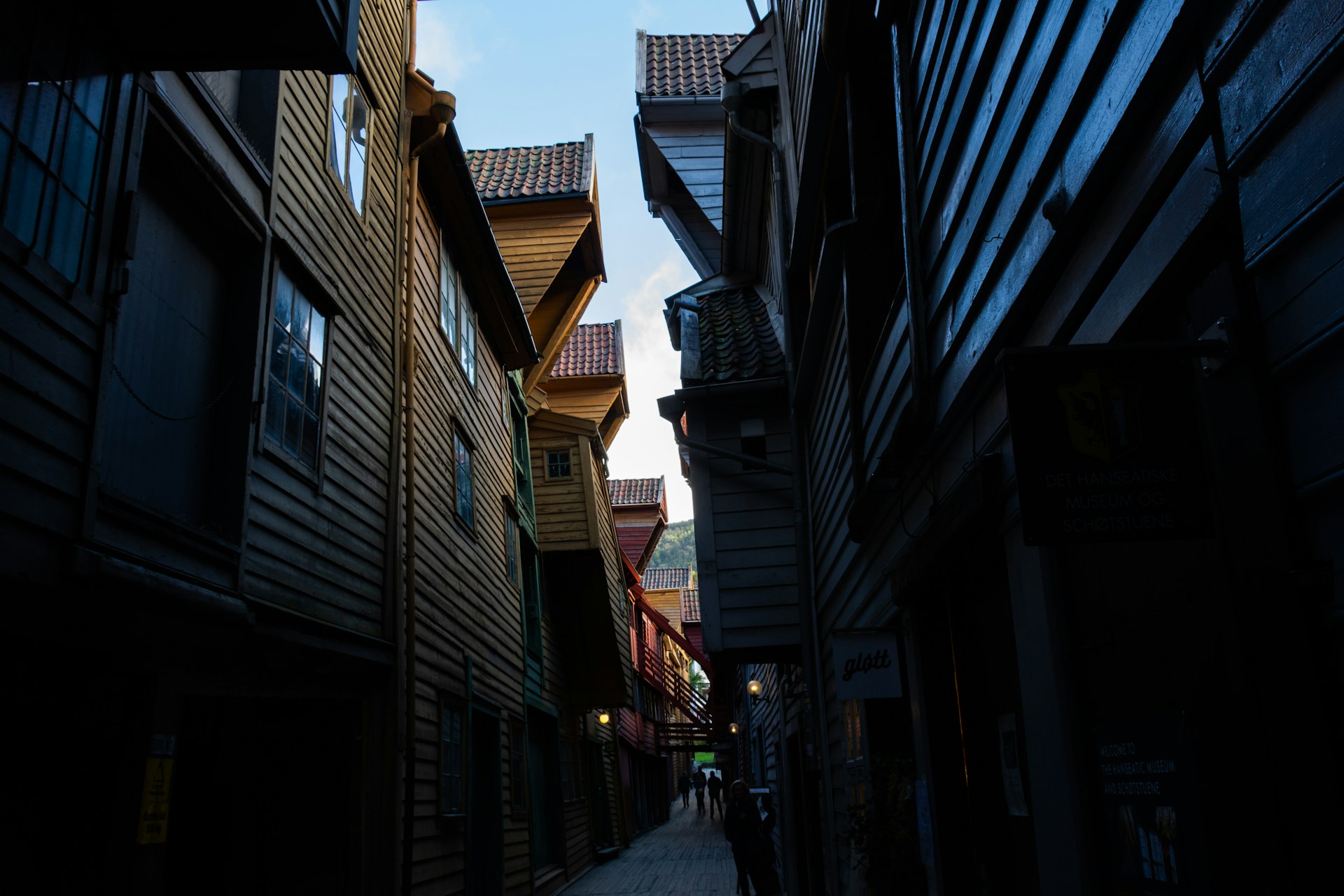
If you do one thing at Bryggen beyond taking a photo, do this. Look for a passage open to visitors and follow it away from the waterfront. The buildings are deeper than they look from the street, and the narrow lanes give you a clearer view of how the rows fit together.
Notice how quickly the harbour disappears from view. One moment you’re on a busy waterfront; a few steps later you’re looking up at timber walls and across small yards. That’s the part of Bryggen you’ll miss if you stay on the pavement out front. Stick to open passages and respect signs for private areas or restoration work.
Bryggen isn’t a museum piece. Today the rows hold shops, artists’ studios, craft workshops, restaurants and offices. The businesses have changed, but people still work in the buildings behind those familiar façades.
3. Visit Bryggens Museum for the medieval story
Choose Bryggens Museum if you want to know what life in medieval Bergen was like. Its Below Ground exhibition draws on finds uncovered after the 1955 fire, including objects from everyday life, ceramics that show how far trade reached, and runic inscriptions that preserve surprisingly personal messages.
The setting adds to it: the museum is built over the remains of some of Bergen’s oldest buildings, dating from the first half of the 1100s.
Fun fact: Some of the runic inscriptions are as ordinary as a modern name tag. Others preserve poems, spells and gossip. They’re a reminder that runes were used for everyday messages too.
It’s worth visiting after you’ve walked through the wharf. Outside, you get a feel for the scale and layout of the district. Inside, you see what was found beneath it. It’s also a good place to spend more time if the weather turns. If you’d like a guide, check the museum’s listing for Bryggen Guiding for current tour times, language and what admission includes.
4. See Schøtstuene to understand Hanseatic life
The Hanseatic Museum at Schøtstuene is the better choice if you’re most curious about the merchants themselves. Schøtstuene were their assembly rooms, and the exhibits explain how the Hanseatic community lived and worked at Bryggen.
The assembly rooms and cookhouses sit near St. Mary’s Church, which was closely associated with the Hanseatic community. They give you a sense of where the merchants gathered when they weren’t working on the wharf.
Fun fact: Cooking was kept in separate cookhouses because open fires posed a danger in the wooden trading buildings.
Bryggens Museum and Schøtstuene cover different parts of the story, so you can pick one without feeling you’ve missed a second version of the same visit. The Hanseatic Museum has moved its visitor offering to Schøtstuene during the restoration of its main building at Finnegården. Check the museum’s current visitor information before you go.
5. Browse the shops and take a coffee break
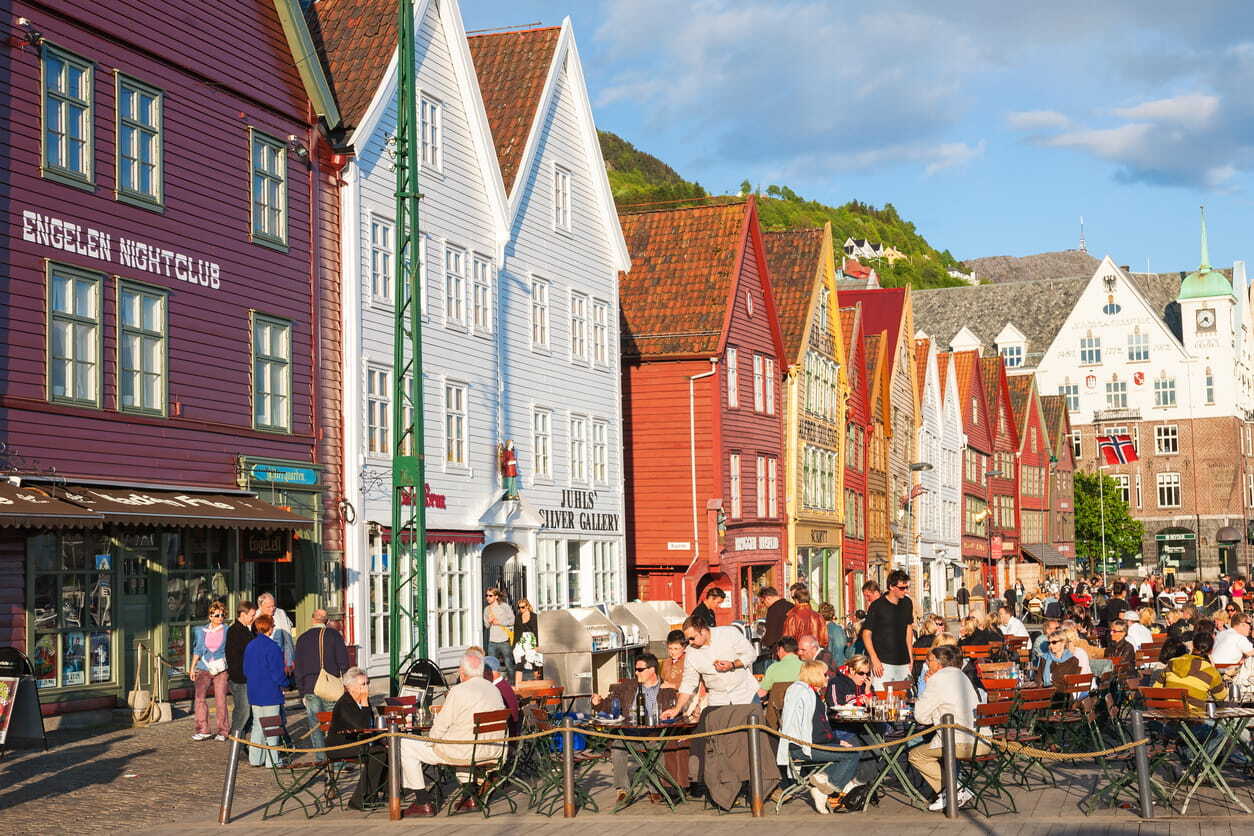
Leave a little time to see what’s open in the lanes and along the waterfront. A shop or gallery gives you a reason to look inside, and a coffee break gives you somewhere to wait out a shower. You don’t need to plan your visit around shopping, but it’s nice to have time to stop if something catches your eye.
How to Visit Bryggen: A Short Walk or a Half-Day
If you have 30–60 minutes: Start at the Fish Market, follow the waterfront to Bryggen, then take a passage behind the façades. That’s enough time to see the harbour and explore the lanes without rushing towards a museum.
If you have half a day: Follow the same route, then choose Bryggens Museum or Schøtstuene. Continue towards Bergenhus Fortress if you want to stay outside, or stop for coffee if you’d rather take your time around the wharf. If you’re still deciding how many days to spend in Bergen, this makes a good first half-day around which to plan the rest of your stay.
You can explore the public waterfront and open passages on foot for free. Museums and guided visits have their own hours and admission arrangements, so check ahead if there’s a particular place you want to see. If step-free access matters for your visit, check with the venue directly before committing to a route through the older passages.
For a quieter walk through the lanes, try early in the morning or later in the evening. If you want to go inside a museum or browse the shops, plan around their opening hours.
A shower doesn’t have to change the plan: walk the lanes when it’s dry and save the museum for the wettest part of the day. If your dates are flexible, our guide to the best time to visit Bergen compares what to expect throughout the year.
What to See Near Bryggen
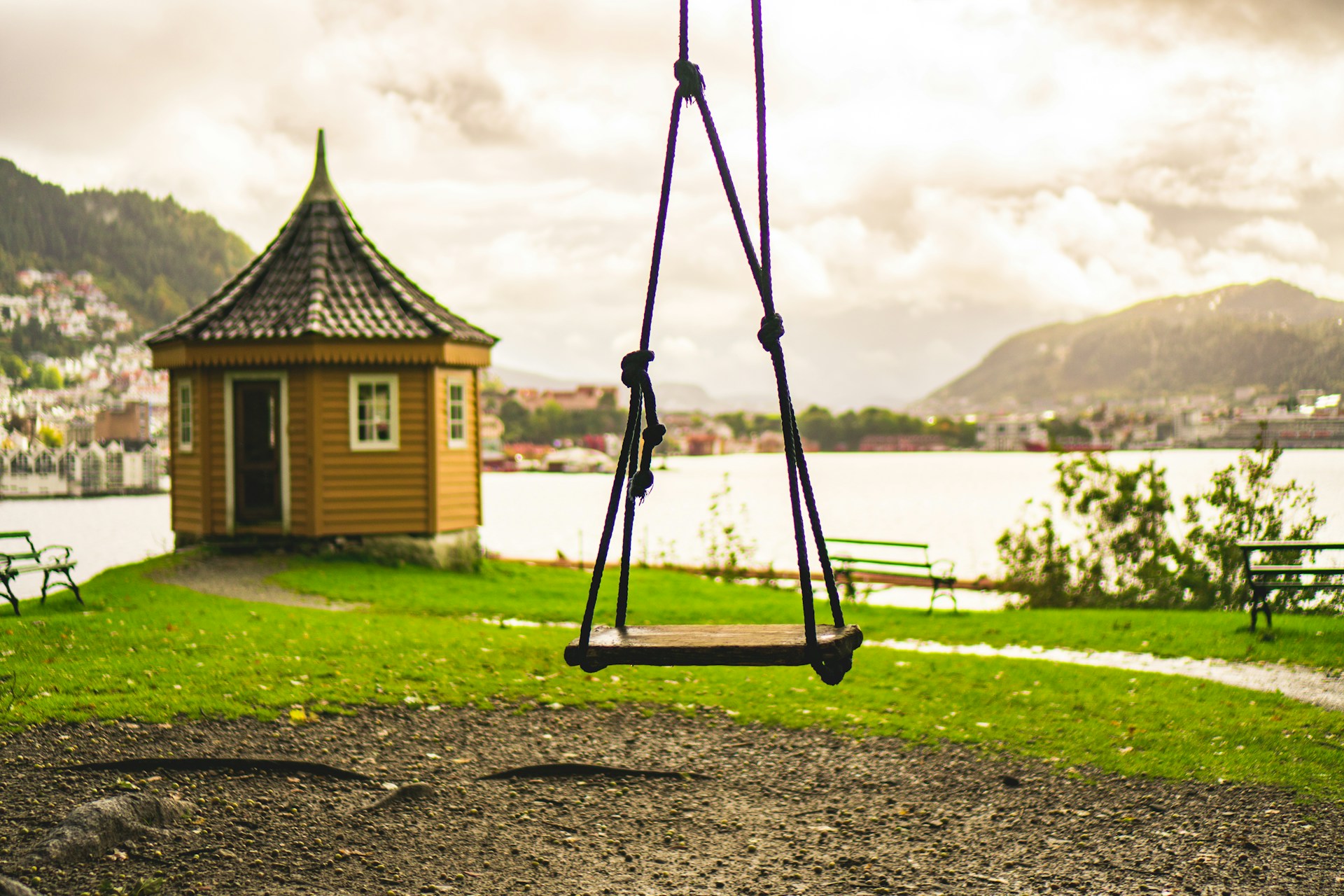
The easiest places to pair with Bryggen are the Fish Market, St. Mary’s Church and Bergenhus Fortress. Start at the market if you’re approaching along the waterfront, then continue towards the church or fortress after exploring the wharf. At Bergenhus, look for the medieval Håkonshallen (Haakon’s Hall) and the Rosenkrantz Tower. If you’d rather finish with a view over Bergen, make Fløibanen a separate stop. Our guide to the best things to do in Bergen covers what to see beyond the harbour.
If Bryggen has you thinking about getting out on the water, our guide to the best fjords to visit from Bergen compares cruises departing from the city with longer trips into Western Norway. Have another day to spare? Compare the best day trips from Bergen, from outdoor activities in Voss to fjord scenery around Flåm and Hardanger.
Frequently Asked Questions About Bryggen in Bergen, Norway
Is Bryggen in Bergen, Norway free to visit?
Yes. You can walk along the waterfront and explore the public passages for free. Museums and guided tours may charge admission.
How long do you need at Bryggen?
Allow 30–60 minutes for the waterfront and lanes. Set aside half a day if you’d like to visit a museum and see a nearby landmark without watching the clock.
Can you go inside the buildings at Bryggen?
You can go inside museums, shops and other spaces that are open to the public. Some buildings are private or may be closed for restoration, so follow the signs on site.
Is Bryggen worth visiting in the rain?
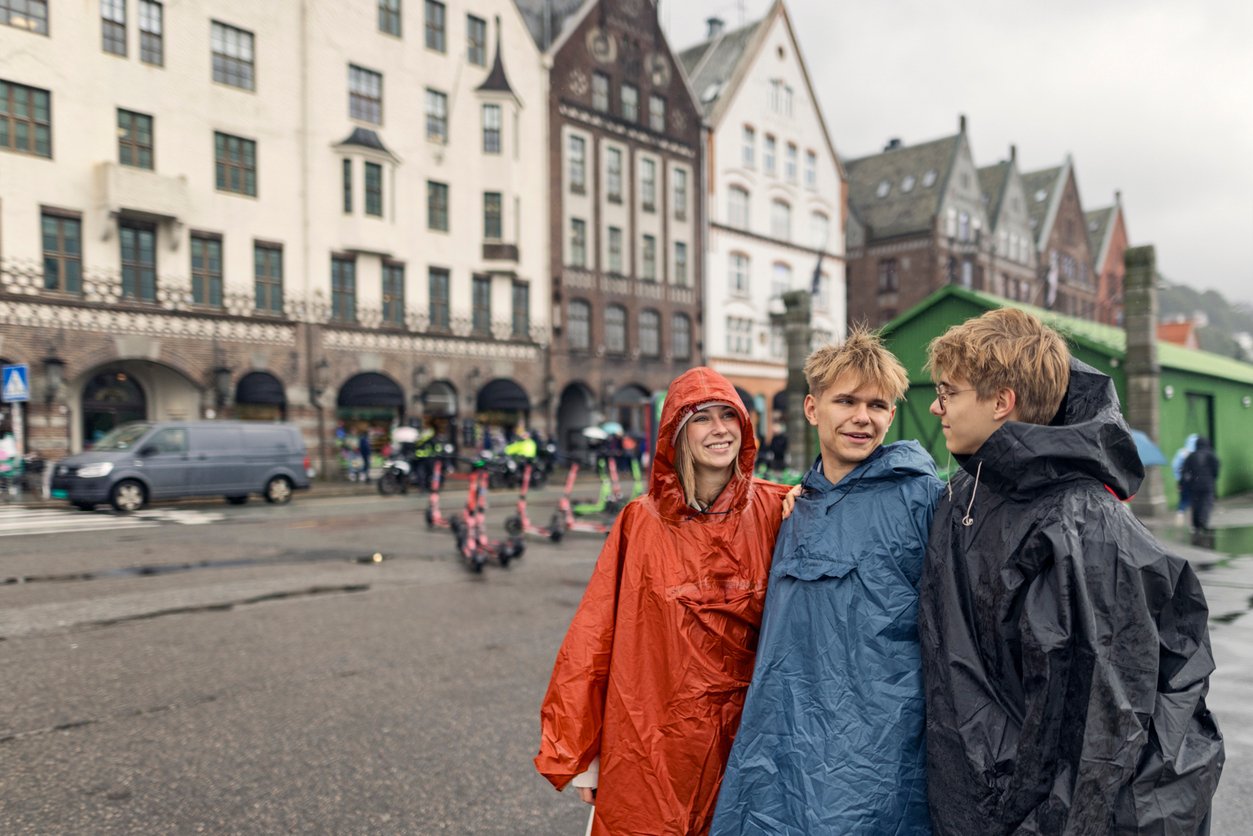
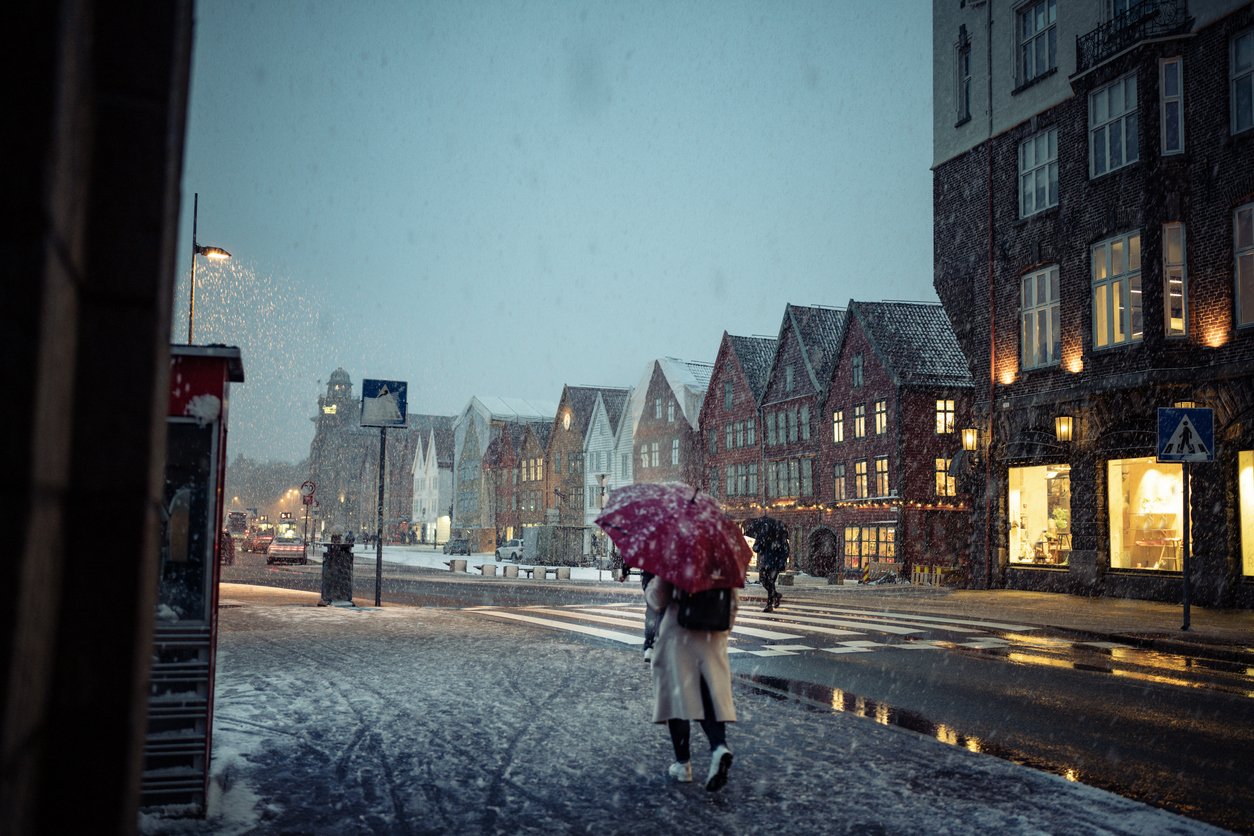
Yes. Walk the lanes in a dry spell, then head indoors to Bryggens Museum or Schøtstuene if the rain gets heavier. Bring a waterproof jacket either way.
How old are the buildings at Bryggen?
The wharf itself is much older than the buildings. An early pier was built here around 1100, but much of the Bryggen you see today dates from rebuilding after the 1702 fire, when builders followed the old plan and used traditional methods.
Why do the buildings at Bryggen lean?
The wooden buildings are old, and the ground underneath them can settle unevenly. The heritage authority’s guide to Bryggen explains why conditions below the surface matter to the preservation of the district.
Can you visit the Hanseatic Museum right now?
Visitors can see the Hanseatic Museum’s exhibits at Schøtstuene while its main building, Finnegården, is being restored. Check the museum’s visitor information and opening details before you go.
Staying a little longer? Voss is just over an hour from Bergen by train and makes a good base for exploring Western Norway. Our guided tours take you out onto the water!