
Most visitors leave Norway thinking they've seen its waterfalls. Usually they've only seen the ones that happened to be beside the road they were already driving. Norway doesn't have a handful of impressive waterfalls, it has thousands, and the geography explains why: glacier-carved valleys and steep mountain walls mean water is almost always falling from somewhere. Some of the best ones take almost no detour at all. A few of the least accessible are worth rearranging an entire day for.
Our Quick Cheat Sheet for the Best Waterfalls in Norway
Norway's most notable waterfalls span the whole country, but the highest concentration worth planning a trip around sits in Western Norway: Vøringsfossen (182m, Hardanger), Langfossen (612m, beside the E134), and Steinsdalsfossen (walkable behind the falls, near Norheimsund). Further north, Mardalsfossen ranks among the country's tallest, and the Seven Sisters in Geirangerfjord are reachable only by boat. If you only have time for one, make it Vøringsfossen.
|
Waterfall |
Best for |
Detour required? |
Walk behind it? |
Boat or train required? |
|
Vøringsfossen |
Dramatic viewpoints |
Yes, worth it |
No |
No |
|
Skjervsfossen |
A quick two-angle stop |
No |
No |
No |
|
Langfossen |
Road trip drama |
No |
No |
No |
|
Steinsdalsfossen |
Families, the walk-behind novelty |
Small |
Yes |
No |
|
Kjosfossen |
Train travellers |
No |
No |
Train only |
|
Tvindefossen |
The easiest roadside stop on this list |
No |
No |
No |
|
Seven Sisters |
Fjord scenery |
Yes |
No |
Boat only |
|
Mardalsfossen |
Serious waterfall chasers |
Yes, a major one |
No |
No |
Why Norway Has So Many Waterfalls
Steep valleys, heavy snowfall, and a coastline shaped by glaciers that retreated only a few thousand years ago, that combination is why Norwegian waterfalls aren't a novelty, they're a default feature of the landscape. Some drop straight into the fjords. Others tumble through pine forest or spill off high plateaus you'd never guess existed from the road below. The best time to see most of them at full force is late spring into early summer, when snowmelt is still feeding the rivers above.
The Waterfalls Worth Planning a Trip Around
1) Vøringsfossen: The One Everyone Means When They Say "Norway's Waterfall"
Ask someone to picture a Norwegian waterfall and there's a decent chance they're picturing this one without knowing its name. Vøringsfossen drops 182 metres into the valley below, in the Hardanger region, and a relatively new viewing platform and footbridge put you close enough to feel the spray on a strong-flow day.
Route 7 gets you there directly if you're driving between Bergen and Oslo. Late spring or early summer is when the flow is heaviest, and arriving early morning avoids both the harsh midday light and the tour bus crowds. If there's one waterfall Norway is most associated with abroad, this is it, and if you only have time for one on this entire list, this is the one we'd send you to.
2) Skjervsfossen: Norway's Best Two-For-One Waterfall
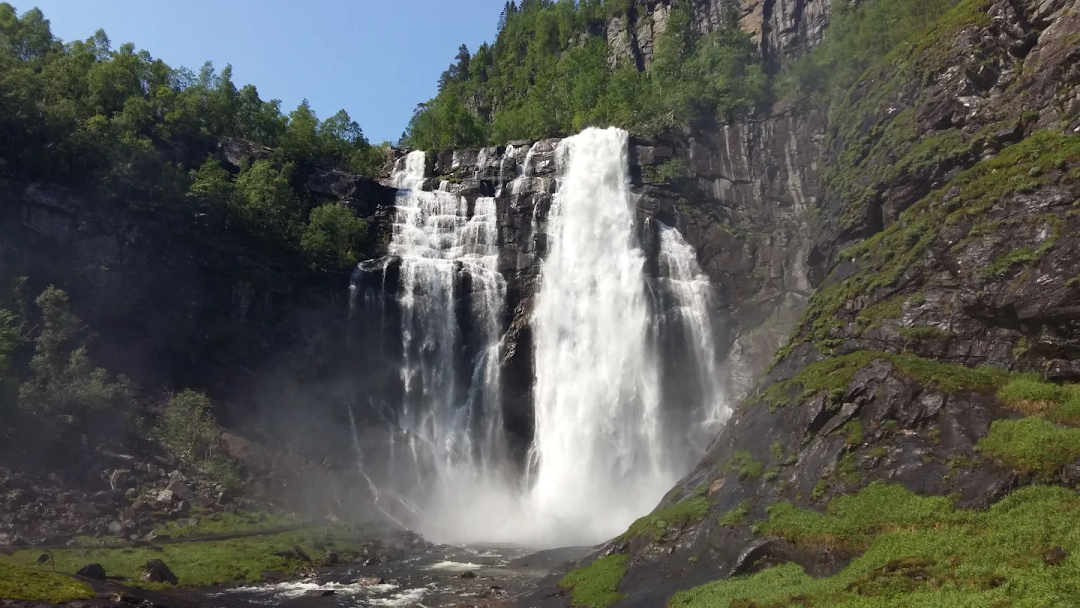
Most waterfalls give you a single angle. Skjervsfossen gives you two: a view from below where the full drop unfolds in front of you, and a second one from above, looking down into the same fall from the opposite side, close enough to a different waterfall entirely. Ten minutes outside Voss, easy to fold into a day already built around Tvindefossen or the Nærøyfjord kayak route.
Locals will also mention, half-joking, the cliffside restroom here that's nearly as photographed as the waterfall itself. Norwegians take their public infrastructure seriously.
3) Langfossen: 612 Metres Beside a Highway
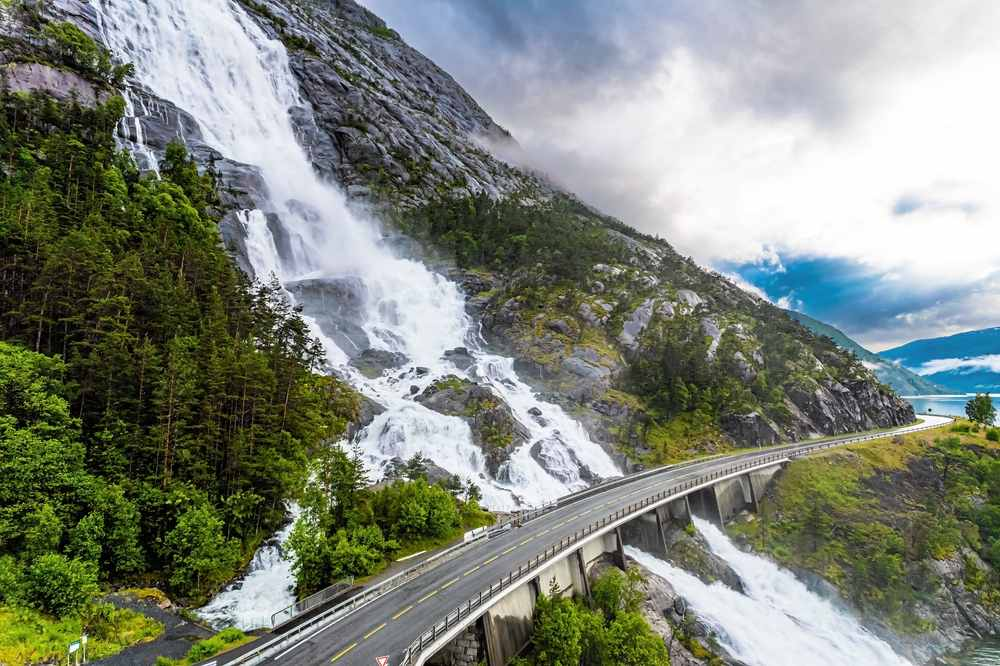
Most waterfalls this dramatic require a hike, a boat, or at minimum a parking fee. Langfossen requires none of that. It falls a full 612 metres into Åkrafjorden, the fifth-highest waterfall in Norway, and the E134 highway runs right past the base. There's a lay-by for the view, or a steep short trail if you want a different angle.
Langfossen is spectacular, and if it's the only waterfall you see from a moving car all trip, you won't feel short-changed. But if you had to choose between the two, we'd still drive the extra hour for Vøringsfossen.
4) Steinsdalsfossen: Walking Behind the Falls
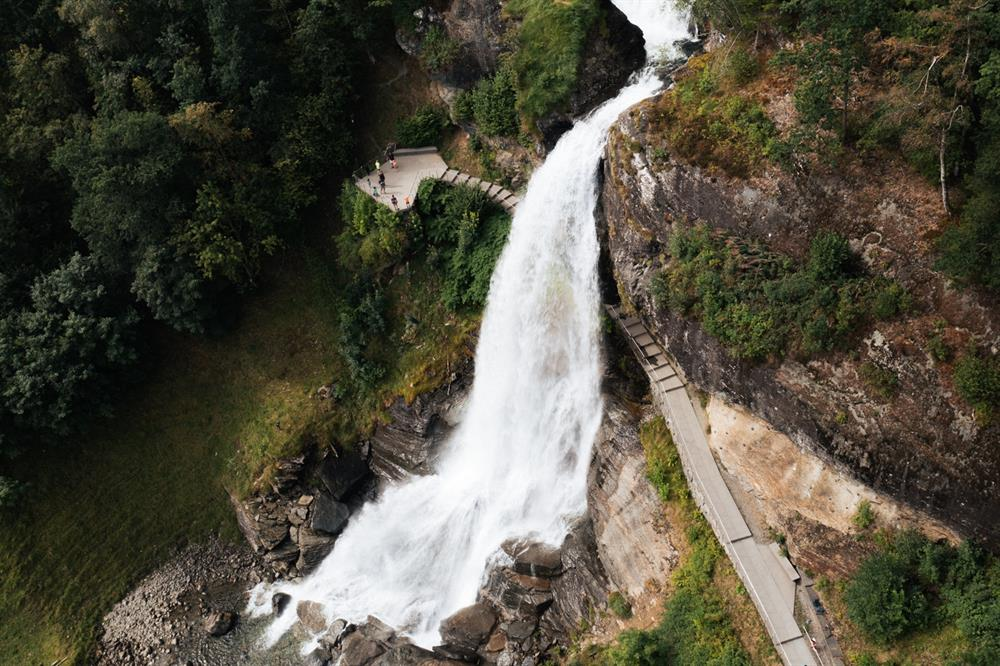
Not the tallest on this list, but the most fun. A path runs behind the curtain of water itself, close enough to feel the roar, far enough back that you won't get soaked. It sits just outside Norheimsund, about 75km and just over an hour's drive from Bergen via the E16 and the Kvamskogen plateau.
Most people plan to spend five minutes on the path behind the falls. Almost nobody actually does, it's short, but you'll want to stand in the middle of it for longer than makes sense.
5) Tvindefossen: Why Everyone Stops Here
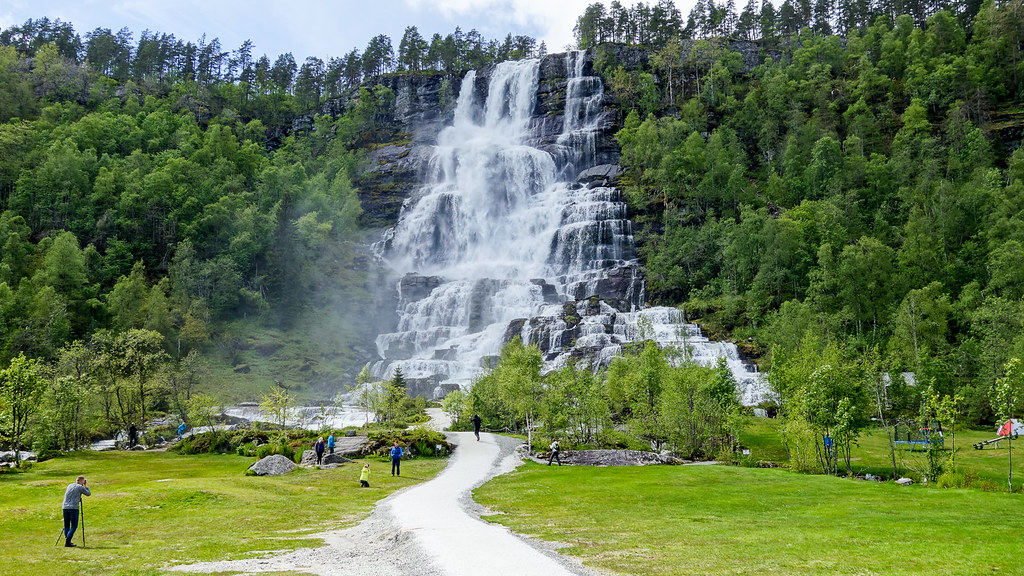
Just off the E16 outside Voss, Tvindefossen is the kind of waterfall people plan to glance at for five minutes. Most end up staying closer to thirty. Gentle trails lead through surrounding forest to good photo spots, and it works as a natural pause on the way toward the UNESCO-listed Nærøyfjord.
Guides who run that route often suggest stopping here on the drive back rather than on the way out, the afternoon light reaches the falls better by then.
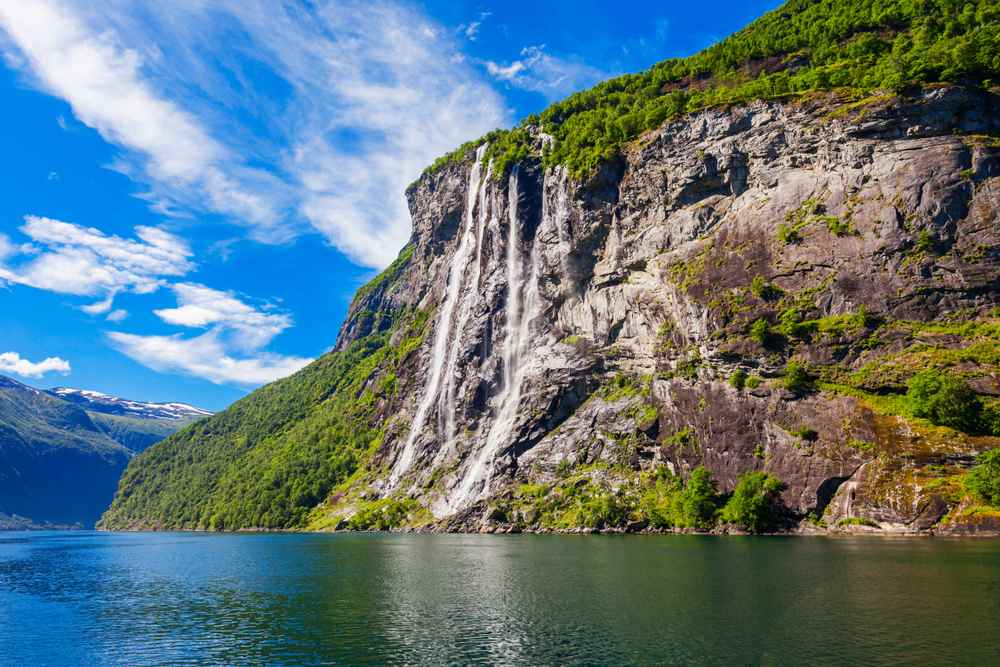
6) Seven Sisters: Fjord Royalty You Can Only Reach by Boat
In the heart of Geirangerfjord, seven separate streams fall side by side down the same cliff face, close enough together to look, from a distance, like a single braided waterfall. There's no road view that does it justice. You need to be on the water, either a ferry or a smaller tour boat, and morning light is when the seven streams show up most clearly against the rock.
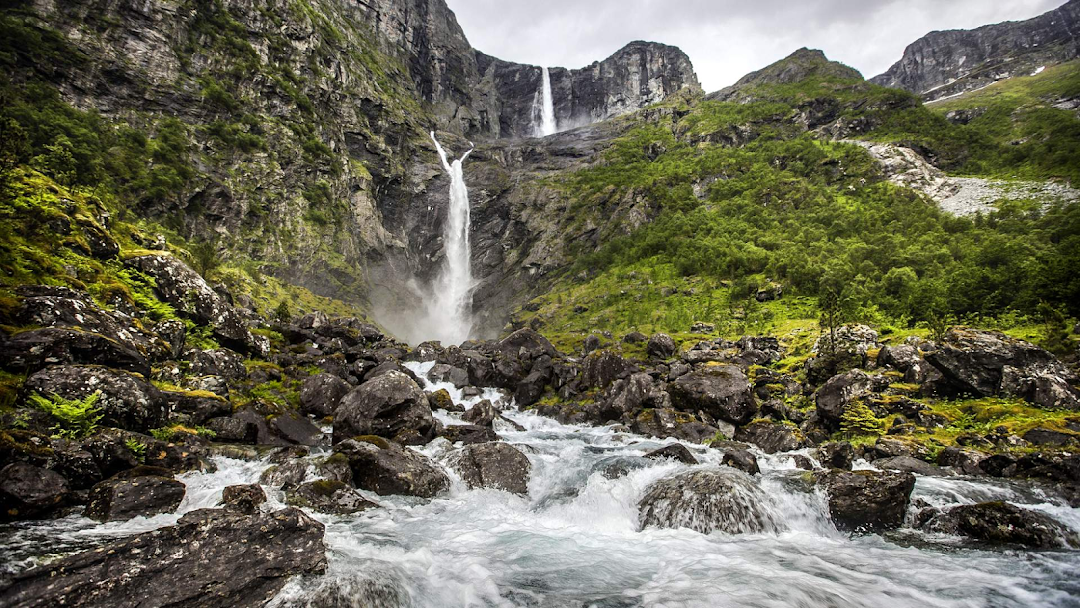
7) Mardalsfossen: One of the Tallest, and Genuinely Hard to Reach
Norway's official statistics office measures Mardalsfossen's total fall at 705 metres, and it's often cited as the biggest waterfall in Norway by total height. It sits in Møre og Romsdal, well north of the Voss and Hardanger cluster, which makes it a genuine detour rather than a stop on the way to somewhere else.
We'd happily skip Mardalsfossen before we'd skip Vøringsfossen, if forced to choose just one waterfall worth a special trip. But if the northern fjords are already part of your route, this is the one that justifies the extra driving.
5) Kjosfossen: Where the Train Stops for a Reason
The Flåm Railway halts here specifically so passengers can get off and look. It's one of the more theatrical waterfall visits in the country, complete with a brief summer performance by a red-dressed "huldra" figure, tied to Norwegian folklore about hidden forest spirits. You can't drive to Kjosfossen. The train is the whole point.
Scenic Routes Worth the Drive
-
Hardanger National Tourist Route connects Vøringsfossen and Steinsdalsfossen along the way, built for self-drive travellers who want more than one waterfall per day.
-
Geiranger-Trollstigen Route is the dramatic mountain drive that delivers you to the Seven Sisters and the wider Geirangerfjord, switchbacks and all.
-
Sognefjellet Road, Norway's highest mountain pass, pairs naturally with mountain biking if waterfalls are only part of what you're after that day.
Which Waterfalls Fit Which Kind of Trip
-
A five-minute detour: Tvindefossen, Skjervsfossen, and Langfossen all sit close enough to a main road that seeing them barely changes your itinerary.
-
Worth planning a full day around: Vøringsfossen, if you're already on the Hardanger route, and Mardalsfossen, if the northern fjords are part of your trip.
-
Only reachable in a specific way: Kjosfossen means boarding the Flåm Railway. The Seven Sisters means getting on the water in Geirangerfjord. Neither has a road-view alternative.
-
Based in Voss and want a shorter list? Our guide to Voss's must-see landmarks covers Tvindefossen, Vøringsfossen, and Skjervsfossen in more depth, alongside the fjords, lakes, and viewpoints that round out a Voss-based trip.
You Could Spend Three Weeks Here and Never See the Same Waterfall Twice
That's exactly why trying to "see them all" is the wrong goal. Build your route around a handful of unforgettable ones instead, and let the rest surprise you along the way.
If you'd rather experience a few of these from the water or the trail instead of the roadside, Outdoor Norway runs guided kayaking on Nærøyfjord and hiking trips that pass several of the Voss-area falls directly, or the 9-Day Fjord Explorer's Adventure if you'd rather have the whole route planned for you.
When is the best time to see Norway's waterfalls at full force?
Late spring into early summer, when snowmelt is still feeding the rivers. By late summer, several of the smaller falls noticeably thin out.
Can you visit these waterfalls without a car?
Some, not all. Kjosfossen only works by train. The Seven Sisters only work by boat. Everything else on this list needs a car or an organised tour.
Is Vøringsfossen or Langfossen more impressive?
Different kind of impressive. Langfossen wins on sheer height and roadside drama, nothing to it but a highway and a 612-metre drop. Vøringsfossen wins on setting, the viewing platform puts you right over the edge of the Hardanger valley in a way Langfossen's roadside view doesn't match. If we had to send someone to only one, it's Vøringsfossen.
How many waterfalls does Norway actually have?
No one can give an exact number, because Norway has countless seasonal waterfalls that appear during snowmelt and disappear again later in the year. The eight here are simply the ones worth planning a route around, not close to a complete list.
What should I pack for waterfall chasing in Norway?
Good hiking shoes, a waterproof jacket, and a tripod if you're serious about long-exposure shots. A rain cover for your camera isn't optional near the bigger falls, the spray reaches further than it looks.
Which waterfalls pair well with a Voss-based trip?
Tvindefossen, Vøringsfossen, and Skjervsfossen, all within reach of Voss without a major detour. For the full list of what else is worth seeing from a Voss base, see the Voss landmarks guide.