
Bergen has a mild but famously wet coastal climate, with cool summers, relatively mild winters and rain possible at any time of year. But what is Bergen weather like by month?
Summer temperatures are usually comfortable rather than hot, and winters in the city tend to be much milder than many travellers expect from Norway.
But Bergen weather can change quickly. Sunshine, cloud, rain and clear skies can all make an appearance on the same day. And that's worth remembering when you're deciding when to visit.
There isn't really a bad month to visit Bergen, just very different versions of Bergen.
Come in June and you'll find evenings that seem to go on forever. Visit in January and you'll have only a fraction of that daylight. July can bring beautiful hiking weather, but it can also bring rain.
December might give you beautiful snow. Or it might give you a wet, grey afternoon in the city while the surrounding mountains look considerably more wintry.
So instead of trying to find the month with "perfect" weather, it makes more sense to choose the conditions that suit the trip you actually want.
Here's what Bergen weather looks like month by month, and what those conditions mean once you're actually here.
Bergen Weather at a Glance
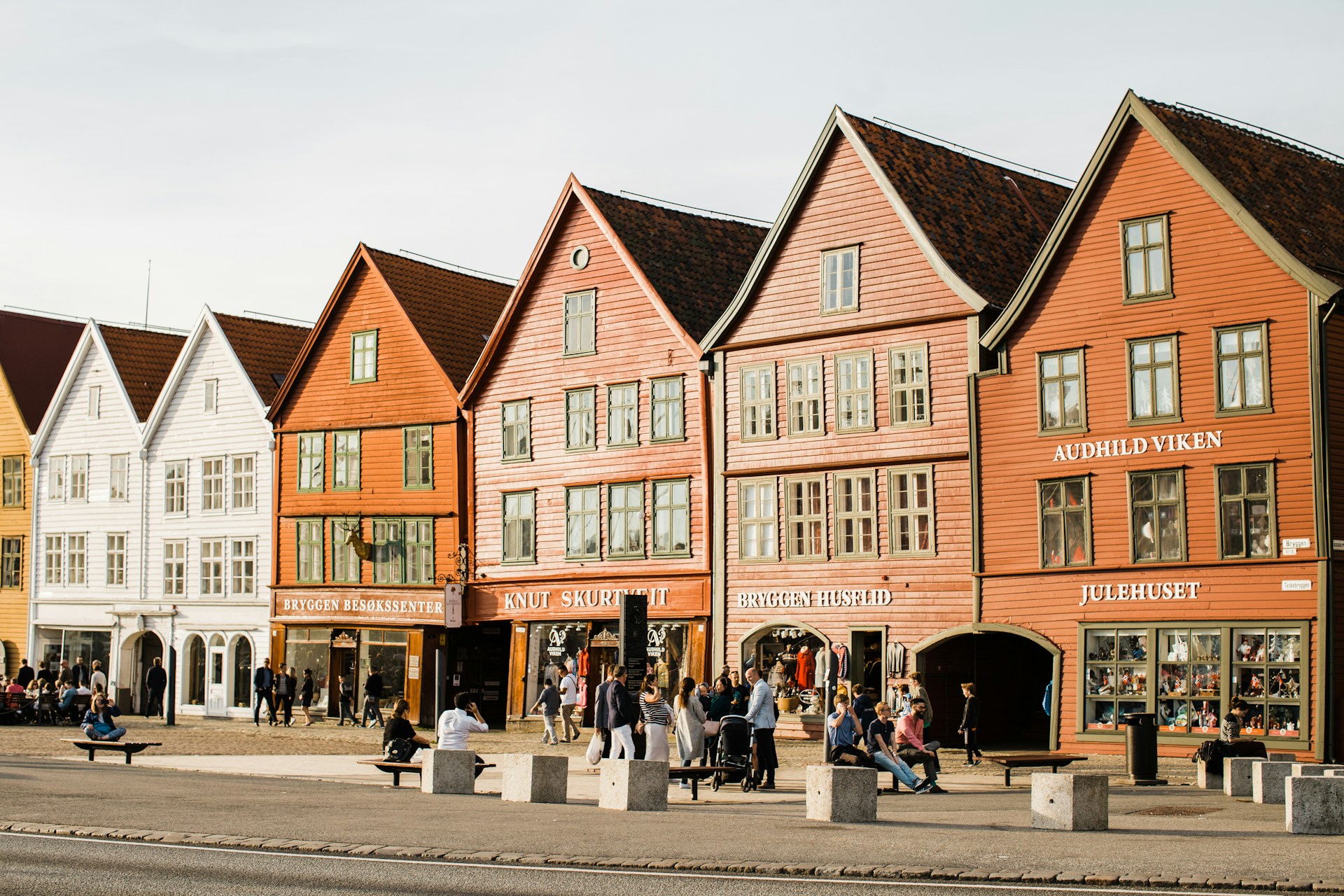
Bergen's coastal location keeps its temperatures relatively moderate compared with many places at the same latitude.
Norwegian Meteorological Institute climate normals for 1991–2020 show the familiar seasonal pattern: winters are cool rather than brutally cold at the coast, while summers remain mild.
For trip planning, this is the broad picture:
|
Month |
Typical daytime temperature |
Daylight |
What it feels like |
|
January |
Around 3–5°C |
6–8 hrs |
Dark, cool and wet |
|
February |
Around 3–5°C |
8–10 hrs |
Wintry, but getting brighter |
|
March |
Around 5–7°C |
10–13 hrs |
Changeable late winter/early spring |
|
April |
Around 8–11°C |
13–16 hrs |
Cool, fresh and increasingly bright |
|
May |
Around 12–15°C |
16–18 hrs |
Green, bright and springlike |
|
June |
Around 15–18°C |
18+ hrs |
Mild with extremely long days |
|
July |
Around 17–20°C |
17–19 hrs |
Usually the warmest period |
|
August |
Around 16–19°C |
14–17 hrs |
Mild summer weather |
|
September |
Around 13–16°C |
11–14 hrs |
Cooler and wetter |
|
October |
Around 9–12°C |
9–11 hrs |
Wet, cool autumn |
|
November |
Around 6–8°C |
7–9 hrs |
Dark, damp and chilly |
|
December |
Around 4–6°C |
Around 6 hrs |
Dark and wintry |
We’ve given you useful planning ranges rather than promises. Bergen's actual weather can sit well above or below the average on any particular day.
The daylight difference is particularly dramatic. Around the beginning of January, Bergen gets just under six hours between sunrise and sunset. Around the beginning of June, that has increased to more than 18 hours.
Warmest months: July and August
Longest days: June
Coldest period: January and February
Wettest period: Generally autumn
Best chance of long, bright sightseeing days: Late spring and summer
But averages only tell part of the story.
What Makes Bergen's Weather Different?
Look at Bergen on a map and its weather starts making much more sense.
The city sits on Norway's west coast, exposed to moist weather arriving from the North Atlantic. Bergen is also surrounded by mountains, which help force moist air upwards, cool it and produce precipitation.
The result? Quite a lot of rain.
At the same time, the ocean has a moderating influence on temperatures. Winters in Bergen are therefore much milder than many international visitors imagine when they hear "Norway".
We’re not saying winter is warm here, but that temperatures in the city often hover around freezing or several degrees above it rather than remaining far below zero for weeks at a time.
If you go higher into the surrounding mountains, conditions can be completely different.
That's one of the peculiarities of travelling around Western Norway: the weather outside your hotel in Bergen isn't necessarily the weather you'll encounter later that day in the mountains.
Does It Really Rain That Much in Bergen?
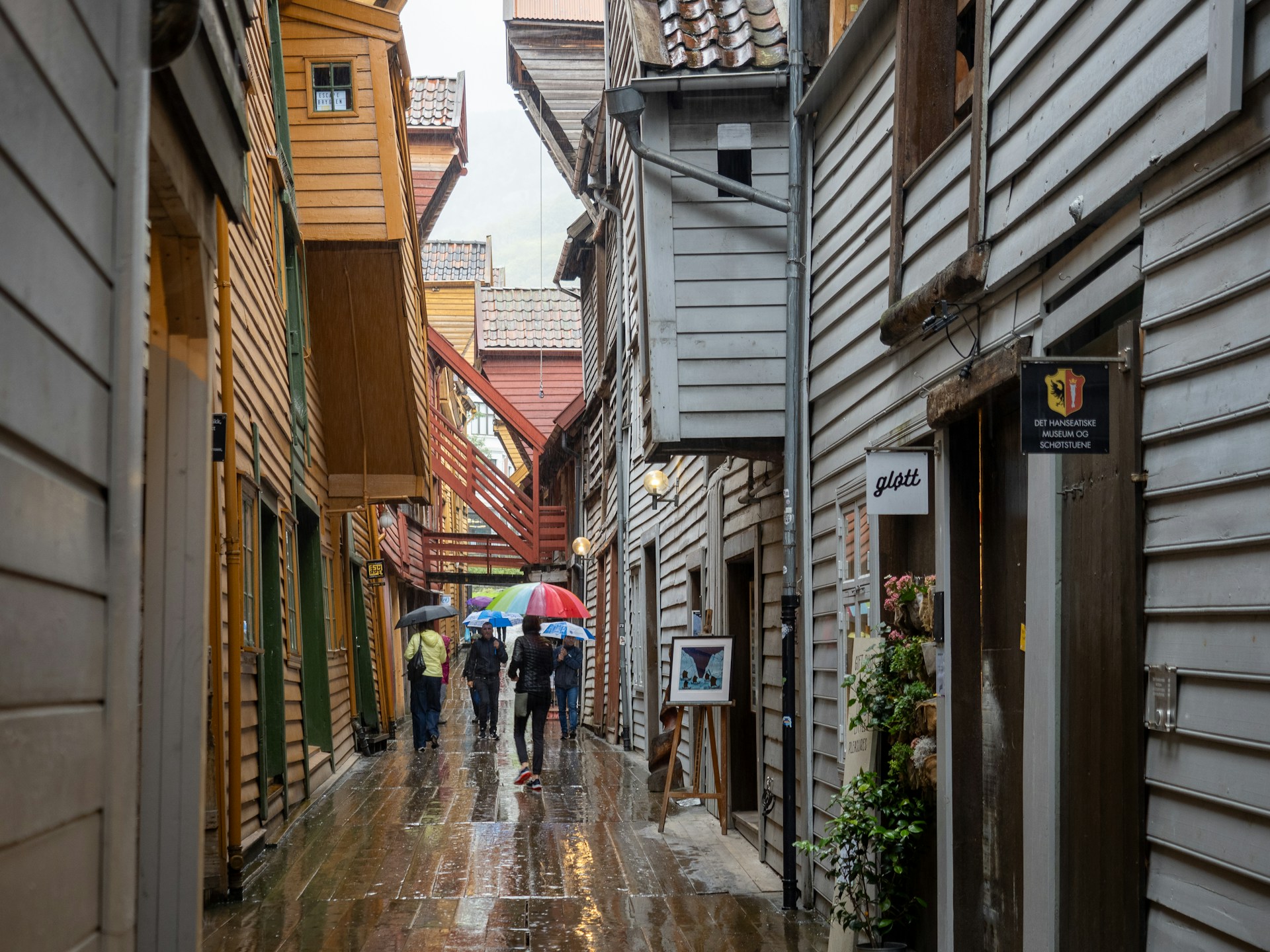
We’d love to lie to you, but unfortunately, yes. Bergen's reputation for rain is well earned.
But locals don't spend half the year hiding indoors waiting for it to stop.
Rainfall is simply part of life on Norway's west coast. The difference between having a miserable wet day and a surprisingly good one often comes down to what you're wearing.
A waterproof outer layer and decent footwear matter much more than obsessively refreshing the weather forecast.
There's also a positive side to all that water.
It's one reason Western Norway is so spectacularly green, and why waterfalls pour down mountainsides throughout the fjord landscape.
The Bergen rule: pack for rain even when the forecast looks good.
Bergen Weather by Month
Bergen Weather in January
Typical temperature: Around 0–5°C
Daylight: Roughly 6–8 hours
What to expect: Short days, rain, cold spells and possible snow
Good for: Winter vibe, quieter sightseeing and combining Bergen with mountain activities
Pack: Warm layers, waterproof jacket, gloves and waterproof footwear
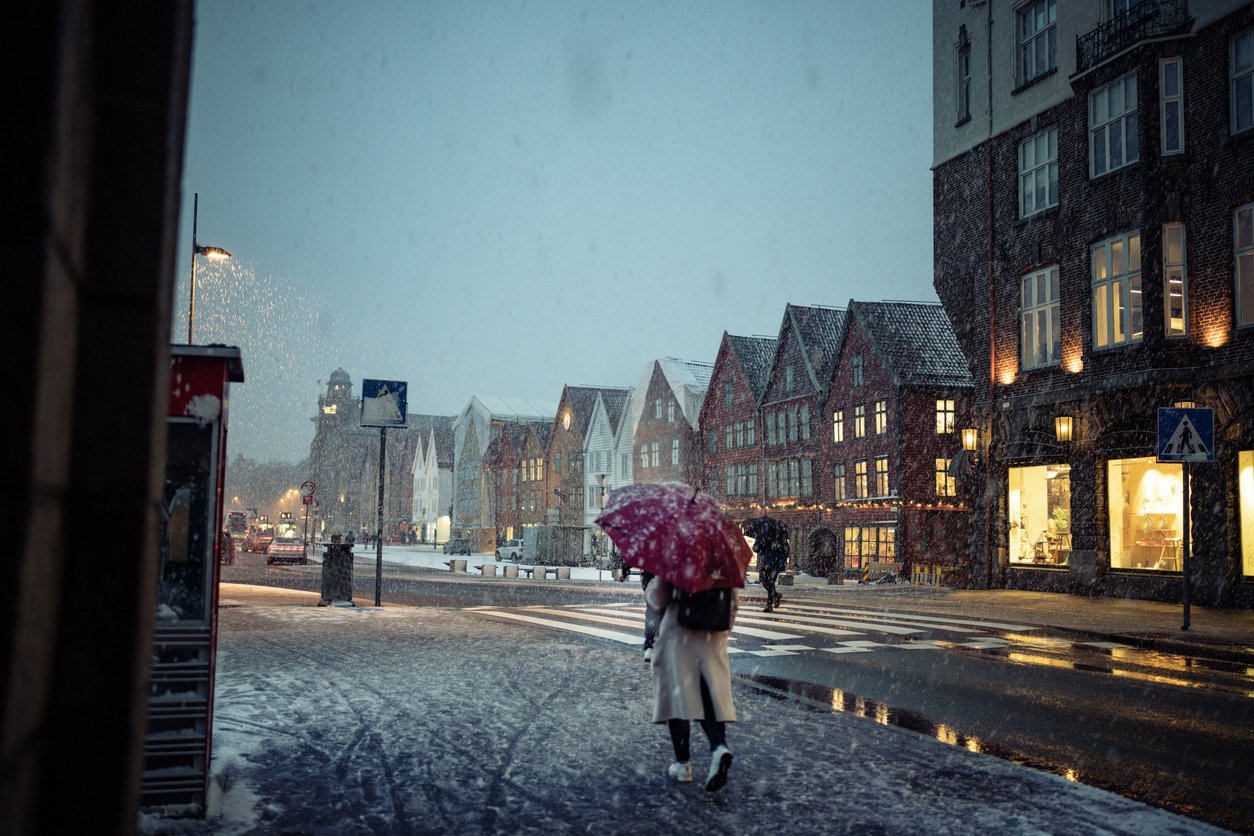
January is firmly winter in Bergen, but it might not look like the Norwegian winter you've pictured. The city itself doesn’t have to be buried under snow.
Because Bergen has a relatively mild coastal climate, temperatures frequently sit above freezing. That means winter precipitation can fall as rain or sleet rather than snow, particularly around sea level.
Snow is still possible, of course, and colder periods can transform the city. But if guaranteed deep snow is central to your Norway plans, you'll generally find more reliable winter conditions at higher elevations and further inland.
The other major consideration is daylight.
On 1 January, Bergen has less than six hours between sunrise and sunset, although the days begin lengthening quickly from there.
January therefore works best if you're comfortable embracing winter rather than trying to recreate a summer itinerary (with far fewer daylight hours).
Bergen Weather in February
Typical temperature: Around 0–5°C
Daylight: Roughly 8–10 hours
What to expect: Cool, wet and occasionally snowy conditions
Good for: Winter travel with noticeably more daylight than January
Pack: Winter layers and waterproof outerwear
February is still winter, but one thing is changing quickly: the light is coming back!
Days get substantially longer through the month. For you, this means more flexibility for sightseeing and outdoor day trips near Bergen.
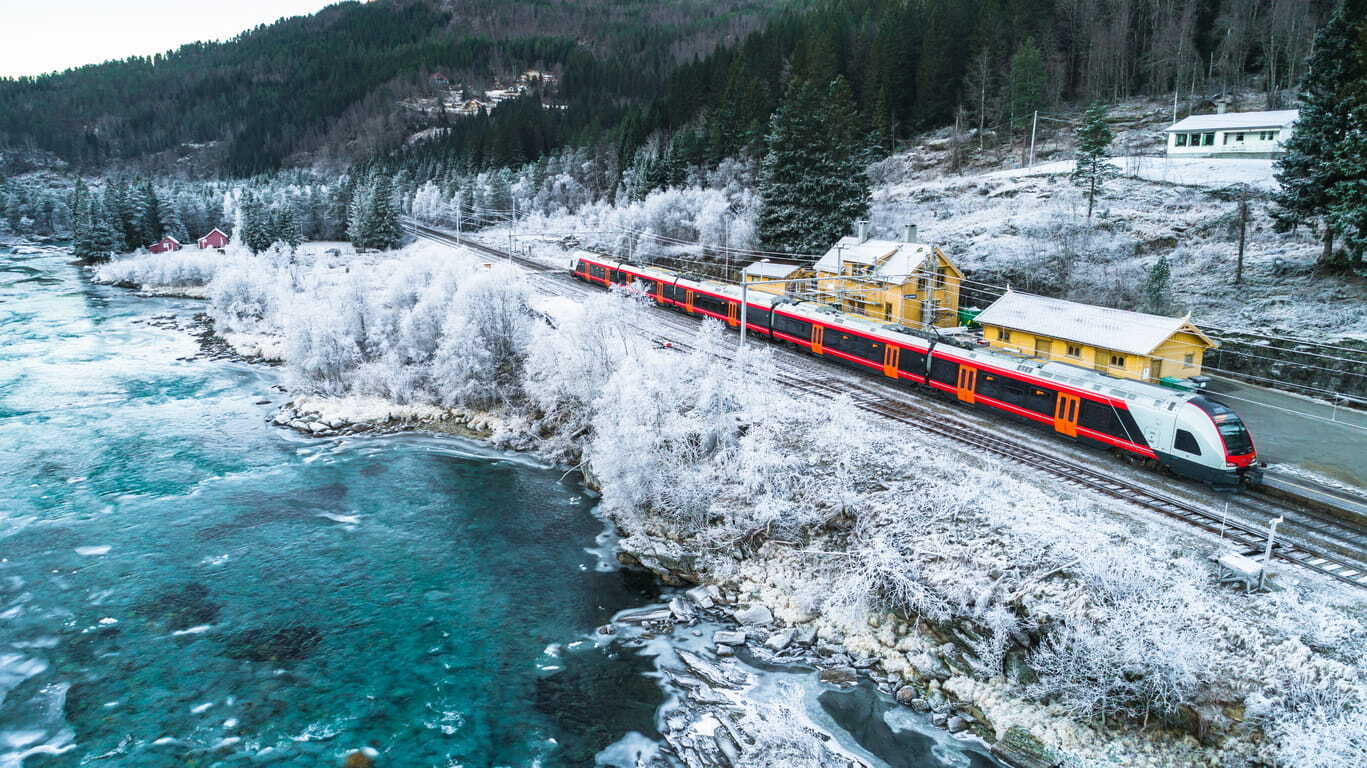
Weather-wise, February can still have everything from cold, clear days to rain, sleet and snow.
Again, don't assume the conditions in central Bergen represent the whole region. Head towards the mountains and you're entering a much more reliably wintry landscape.
For travellers interested in combining Bergen with a wider Norway winter trip, February can be an interesting compromise: winter conditions are still here, but daylight is becoming considerably more useful.
Bergen Weather in March
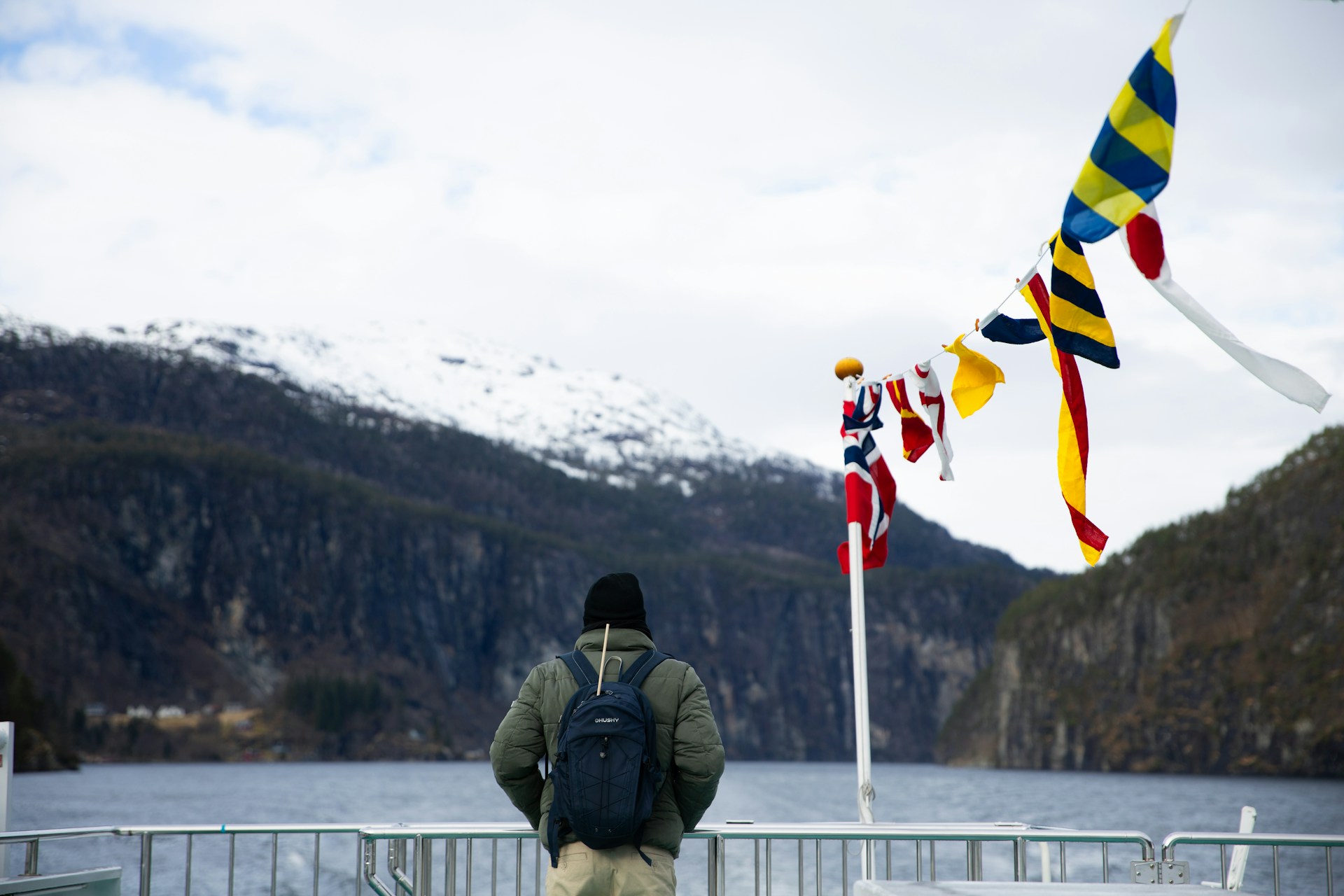
Typical temperature: Around 2–7°C
Daylight: Roughly 10–13 hours
What to expect: A mixture of winter and spring
Good for: Longer days, quieter travel and late-season winter experiences
Pack: Layers, waterproofs and warm clothing
March is one of those months when Bergen may not have decided which season it's in.
You can get mild springlike afternoons. You can also get cold rain, sleet or a return of winter.
At the beginning of March, Bergen already receives more than ten hours between sunrise and sunset. Plus, the days continue getting longer rapidly.
This all makes March considerably easier for active sightseeing than the depths of winter.
In the mountains, however, winter may be very much alive.
So if your trip combines Bergen with skiing, snowshoeing or mountain travel, don't let spring flowers at sea level convince you that winter has disappeared everywhere else.
Bergen Weather in April
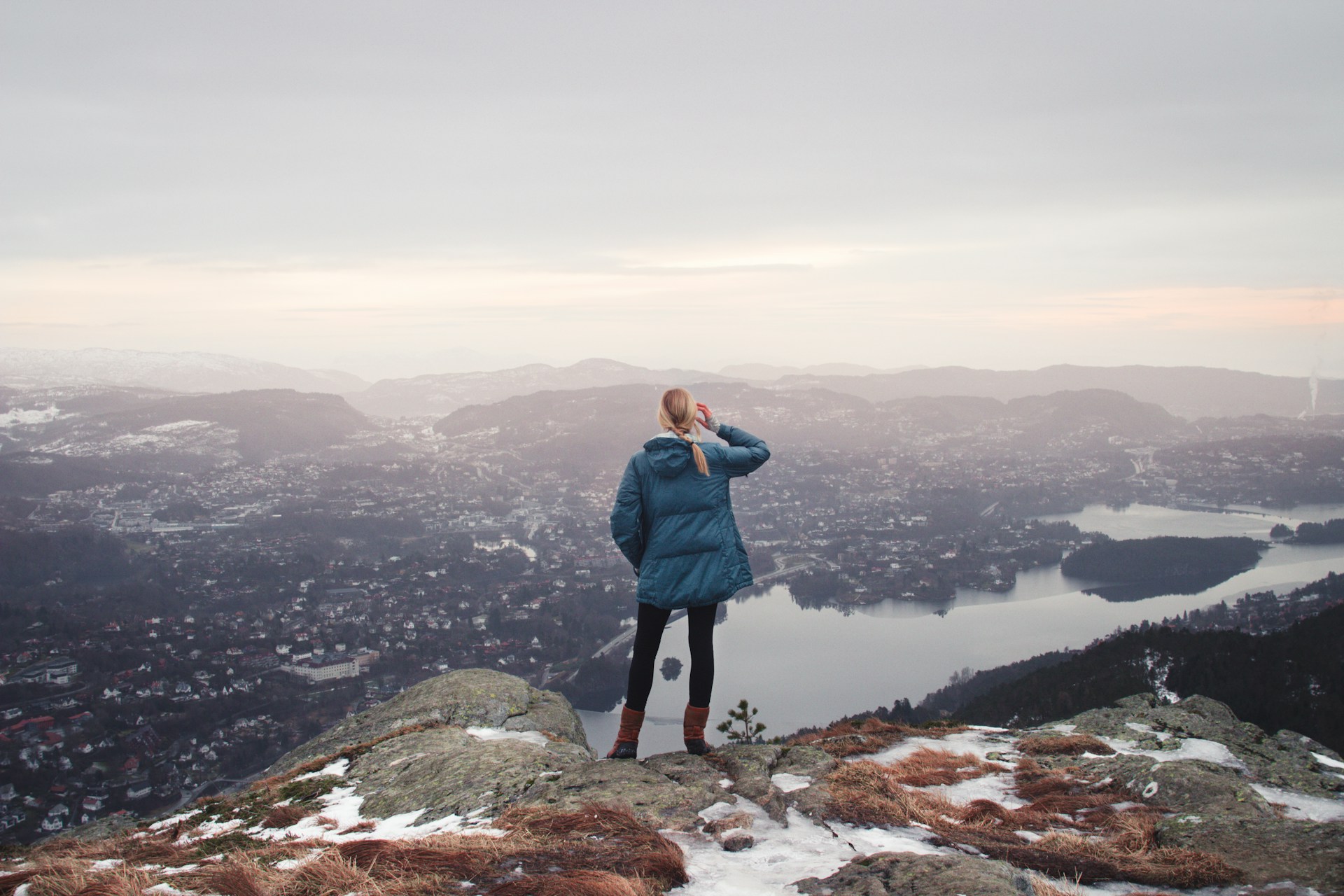
Typical temperature: Around 4–11°C
Daylight: Roughly 13–16 hours
What to expect: Highly variable spring weather
Good for: Sightseeing, spring scenery and longer days
Pack: Layers and proper waterproofs
April feels much more obviously like spring, but it's still a transitional month.
On 1 April, Bergen already gets more than 13 hours between sunrise and sunset. By the end of the month, the days are significantly longer again.
For us, and you, this means far more time to explore!
In April, temperatures go up, landscapes are waking up and the combo of melting mountain snow and spring precipitation can add plenty of water to the surrounding waterfalls.
But don't unpack the summer wardrobe yet.
Cold snaps are possible. Rain is always part of the equation. Conditions at elevation can remain “wintry”.
April is all about flexibility.
Bergen Weather in May
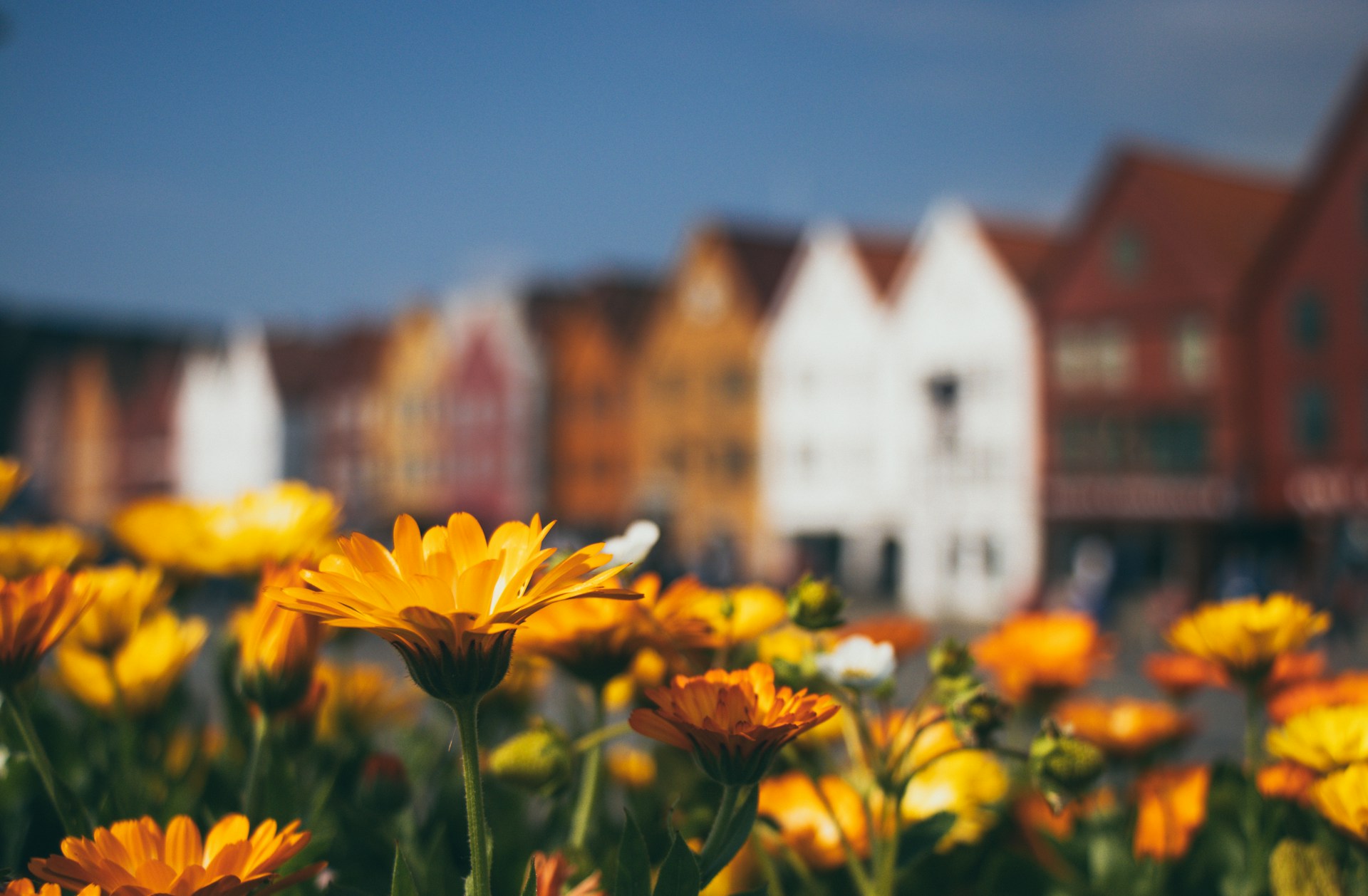
Typical temperature: Around 7–15°C
Daylight: Roughly 16–18 hours
What to expect: Long, bright spring days and increasingly mild temperatures
Good for: Fjords, sightseeing, waterfalls and outdoor adventures
Pack: Light layers plus waterproof jacket
May is one of the most appealing months if you want long days, but not be there right in the middle of peak summer.
Spring is well established by this point. Vegetation is green, waterfalls can be powerful and the amount of daylight is remarkable.
On 1 May, Bergen has around 16 hours of daylight. That continues increasing as the month progresses.
Temperatures are usually comfortable for active sightseeing, although cool and wet days remain perfectly normal.
That's the trade-off with Bergen: you can have a gorgeous sunny afternoon followed by a very persuasive reminder that you're still on Norway's west coast.
For hiking, kayaking, sightseeing and exploring the fjords, May can be an excellent compromise. Particularly if you don't need the warmest possible weather.
Bergen Weather in June
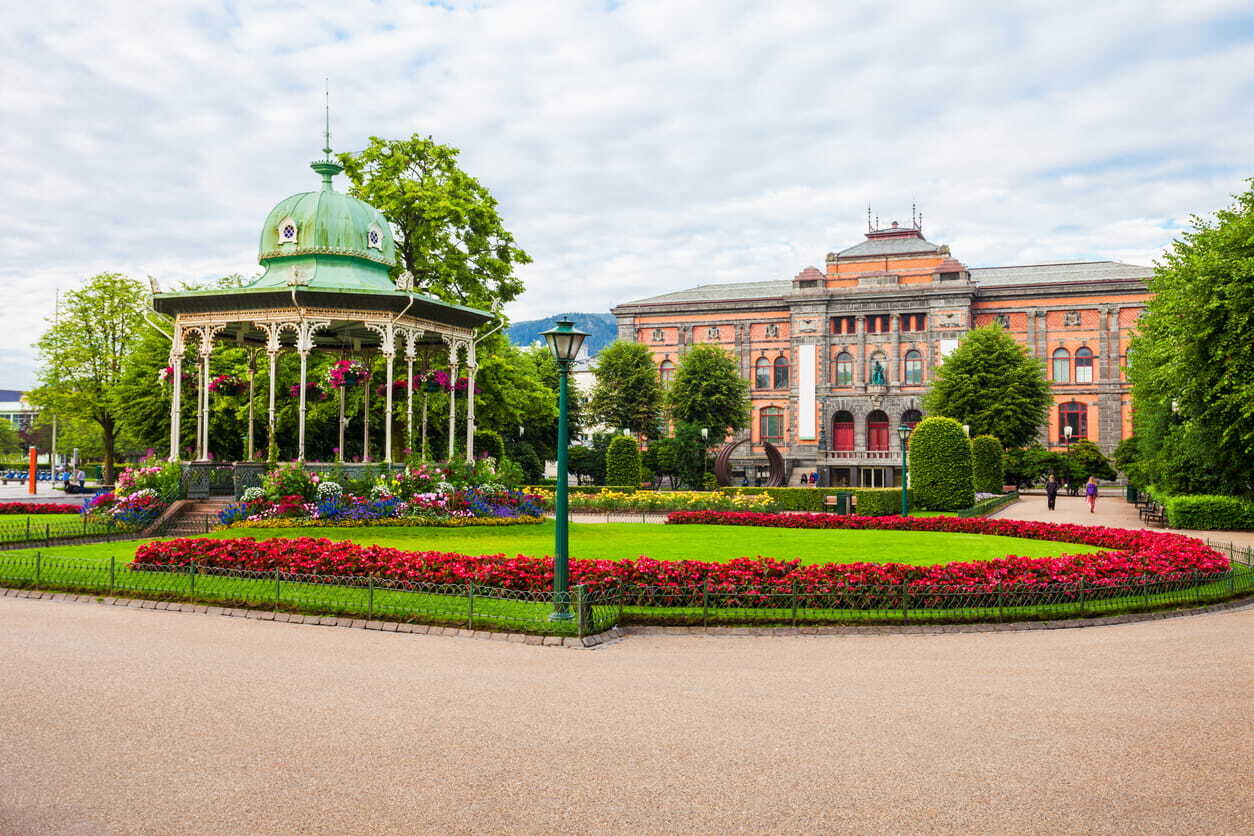
Typical temperature: Around 10–18°C
Daylight: More than 18 hours around midsummer
What to expect: Mild weather and extraordinarily long days
Good for: Hiking, kayaking, fjords, road trips and outdoor adventures
Pack: Layers, sun protection and waterproof outerwear
June is when summer light in Bergen really takes over.
At the beginning of June, sunrise is around 4:24 am and sunset around 10:50 pm. For Bergen, this means more than 18 hours of daylight.
And even after sunset, it doesn't suddenly become pitch black.
One misconception worth clearing up: Bergen does not have the Midnight Sun.
The city lies south of the Arctic Circle, so the sun does technically set. But around midsummer, the nights remain remarkably bright.
That’s why June is excellent for anyone who wants to fit a lot into their days.
Hiking, kayaking, fjord trips and road trips all become easier when you're not racing against an early sunset.
Just don't confuse long sunny-looking evenings with guaranteed sunshine.
It's still Bergen. Don’t be stubborn. Bring the waterproof.
Bergen Weather in July
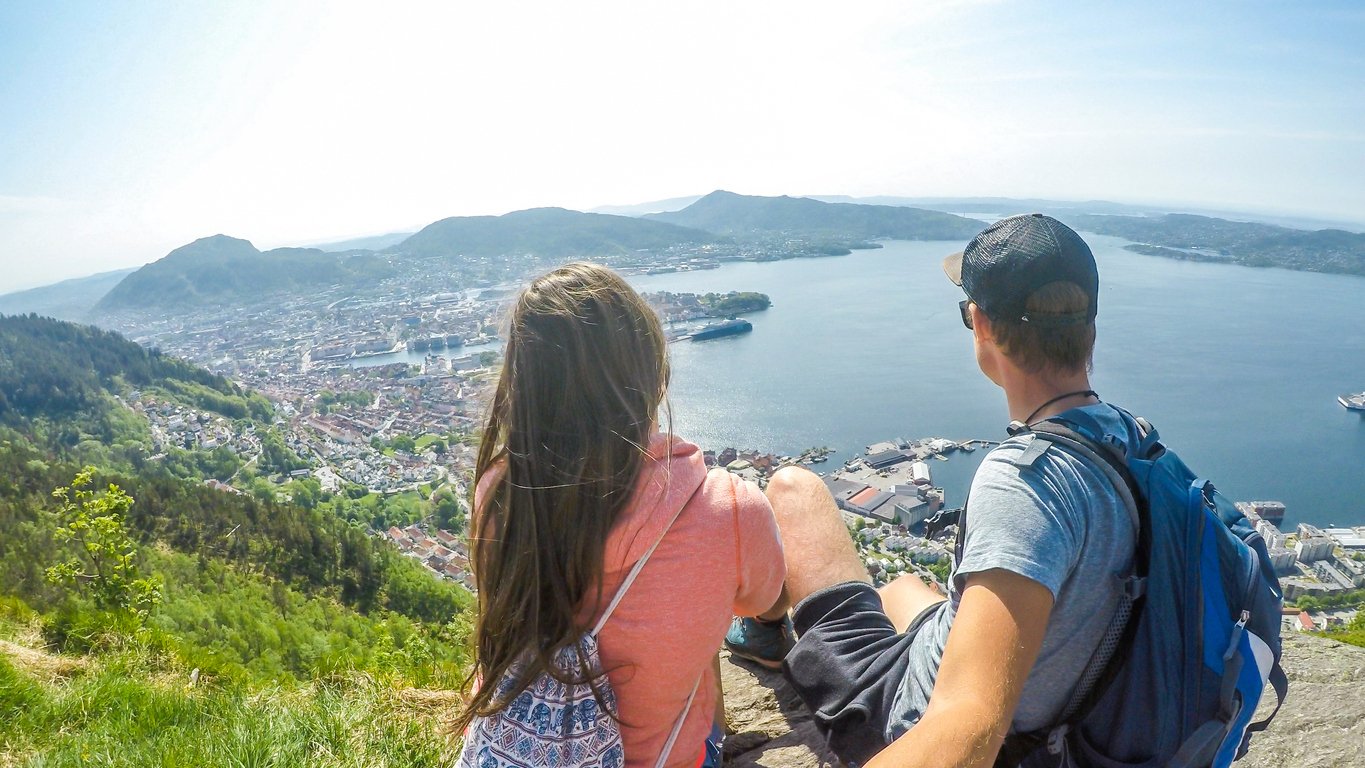
Typical temperature: Around 12–20°C
Daylight: Roughly 17–19 hours early in the month
What to expect: Usually some of the warmest weather of the year, with rain still possible
Good for: Hiking, fjords, kayaking, biking and almost every summer activity
Pack: Summer layers and a waterproof jacket
July is summer in Bergen, but "Norwegian summer" is the important part of that sentence.
This is generally one of the warmest periods of the year, and pleasant days can feel genuinely warm. But don't arrive expecting Mediterranean weather.
Cool days are possible. Rain is possible. A sunny morning can become a wet afternoon very quickly.
What July does reward you with is an enormous amount of usable daylight. At the start of the month, Bergen still receives nearly 19 hours between sunrise and sunset.
This all makes July ideal active trips. There are a million things to do in Bergen at this time: you can spend a full day exploring the fjords, trekking, rafting or biking and still return to town with daylight left.
The trade-off is popularity. July sits firmly inside Norway's main summer travel season, so you'll generally share those long days with more visitors.
Bergen Weather in August
Typical temperature: Around 12–19°C
Daylight: Roughly 14–17 hours
What to expect: Mild summer weather with gradually shorter days
Good for: Fjords, hiking, kayaking and outdoor adventures
Pack: Layers and waterproof outerwear
August is still very much summer in Bergen.
Temperatures will still be mild, the landscapes green and most summer outdoor activities are in full swing.
Compared with June and early July, though, you'll start noticing that the evenings are becoming shorter.
Early August can feel thoroughly summery. By late August, you may catch the first hints that autumn isn't very far away.
Rain remains part of the picture throughout.
For travellers who want to hike the best trails in Bergen, kayak or take day trips from Bergen, August remains one of the most versatile months of the year. Just keep a waterproof jacket within reach.
Bergen Weather in September
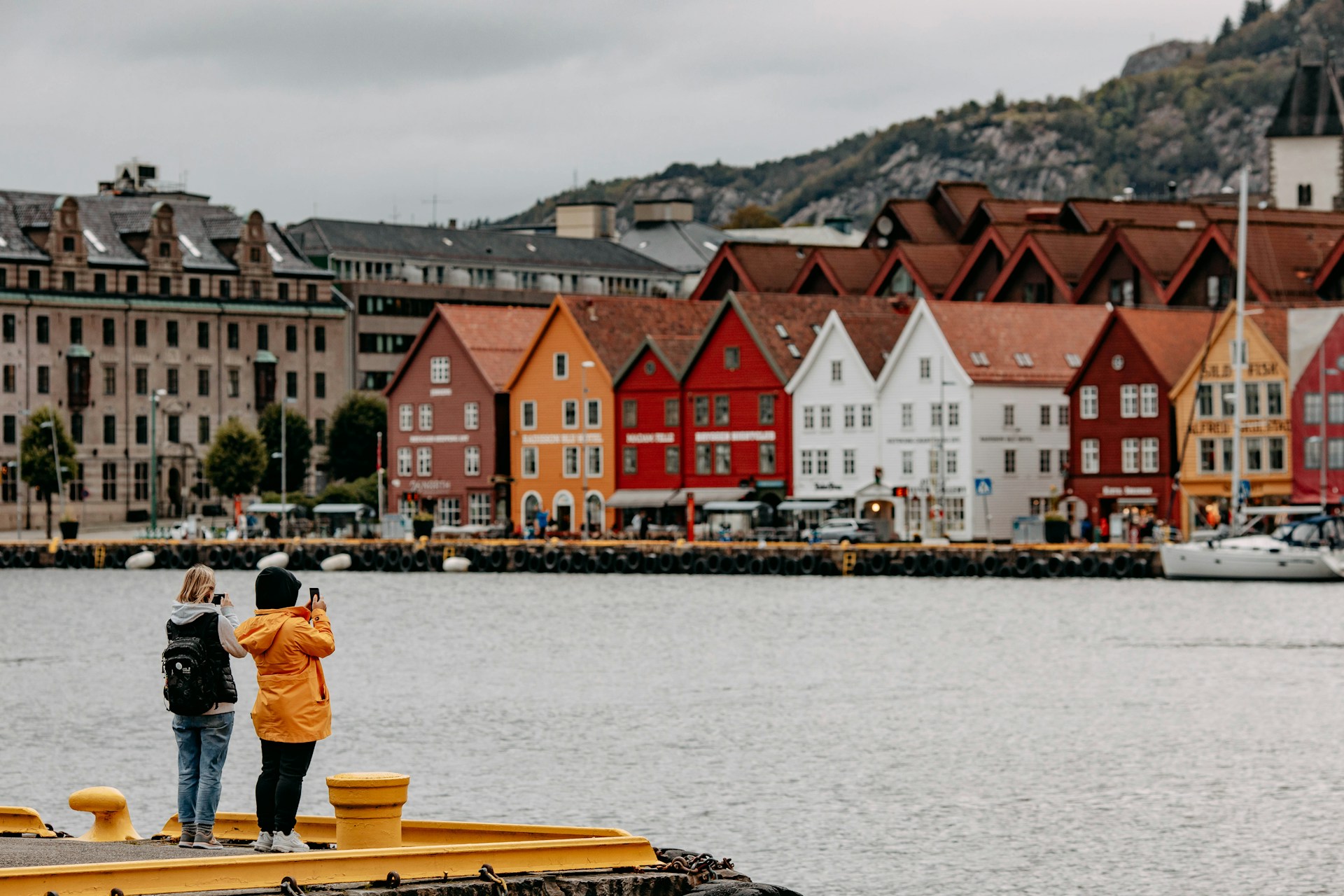
Typical temperature: Around 9–16°C
Daylight: Roughly 11–14 hours
What to expect: Cooler temperatures, increasing rain and early autumn colour
Good for: Quieter travel, autumn scenery and outdoor activities early in the month
Pack: Waterproofs and warmer layers
September is the bridge between summer and autumn.
Early in the month, the conditions can still feel pleasantly summery. Daylight will be generous and many outdoor activities will stay very accessible.
As September progresses, things change quickly: temperatures fall, the days are shorter and wetter Atlantic weather becomes increasingly noticeable.
The daylight difference within the month alone is significant. Around the beginning of September, Bergen still has roughly 14 hours between sunrise and sunset; by late September, that has fallen substantially.
The reward is atmosphere.
Autumn colours begin appearing while visitors are disappearing and the surrounding mountains and fjords can look spectacular under dramatic September skies.
If you're choosing September specifically for outdoor activities, here’s a local tip on the house: early September and late September can feel like quite different trips.
Bergen Weather in October
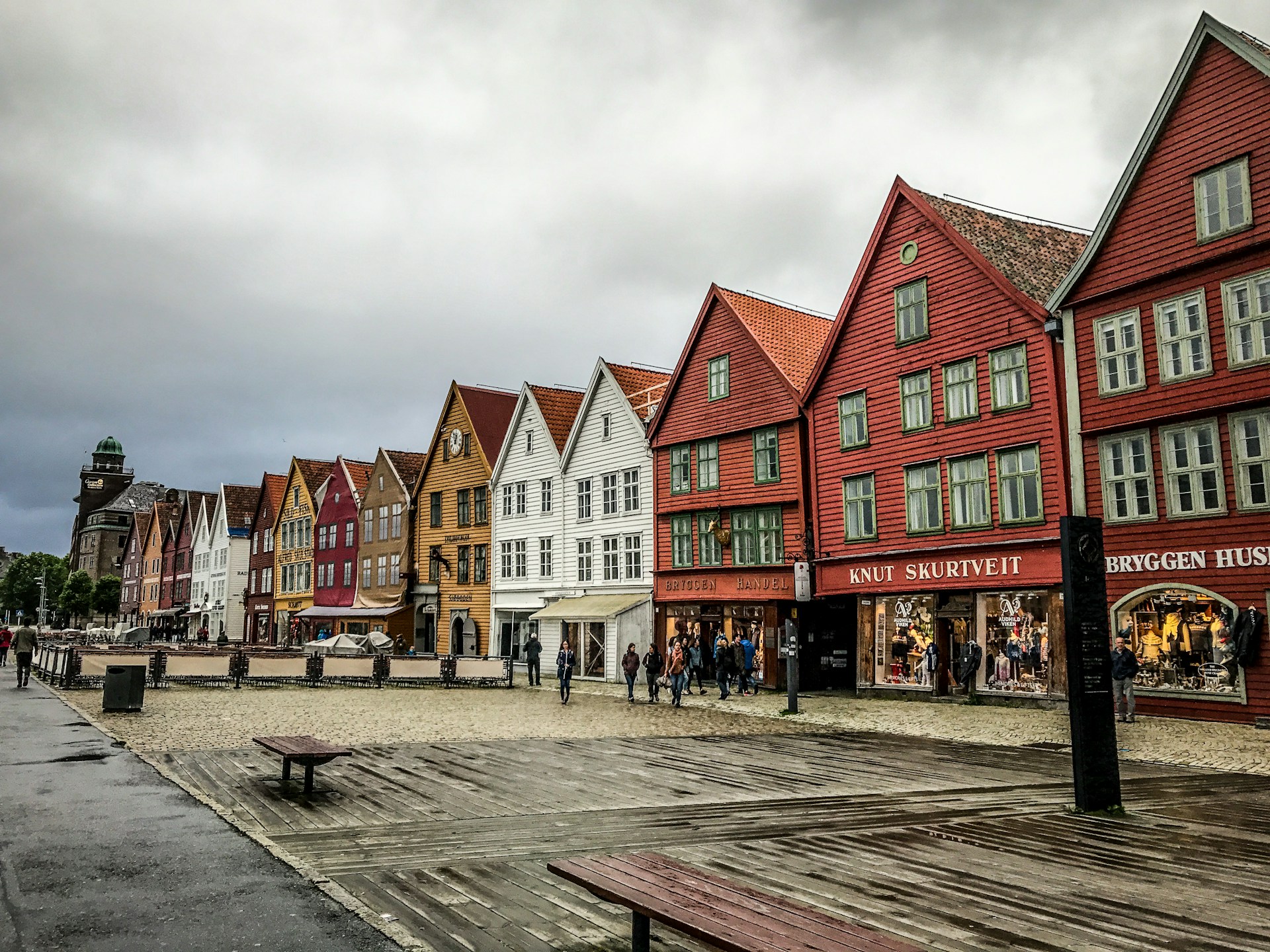
Typical temperature: Around 6–12°C
Daylight: Roughly 9–11 hours
What to expect: Cool, wet autumn weather and rapidly shortening days
Good for: Autumn atmosphere, city breaks and flexible sightseeing
Pack: Proper waterproofs, warm layers and good footwear
By October, Bergen is unmistakably in autumn.
Temperatures are cooler, daylight is disappearing quickly and wet weather becomes a much bigger part of trip planning.
This doesn't make October a write-off. Far from it.
The low clouds that hang around the mountains, powerful waterfalls and autumn colours can make Western Norway incredibly atmospheric.
But outdoor plans need more flexibility than they do in midsummer.
This is where waterproofing becomes less of a suggestion, and more of a survival thing.
If you're planning long days outdoors, we highly recommend you build alternatives into the itinerary and not assume that conditions will stay the same from morning until evening.
Bergen Weather in November
Typical temperature: Around 3–8°C
Daylight: Roughly 7–9 hours
What to expect: Short, cool and often wet days
Good for: Quiet city travel and transitioning into Norway's winter season
Pack: Warm layers and serious waterproofs
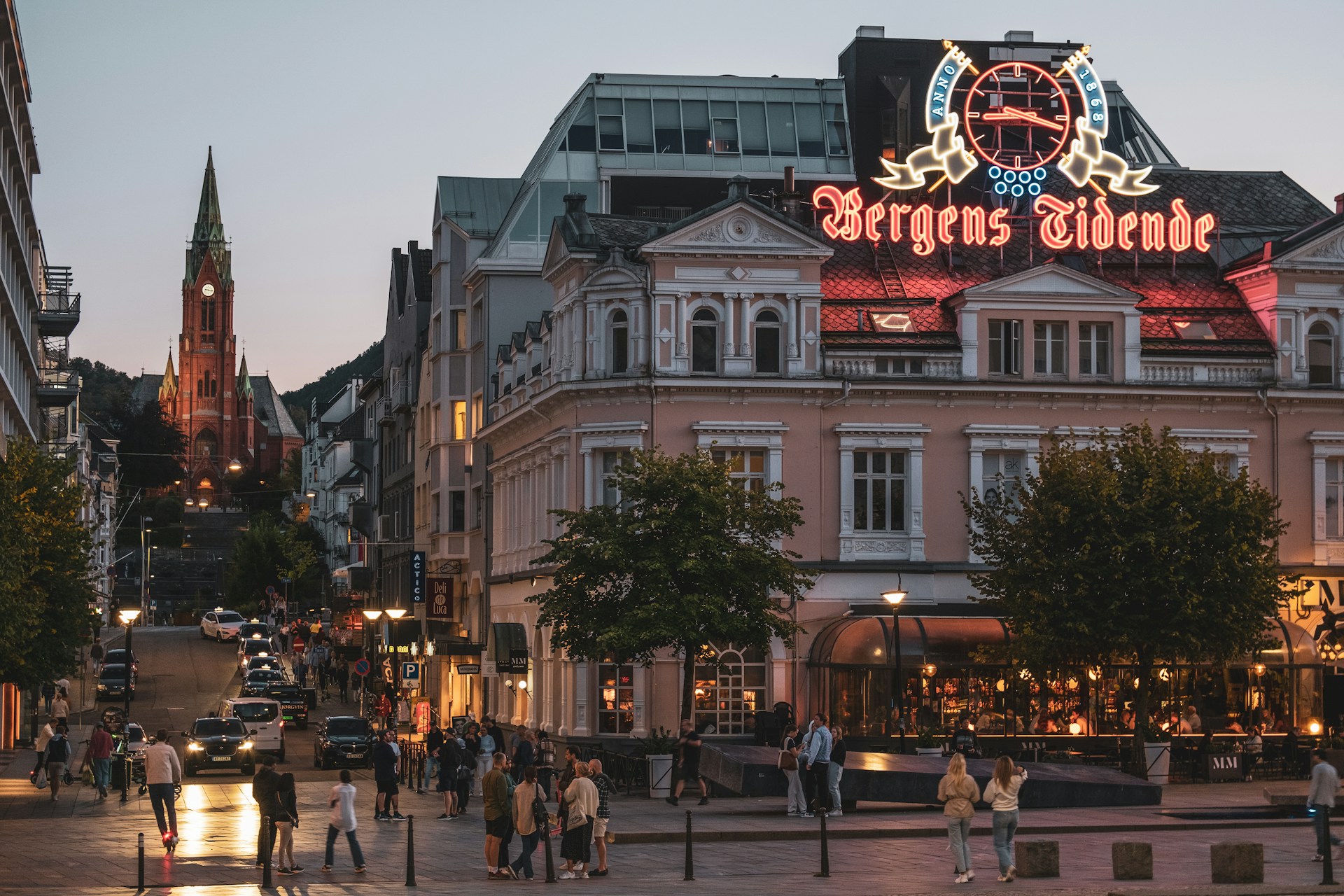
November probably isn't the month travel brochure authors write about.
It's dark. It's often wet. Temperatures are dropping, but still, Bergen itself may still not have the snowy winter appearance many visitors expect.
You might get rain.
You might get sleet.
You might get snow.
Sometimes you'll get a little of everything.
The only upside is that Bergen is considerably quieter than during summer, while winter is beginning to take hold in the surrounding mountains.
If you're travelling specifically for outdoor experiences, you'll need to pay much more attention to daylight and conditions than you would in July.
But if Bergen is the starting point for a wider winter journey through Norway, November marks the beginning of a very different travel season.
Bergen Weather in December

Typical temperature: Around 1–6°C
Daylight: Around 6 hours near midwinter
What to expect: Very short days, winter weather and a mixture of rain, sleet and snow
Good for: Christmas atmosphere and combining Bergen with winter landscapes
Pack: Warm waterproof clothing and good footwear
December is Bergen's darkest days.
Around the winter solstice, there are only about six hours between sunrise and sunset. This is generally when many people start planning their northern lights tours.
(before you ask, no, you probably won’t see the Northern Lights in Bergen, you'll have to head north for that).
That changes how you travel.
Rather than squeezing sightseeing into a huge summer day, you'll want to think more carefully about when you're outdoors and use the darker hours for restaurants, cafés and indoor attractions.
There's also an important expectation to set:
Bergen in December does not guarantee a snowy Christmas city.
Snow certainly happens, but Bergen's coastal climate means rain and sleet are also completely normal.
Head towards higher elevations or further inland and your chances of finding proper winter landscapes improve dramatically.
Bergen Weather by Season
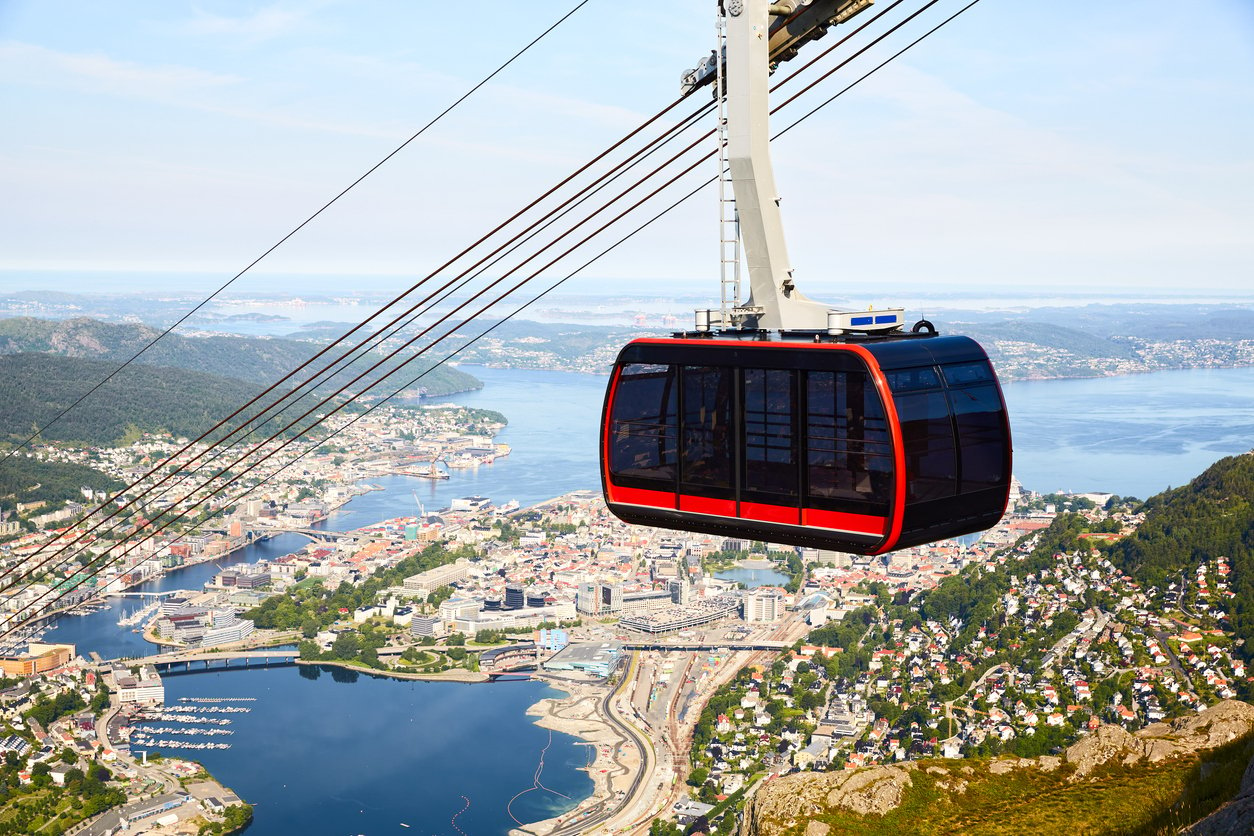
If twelve monthly forecasts are more detail than you need, Here’s a seasonal breakdown for a simpler way to choose when to travel.
Bergen in Spring: March to May
Spring starts uncertainly and finishes spectacularly bright.
March can still feel wintry. April becomes increasingly springlike. By May, the landscape is green and the days are remarkably long.
It's a good period for travellers who want fewer peak-season crowds but still want enough daylight for exploring.
The main trade-off is unpredictability.
Spring can give you sunshine, rain, cold air and mild temperatures, sometimes within a surprisingly short period.
Bergen in Summer: June to August
Summer brings Bergen's longest days and generally mildest temperatures.
It's the easiest season for building an active itinerary around hiking, kayaking, biking and exploring the fjords.
The evenings are exceptionally light around midsummer, giving you far more flexibility than you'll have in winter.
But remember:
Summer does not mean rain-free.
A waterproof jacket belongs in your bag in July just as much as it does in October.
Bergen in Autumn: September to November
Autumn becomes progressively cooler, darker and wetter.
September can still offer plenty of usable daylight and mild conditions, while November feels much closer to winter.
For photographers and travellers who enjoy dramatic landscapes, autumn can be beautiful.
For travellers whose entire itinerary depends on long days of predictable outdoor weather, it requires more flexibility.
Bergen in Winter: December to February
Winter in Bergen means short days, cool temperatures and plenty of precipitation.
What it doesn't necessarily mean is continuous deep snow.
The city can experience snow, but rain and sleet are also common possibilities around sea level.
For more reliable snow, look towards the surrounding mountains.
That contrast can actually work in your favour: spend time exploring Bergen, then travel inland or higher for proper winter activities.
When Is the Best Time to Visit Bergen?
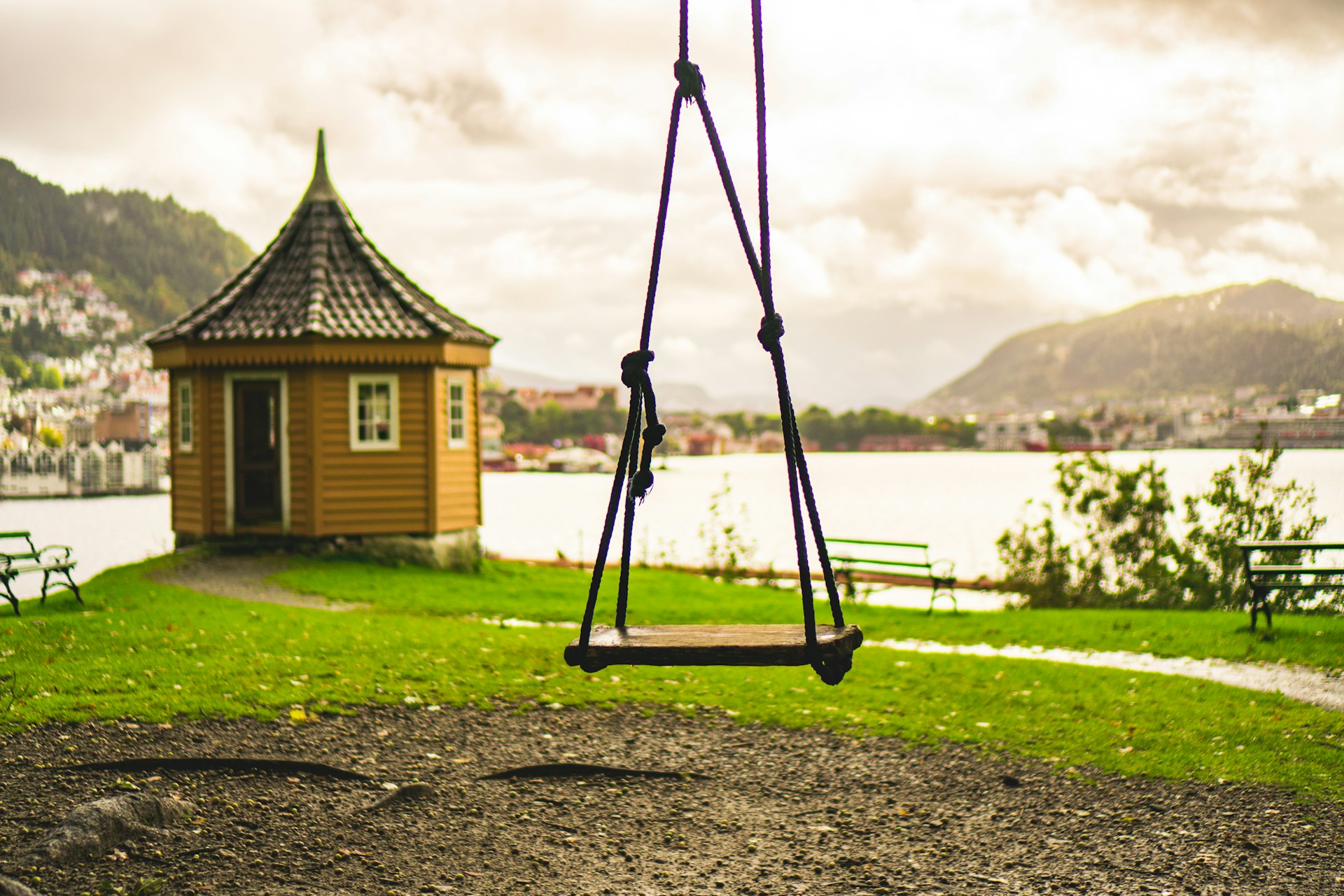
As always, it all depends on what you want to do.
Best for hiking and outdoor adventures
June to August will have the longest days, generally mild temperatures and broad access to summer activities.
Late spring and early autumn can also work well depending on the activity and conditions.
Best for long daylight
May, June and July.
June is particularly impressive, with more than 18 hours between sunrise and sunset around midsummer.
Best for fewer crowds
Look towards spring and autumn.
May and September can be particularly interesting if you want plenty of daylight without travelling right in the middle of peak summer.
Best for winter atmosphere
December to February.
Just remember that snowy Bergen itself isn't guaranteed. If snow is important, combine the city with destinations further inland or at higher elevation.
Best for fjord adventures
Late spring through summer gives you long days and excellent access to the wider fjord region.
But the fjords don't disappear when summer ends.
Different seasons simply produce very different experiences.
The best month for Bergen depends less on finding perfect weather and more on deciding what you want to do.
What to Wear in Bergen by Season
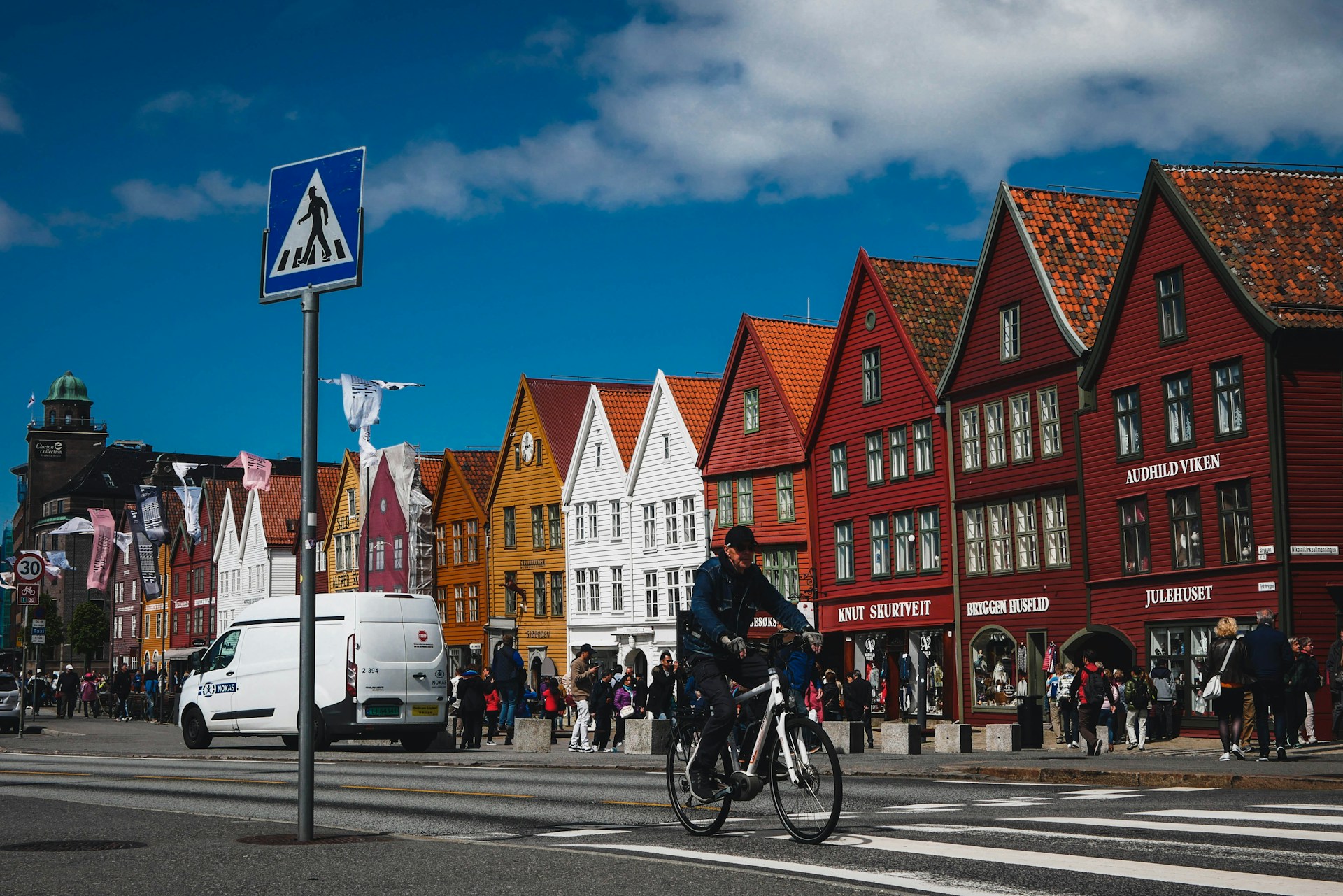
You don't need an enormous wardrobe to deal with Bergen weather.
You do need layers.
Spring
Bring layers you can add and remove throughout the day, along with a waterproof outer shell.
Early spring can still feel wintry, particularly outside the city and at elevation.
Summer
Pack light layers, comfortable walking shoes and a waterproof jacket.
Even in July, don't assume you'll spend every day in shorts and a T-shirt.
If you're heading into the mountains, bring warmer clothing than you think you'll need.
Autumn
Warm layers and reliable waterproof clothing become increasingly important.
Water-resistant shoes or boots are particularly useful if you're spending a lot of time outdoors.
Winter
Bring warm base and mid-layers, a waterproof outer layer, hat, gloves and suitable footwear.
If your trip extends into the mountains, your clothing needs may be very different from what you'd use for walking around central Bergen.
And whatever season you're visiting:
Pack a waterproof layer.
It's Bergen.
Does Rain Ruin a Trip to Bergen?
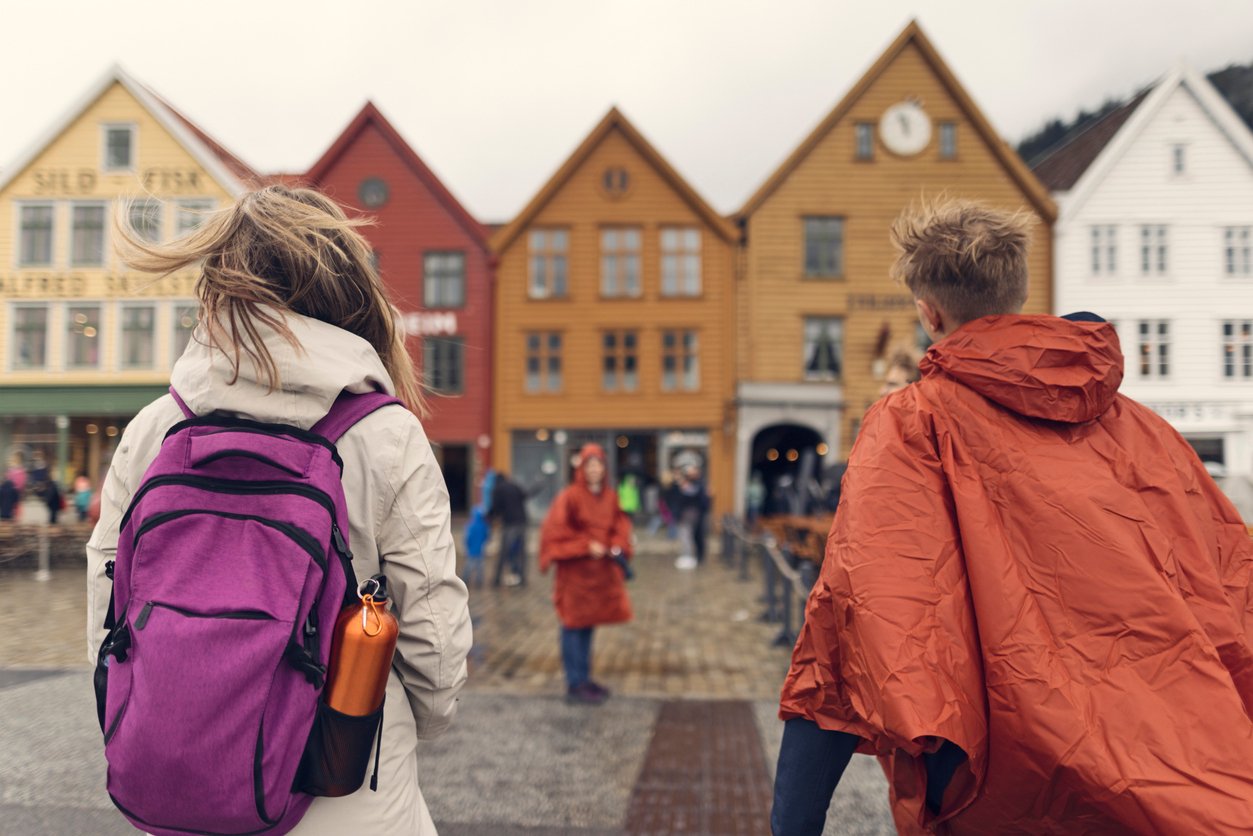
Nope, but arriving completely unprepared for it might.
Bergen's rain is part of the environment that creates the landscape people travel here to see.
The mountains are green for a reason. The waterfalls don't appear from nowhere.
And a grey forecast doesn't necessarily mean eight uninterrupted hours of heavy rain.
Weather can change quickly on Norway's west coast.
The more useful strategy is to bring proper clothing, keep some flexibility in your itinerary and make decisions based on actual local conditions rather than abandoning a day because a weather app displays a rain symbol.
There are also days when moody weather makes the fjords look even better.
Cloud sits low on the mountains. Waterfalls appear everywhere. Mist moves across the landscape.
It might not be postcard-blue-sky Norway.
But it's still very much Norway.
If you wait for a completely dry week before visiting Bergen, you may be waiting a while.
The goal isn't to avoid Bergen weather.
It's to arrive prepared for it.
Bergen vs the Rest of Norway: Don't Use One Forecast for Your Whole Trip
This is one of the easiest mistakes to make when planning a Norway holiday.
You check Bergen.
Rain.
You assume your entire trip is going to be wet.
But Norway is an extremely varied country, and weather can change dramatically over surprisingly short distances.
Travel east from Bergen towards Voss, for example, and you're moving away from the immediate coast and into a different landscape.
Climb higher into the mountains and conditions change again.
Travel all the way to Northern Norway and Bergen's forecast tells you very little about what you'll experience there.
The same applies within a single day.
It can be raining in Bergen while conditions somewhere further inland are completely different.
So if your itinerary includes Bergen, Voss, the fjords and other parts of Norway, check forecasts for each destination individually.
Don't let one rain cloud over Bergen dictate the packing list for the whole country.
Frequently Asked Questions About Bergen Weather
What is the weather like in Bergen, Norway?
Bergen has a mild maritime climate. Summers are generally cool to mild, winters are relatively mild for its latitude, and precipitation is common throughout the year. Weather can also change quickly because of the city's coastal and mountainous setting.
What is the warmest month in Bergen?
July is generally among Bergen's warmest months, with August also typically mild. Even during summer, however, temperatures are usually comfortable rather than consistently hot.
What is the coldest month in Bergen?
January and February are generally the coldest period of the year. Bergen's coastal climate keeps winters milder than many inland Norwegian destinations, so temperatures around sea level frequently sit close to or above freezing.
What is the rainiest month in Bergen?
Autumn is generally Bergen's wettest period, with September through November typically bringing substantial precipitation. That doesn't mean other months are dry — rain is possible throughout the year.
Does it rain every day in Bergen?
No. Bergen is famously rainy, but that doesn't mean it rains continuously every day. Conditions can change rapidly, and a day with rain in the forecast can still contain long dry periods.
Does it snow in Bergen?
Yes, Bergen can receive snow during winter, but snow cover in the city isn't guaranteed. Its coastal climate means winter precipitation often falls as rain or sleet as well. Snow is generally more reliable in the surrounding mountains and further inland.
Is Bergen cold in July?
Usually not by Norwegian standards, but it may feel cool if you're expecting a hot European summer. July is one of Bergen's warmest months, yet cool and rainy days remain possible.
Is July or August better for Bergen?
Both can be excellent. July gives you slightly longer days and sits around the warmest part of the year, while August still offers mild temperatures and plenty of daylight. Your choice may depend more on your wider itinerary than on a significant weather difference.
What should I wear in Bergen?
Layers and a waterproof outer jacket are useful throughout the year. In summer, combine lighter clothing with something warm and waterproof. During winter, add insulating layers, gloves, a hat and appropriate footwear.
When is the best time to visit Bergen?
For long days and outdoor adventures, late spring through summer is particularly convenient. Spring and autumn can suit travellers looking for fewer crowds, while winter offers a completely different atmosphere and access to winter experiences outside the city.
How many hours of daylight does Bergen get in winter?
Around the shortest part of the year, Bergen gets approximately six hours between sunrise and sunset. By comparison, early June brings more than 18 hours.
Does Bergen have the Midnight Sun?
No.
Bergen lies south of the Arctic Circle, so the sun still sets during summer.
However, the days become extremely long around midsummer. On 1 June 2026, for example, sunrise was at approximately 4:24 am and sunset at 10:50 pm.
If experiencing the true Midnight Sun is important to you, you'll need to travel further north.
Don't Just Check the Bergen Weather. Get Out in It.
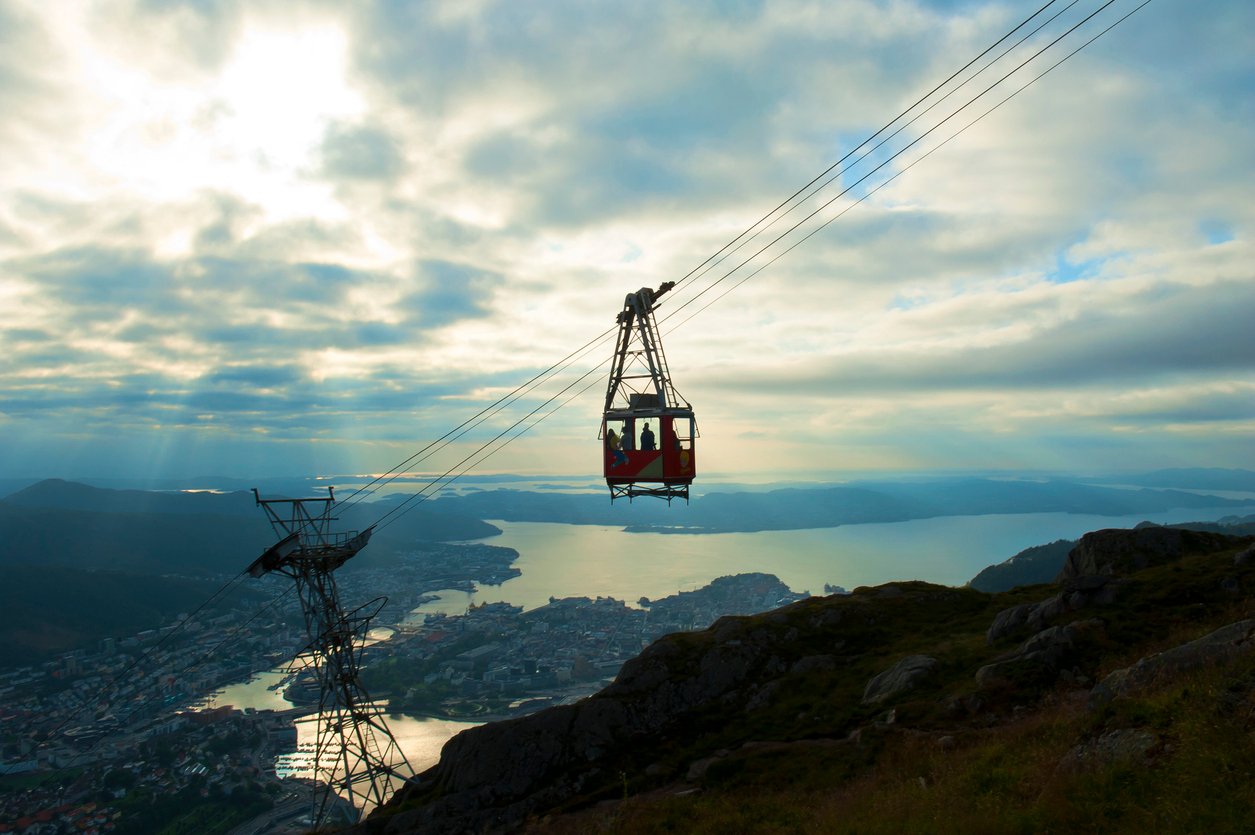
Bergen's weather is part of travelling in Western Norway.
Some days are bright and clear. Others bring low cloud, rain and waterfalls pouring down the mountainsides.
And sometimes you'll get both before lunch.
You don't need perfect weather to have a great adventure here. You need the right clothing, a flexible plan and somewhere worth exploring.
But you didn't come all the way to Norway to sit inside waiting for it to stop! You came for the fjords and mountains of Western Norway packed with kayaking, hiking, rafting, biking and multi-day adventures.