Planning to explore our homeland by bicycle? Riding through Bergen, cycling around Voss, taking an e-bike into the mountains? Knowing the local cycling rules in Norway is vital if you want to travel safely and confidently (and why wouldn't you?).
The most important cycling rule in Norway is that bicycles are treated as vehicles. When riding on the road, cyclists must generally follow the same traffic rules as drivers. This includes stopping at red lights, obeying signs and giving way where required.
Norway also has a few rules that visitors may find surprising. Cycling on pavements is permitted under certain conditions, bicycle helmets are recommended rather than legally mandatory, and drivers do not automatically have to stop for someone cycling across a pedestrian crossing.
That's the short of it; here's all you need to know before setting off.
Cycling rules in Norway: The essentials
If you're short on time, start with our quick overview:
|
Rule |
What cyclists need to know |
|
Riding on roads |
Allowed unless signs or road restrictions prohibit cycling |
|
Traffic lights |
Cyclists must obey the signals that apply to their lane |
|
Cycling on pavements |
Permitted when pedestrians are not obstructed or endangered |
|
Pedestrian crossings |
Drivers do not automatically have to yield if you ride across |
|
Bicycle helmets |
Recommended, but not generally required by law |
|
Bicycle equipment |
Brakes, reflectors, a bell and appropriate lighting are required |
|
E-bikes |
Standard pedal-assisted e-bikes are limited to 250 W and assistance up to 25 km/h |
|
Motorways |
Cycling is prohibited |
|
Tunnels |
Some allow cycling; others prohibit it |
|
Off-road cycling |
Generally possible on suitable routes, subject to land-access and local restrictions |
These are the general rules. Always follow local signs, temporary restrictions and instructions from authorities.
Where can you cycle in Norway?
Norway offers everything from city cycle lanes to quiet country roads and mountain trails. The rules depend on where you ride.
Cycling on roads
You can cycle on public roads where cycling is not prohibited.
When sharing the road with motor vehicles, you must follow the applicable traffic rules. This includes stopping at red lights, observing speed limits, signalling turns and giving way at junctions.
At an unmarked junction, the general rule is to give way to traffic approaching from the right unless another priority rule applies.
Ride predictably and position yourself where drivers can see you. On narrow roads, leave enough space to avoid potholes, gravel and other hazards rather than riding dangerously close to the edge.
Cycling in cycle lanes and on cycle paths
Norway distinguishes between cycle lanes marked on the roadway and separate cycle paths.
In a marked cycle lane, you must ride in the same direction as the adjacent traffic and use the lane on the right side of the road.
Separate cycle paths may permit travel in one or both directions. Follow their signs and markings.
On shared pedestrian and cycle paths, keep right, slow down around pedestrians and leave sufficient room when passing.
Can you cycle on pavements in Norway?
Yes. Cycling on pavements and pedestrian paths is allowed, provided you do not obstruct or endanger pedestrians.
When passing people on foot, you should travel at approximately walking speed and no faster than 6 km/h.
If the pavement is crowded, dismount and walk your bicycle.
This is particularly important in busy town centres, where pedestrians may change direction unexpectedly.
Can cyclists use bus lanes?
Cyclists can generally use public transport lanes in Norway.
However, buses have large blind spots, particularly near stops. Avoid riding alongside a bus where the driver may not see you, and watch for passengers entering or leaving the vehicle.
Where is cycling prohibited?
Cycling is prohibited on motorways and wherever signs indicate that bicycles are not permitted.
Restrictions also apply to some tunnels, bridges and other road sections.
Before planning a longer cycling route, check whether your chosen roads and tunnels are open to bicycles. Do not assume that a route suitable for driving is also suitable for cycling.
Right-of-way rules for cyclists in Norway
Understanding who must give way is especially important at intersections and crossings.
Cycling on the road or in a cycle lane
When riding on the road or in a marked cycle lane, cyclists generally follow the same right-of-way rules as other vehicle drivers.
Drivers turning across a cycle lane must also follow the applicable priority rules.
Always make sure other road users have seen you before proceeding.
Cycling across pedestrian crossings
This is one of the most important rules for visitors.
You are allowed to cycle across a pedestrian crossing, but drivers are not automatically required to give way to you.
If you dismount and walk your bicycle across, you are treated as a pedestrian, and drivers must give way accordingly.
At a busy crossing, walking your bike may be the simplest and safest option.
Leaving a cycle path or pavement
When cycling from a separate cycle path, shared path or pavement across or onto another road, you generally have to give way to traffic on that road.
Different rules can apply around entrances and exits to properties or parking areas, so pay attention to the road layout and signs.
Cycling through roundabouts
When entering a roundabout, give way to traffic already circulating where the entry is controlled by give-way signs.
Signal clearly when leaving, and be especially careful when changing lanes.
If a roundabout feels too busy or complicated, you can dismount and use pedestrian crossings where available.
Turning left at intersections
Cyclists can usually turn left in one of two ways.
A direct left turn involves positioning yourself in the appropriate part of the lane and turning when it is safe.
Alternatively, you can cross the junction in two stages: continue straight to the far side, stop, then turn and proceed when the road is clear.
The two-stage approach can be useful at busy intersections.
Bicycle helmet rules in Norway
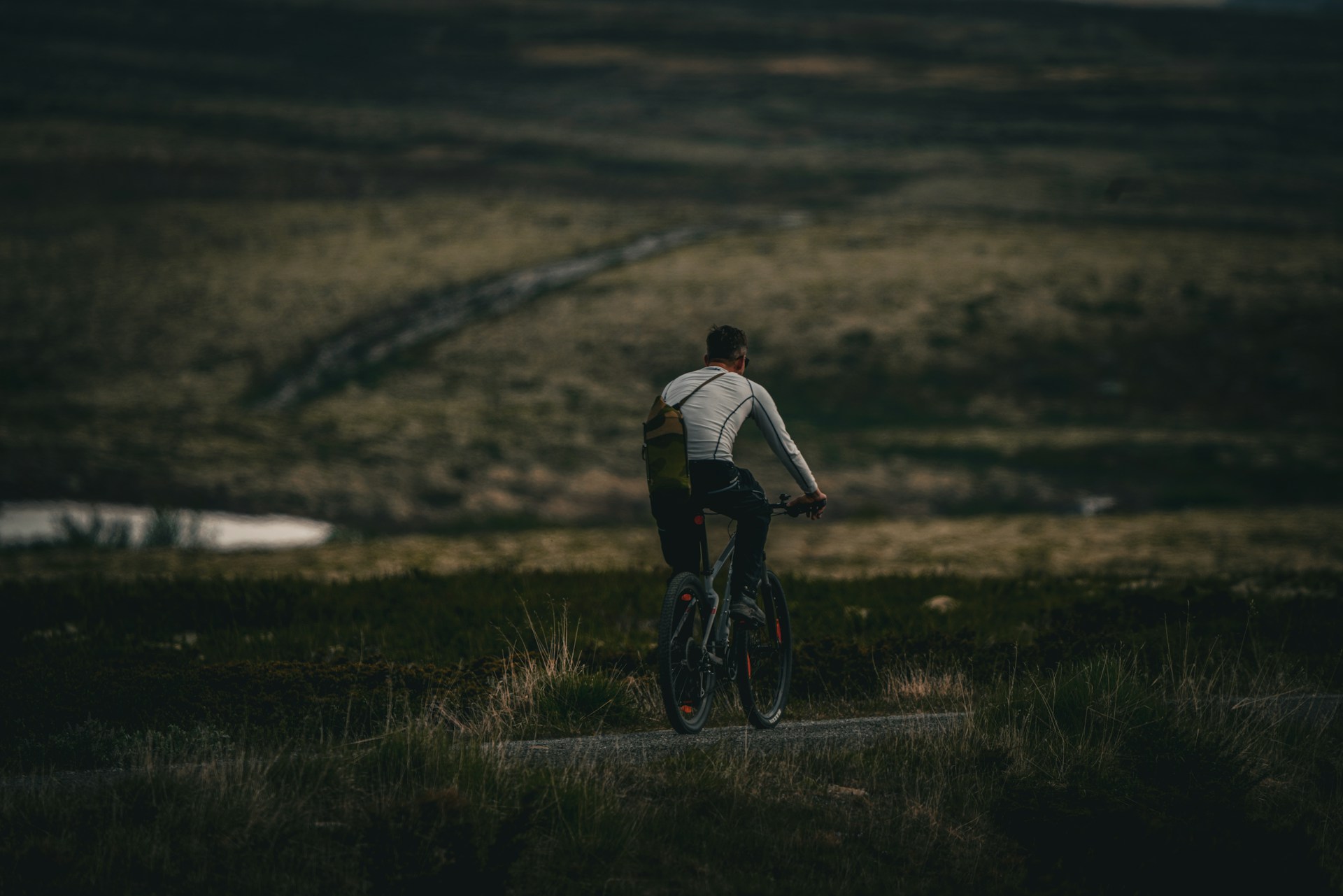
Bicycle helmets are not generally mandatory in Norway, including for adult cyclists.
However, wearing one is strongly recommended.
A properly fitted helmet can reduce the severity of head injuries in a fall or collision. Choose a helmet that meets an appropriate bicycle safety standard, fits securely and has its chin strap fastened.
For children, helmets are particularly important.
Even when a helmet is not legally required, a guided cycling tour or rental operator may make one a condition of participation.
Required bicycle equipment in Norway
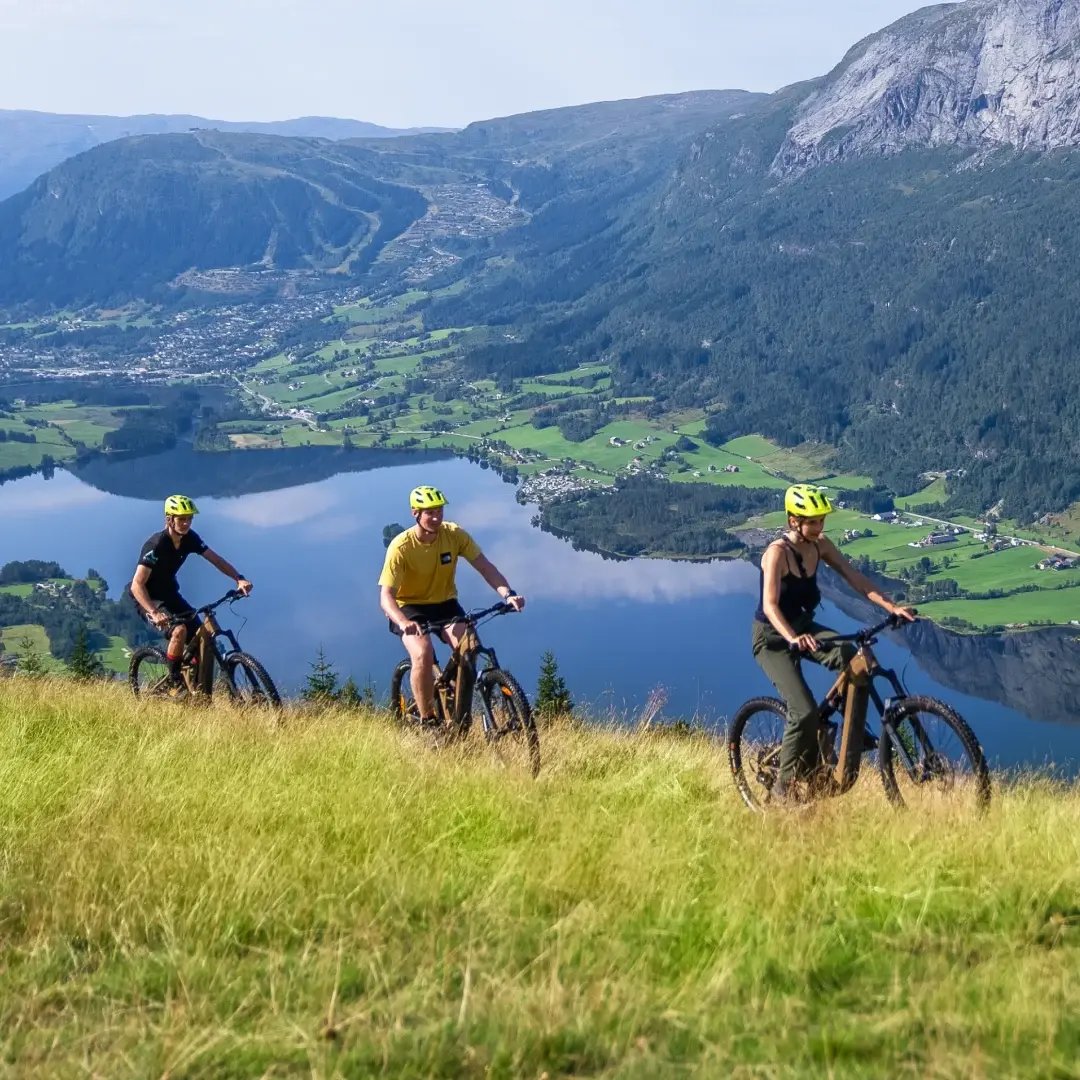
Norwegian regulatory bodies set minimum technical requirements for bicycles, including ordinary bicycles and qualifying e-bikes.
Before riding, check that your bicycle has:
- Two independent brakes: one acting on the front wheel and one on the rear.
- A rear red reflector: clearly visible at the back of the bicycle.
- Pedal reflectors: approved white or yellow reflectors on both sides of the pedals, or on the pedal arms where applicable.
- A bell: to alert other road users when necessary.
- Front and rear lights: appropriate lights fitted to the bicycle for riding in darkness or low visibility.
The front light must emit white or yellow light, while the rear light must emit red light. The lights must meet the applicable visibility requirements, including being clearly visible from 300 metres.
Flashing lights must meet the required flashing frequency.
Reflective clothing, a high-visibility jacket and mirrors can improve safety, although they are not generally mandatory bicycle equipment.
For cycling in western Norway, we recommend carrying lights even on a daytime ride. Rain, tunnels and changing weather quickly reduce visibility. And if you're staying in the Voss & Bergen area, we've got rentals for everything you need.
E-bike rules in Norway

Electric bikes are popular for exploring Norway's hills and longer routes, but not every electrically powered bicycle qualifies as an ordinary bicycle under Norwegian law.
To be treated as a standard e-bike, the motor must generally:
- Have a maximum nominal continuous rated power of 250 watts.
- Provide assistance while the rider pedals.
- Stop providing assistance when the bicycle reaches 25 km/h.
- Provide motor-only start assistance no faster than 6 km/h.
You can still cycle faster than 25 km/h using your own effort or when travelling downhill. The limit concerns motor assistance, not the bicycle's absolute speed.
If an electric bicycle exceeds the permitted motor power or assistance limits, it may fall into another vehicle category, such as a moped, with additional legal requirements.
If you're bringing your own e-bike to Norway, check its specifications before travelling. Some models sold in other countries may not qualify as ordinary bicycles under Norwegian regulations.
Can you ride an e-bike off-road in Norway?
Off-road access for e-bikes requires particular care.
Norway's right-to-roam rules provide broad access for traditional cycling in suitable uncultivated areas, but motor-assisted cycling is subject to additional rules and restrictions.
Some trails, protected areas and private routes may prohibit e-bikes or restrict where they can be used.
Before heading into the mountains, check the rules for your intended route rather than assuming that every trail open to ordinary bicycles is also open to e-bikes.
Cycling in Norway's countryside and mountains
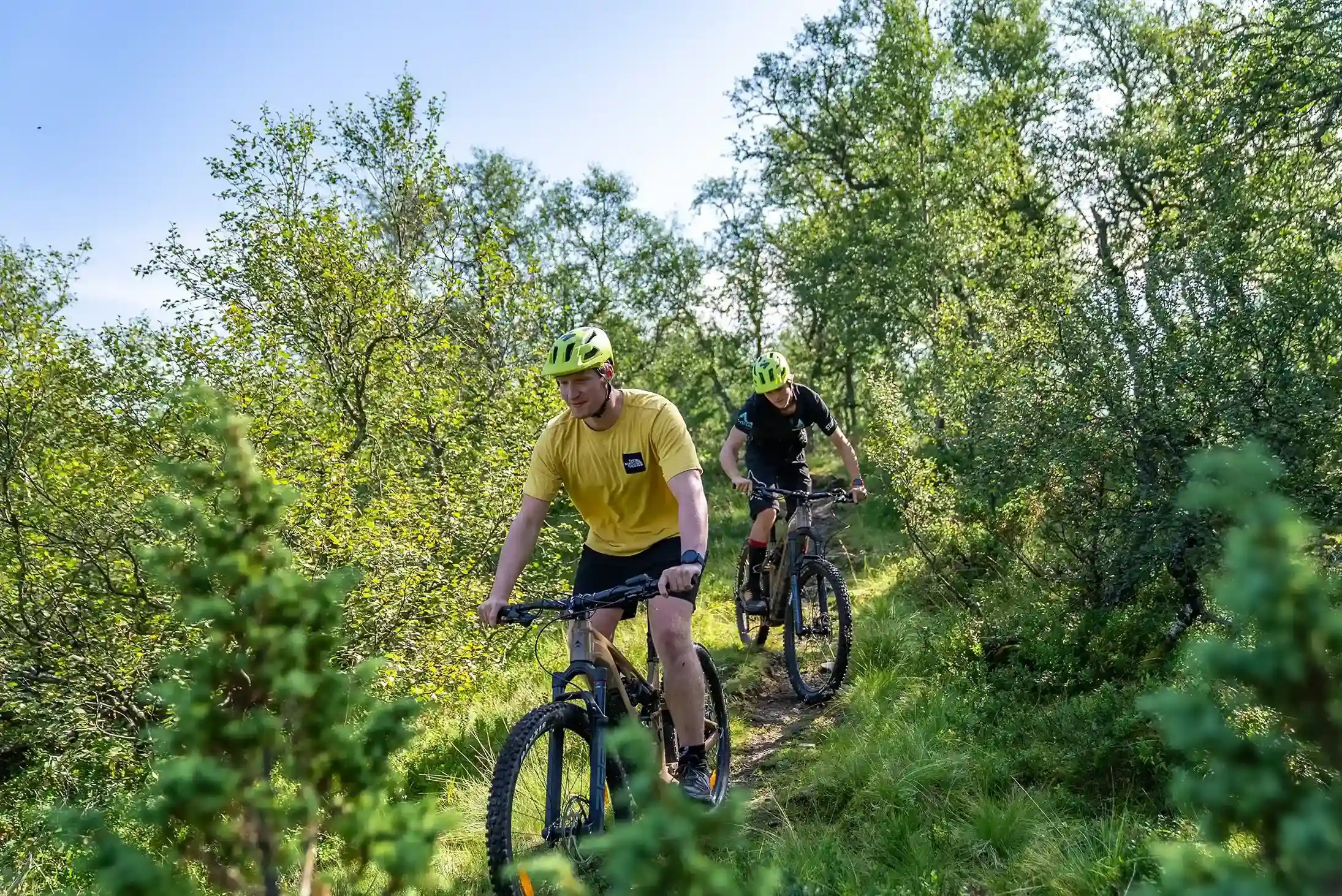
Norway's landscapes make it an excellent destination for cycling, but mountain and rural routes require more planning than an urban ride.
The right to roam, known as allemannsretten, allows traditional cycling on many suitable paths and tracks in uncultivated land. However, access is not unlimited.
Respect cultivated land, avoid damaging trails and follow restrictions in protected areas. Some routes may be closed or unsuitable because of environmental protection, land use or seasonal conditions.
Choose routes that match your experience, particularly when mountain biking. Wet rock, exposed terrain and steep descents can become hazardous even when the route looks straightforward on a map.
Cycling through tunnels in Norway
Norway has an extensive network of road tunnels, and some are unsuitable or closed to cyclists.
A tunnel may be prohibited to bicycles even when it appears on a standard road-navigation route.
Before setting off, check tunnel restrictions along your entire journey. Where cycling is permitted, use appropriate lights and make yourself visible.
Remember that tunnel conditions can be very different from those outside. Visibility may be limited, traffic noise can make approaching vehicles difficult to hear, and some tunnels have little or no shoulder.
Never enter a tunnel marked as prohibited to cyclists.
Cycling with children in Norway
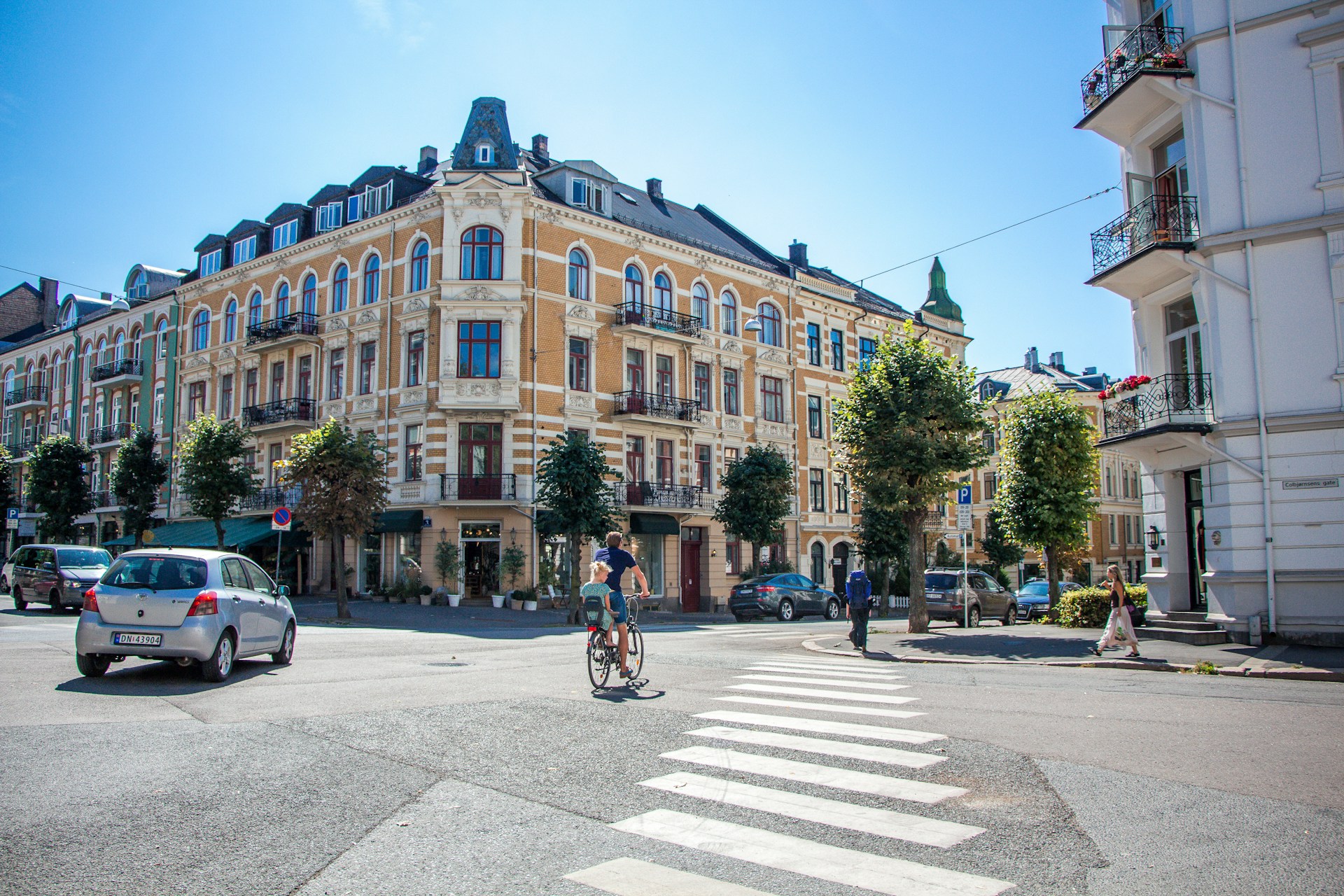
Norway has specific rules for carrying children on bicycles and in bicycle trailers.
On a bicycle, you may generally carry up to two children under six, or one child under ten, using suitable equipment.
Separate rules apply to bicycle trailers, including the number and age of passengers and the manufacturer's maximum permitted load.
Children riding their own bicycles should be capable of understanding basic traffic rules and handling the route safely.
For family cycling, choose quieter roads, suitable cycle paths and distances that match the youngest rider's abilities.
Around Voss, gentler routes can provide a more comfortable introduction than busy roads or technical mountain trails.
Other cycling rules visitors should know
Cycling on one-way streets
One-way restrictions generally apply to cyclists.
Some streets have an additional sign indicating that cyclists are exempt and may ride against the direction of motor traffic.
Look for the Norwegian wording sykkel unntatt, meaning cyclists excepted.
Do not assume that every one-way street allows two-way bicycle traffic.
Overtaking other vehicles
Cyclists generally overtake on the left.
In certain circumstances, cyclists may pass cars and other vehicles on the right, such as when traffic is stationary or moving slowly.
However, overtaking another cyclist or an electric scooter should be done on the left.
Leave sufficient space and watch for vehicle doors opening or drivers turning unexpectedly.
Cycling after drinking alcohol
Norway does not apply the same fixed blood-alcohol limit to ordinary cycling as it does to driving a car.
However, cyclists must still be capable of riding safely and must not create danger for themselves or others.
Cycling while impaired can have legal consequences. The safest approach is not to ride after drinking enough alcohol to affect your judgement, balance or reactions.
Can cyclists be fined in Norway?
Yes. Cyclists can receive fines for traffic violations.
Serious offences may also be reported to the police.
Common situations worth avoiding include ignoring red lights, failing to give way and riding in prohibited areas.
Best time to go cycling around Voss and Fjord Norway

Western Norway offers an excellent mix of road cycling, e-biking and mountain biking.
Around Voss, you can find valley scenery, lakes, mountain roads and access to the wider fjord region.
Late spring through early autumn is generally the most practical period for many cycling and mountain biking trips around Voss, particularly when longer daylight hours and milder conditions are priorities.
June, July and August are useful starting points for planning a summer cycling holiday, while May and September can also work for suitable routes.
However, mountain conditions vary considerably with elevation. Snow can remain on higher routes well after the valley has become green, and autumn weather can change quickly.
Check the specific route, local forecast and tour operating dates before choosing when to visit.
If you want to experience the area with local guidance, explore Outdoor Norway's cycling and mountain biking experiences around Voss. A guided trip can help you choose terrain that matches your ability while getting more out of the surrounding landscape.
Common questions about cycling rules in Norway
Is wearing a bicycle helmet mandatory in Norway?
No. Bicycle helmets are not generally required by law for ordinary cycling, but they are strongly recommended for both adults and children.
Can you ride a bicycle on the pavement in Norway?
Yes, provided you do not obstruct or endanger pedestrians. When passing people on foot, travel at approximately walking speed and no faster than 6 km/h. Dismount if the pavement is crowded.
Do cars have to stop for cyclists at pedestrian crossings?
Not automatically. If you ride across a pedestrian crossing, you are not treated as a pedestrian. If you dismount and walk your bicycle across, drivers must give way to you as a pedestrian.
Are e-bikes legal in Norway?
Yes. Standard pedal-assisted e-bikes that meet the applicable motor power and assistance limits are treated as bicycles. More powerful or faster motor-assisted models may be subject to different rules.
Can you cycle on roads in Norway?
Yes, on roads where cycling is permitted. You must follow the applicable traffic rules and road signs. Cycling is prohibited on motorways and certain other road sections.
Can you cycle through tunnels in Norway?
Some tunnels allow bicycles, while others prohibit them. Check restrictions before planning your route and use appropriate lighting where cycling is permitted.
Is Norway good for cycling holidays?
Yes. Norway offers scenic roads, cycle routes and mountain biking opportunities. The best destination and season depend on your preferred terrain, cycling experience and local conditions.
Follow the Cycling Rules in Norway, and You’ll Have a Great Time!
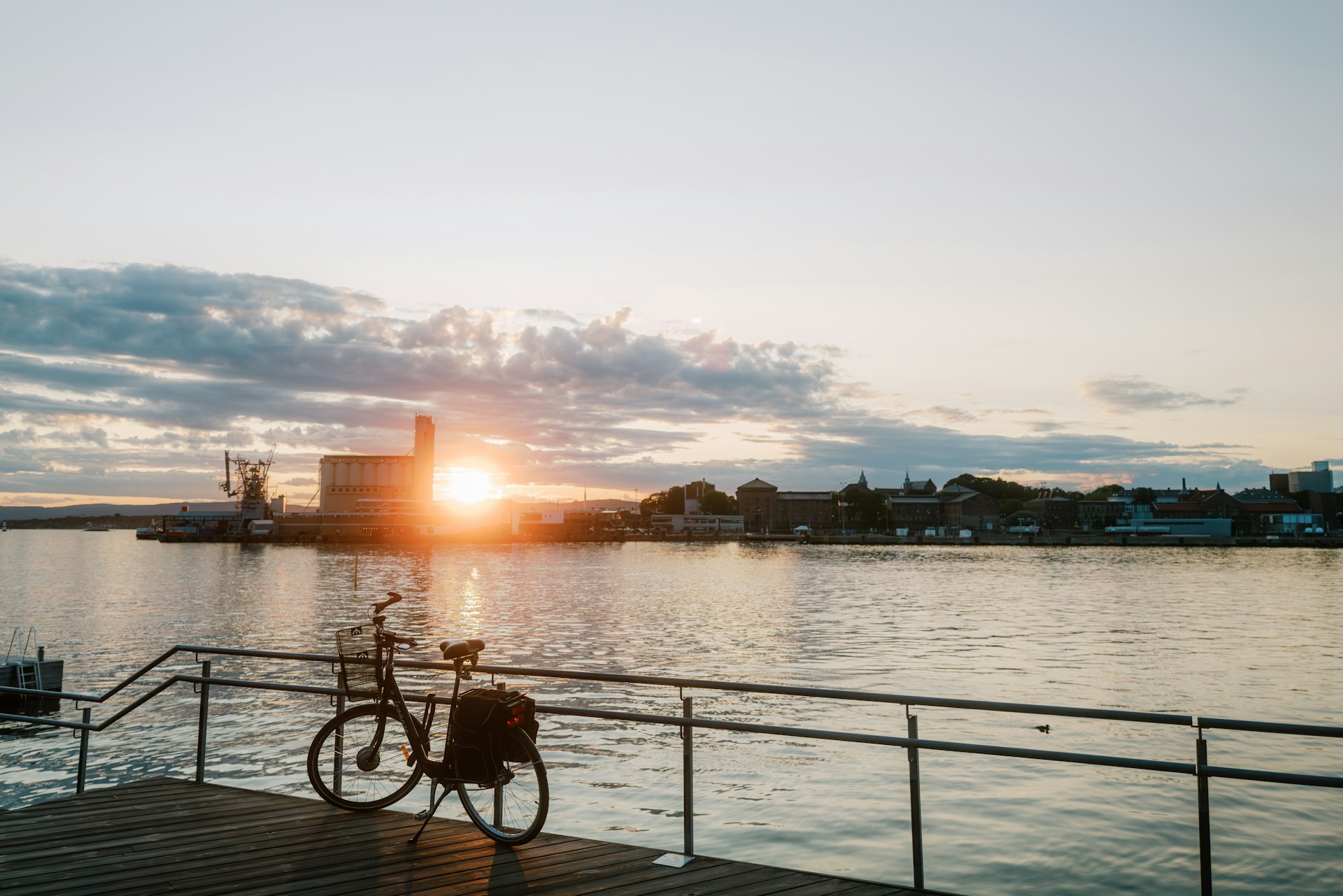
Understanding Norway's cycling rules makes it easier to enjoy the ride, whether you're exploring a town, following a fjord-side road or heading into the mountains.
Remember the essentials: obey traffic signs, give way correctly, respect pedestrians, use suitable equipment and check route restrictions before travelling.
If you're planning a cycling adventure in western Norway, Voss is a great place to start. Explore Outdoor Norway's guided biking experiences and find a route that suits your interests, experience and travel dates.