You can cross the Arctic Circle in Norway on a mountain road, from a train window or on a ferry past a tiny island. You can also fly straight to Tromsø or Alta and spend a week north of the line without ever seeing a crossing marker. Both are good trips. The one to choose depends on whether you want to stand at the Arctic Circle or spend time in the Norwegian Arctic.
The Arctic Circle crosses mainland Norway in Nordland county, at roughly 66°34′ north. The easiest place to stop for a photo is the Arctic Circle Centre on the E6 over Saltfjellet. If you’d rather cross by sea, the ferry between Kilboghamn and Jektvik passes the Arctic Circle monument on Vikingen island. Farther north, Bodø, Narvik, Tromsø and Alta are all inside the Arctic Circle.
Here’s how to choose a crossing, which towns to visit and what the Arctic Circle actually tells you about the midnight sun, polar night and Northern Lights.
Where is the Arctic Circle in Norway?
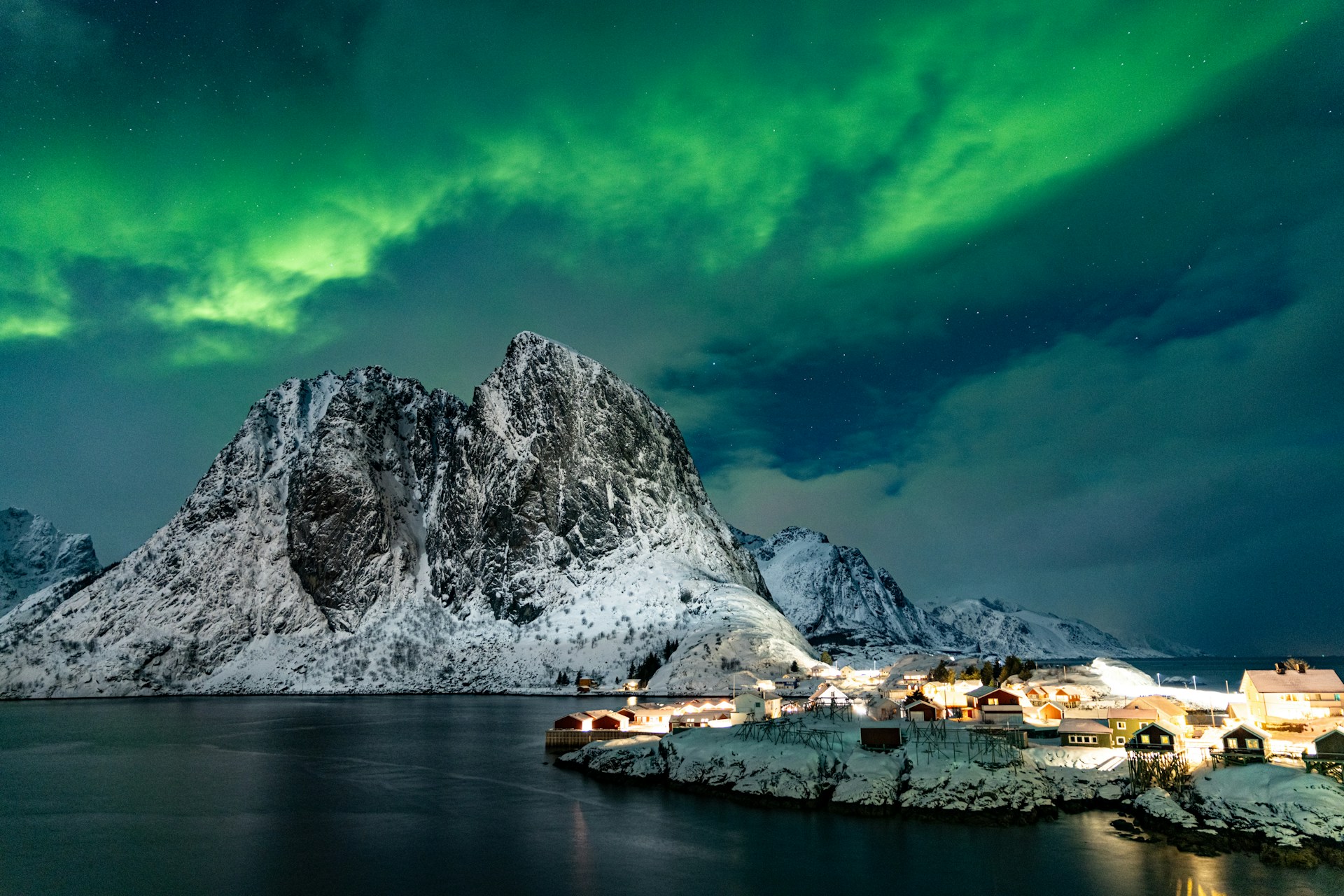
The Arctic Circle runs through Nordland in Northern Norway, crossing the Helgeland coast and the Saltfjellet mountains before continuing east into Sweden.
On the main north–south highway, the E6, you reach it about an hour’s drive north of Mo i Rana in normal conditions. On the coast, it passes through an area of islands, fjords and small ferry ports, so the crossing feels quite different depending on the route you take.
You’ll see both 66°33′ N and 66°34′ N used in travel guides and at crossing sites. The Arctic Circle is defined by the tilt of the Earth’s axis, which changes slowly. Its precise latitude therefore moves over time. The marked crossings are the practical reference points for visitors; you don’t need to find the exact latitude on your phone to make the stop count.
What makes the line significant is daylight. In astronomical terms, it marks the latitude at which the sun can stay above the horizon for a full day in summer and below it for a full day in winter. What you actually see depends on where you stand, the shape of the horizon and the weather.
On the ground, there’s no sudden change in landscape or climate as you cross. The change becomes more obvious as you travel farther north and the periods of continuous summer daylight and winter twilight get longer.
Is Norway in the Arctic Circle?
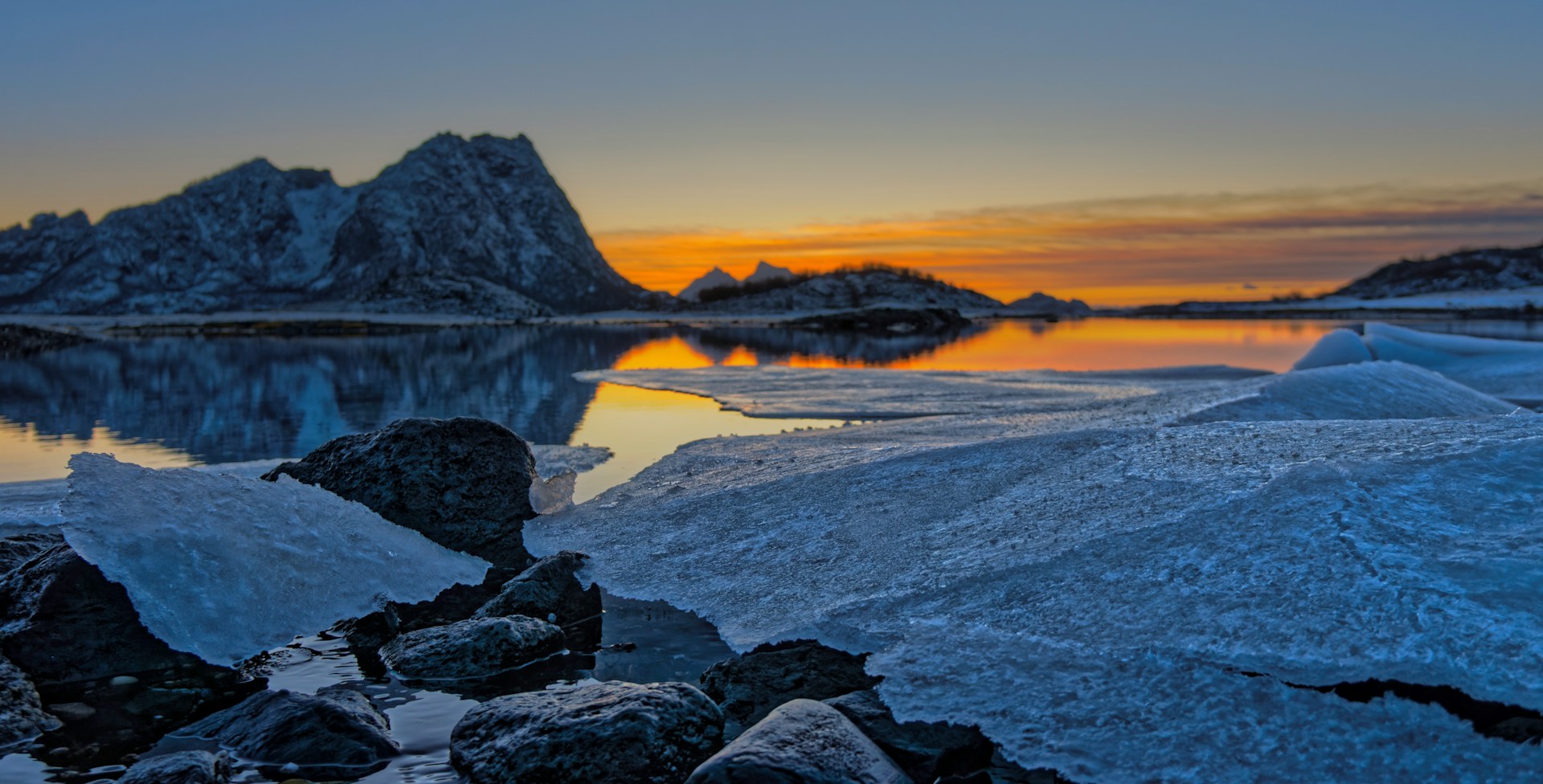
Part of Norway is north of the Arctic Circle, and part is south. Oslo, Bergen and Trondheim are well south of it. Bodø, Narvik, Tromsø and Alta are north of it.
Mo i Rana is south of the line even though it’s in Northern Norway. That distinction matters when you’re planning a trip: Northern Norway is the name of a region, and you can be well into that region before you reach the Arctic Circle.
How much of Norway is north of the Arctic Circle?
On the mainland, the area north of the line includes the northern part of Nordland and all of Troms and Finnmark. It also takes in island destinations such as Lofoten and Vesterålen.
A percentage depends on what you count: mainland Norway alone gives a different answer from a calculation that includes Svalbard, which lies entirely north of the line.
For trip planning, the useful point is that there’s a substantial stretch of mainland Norway to explore after crossing, with coastal towns, islands and inland destinations that suit very different itineraries.
Where do you cross the Arctic Circle in Norway?
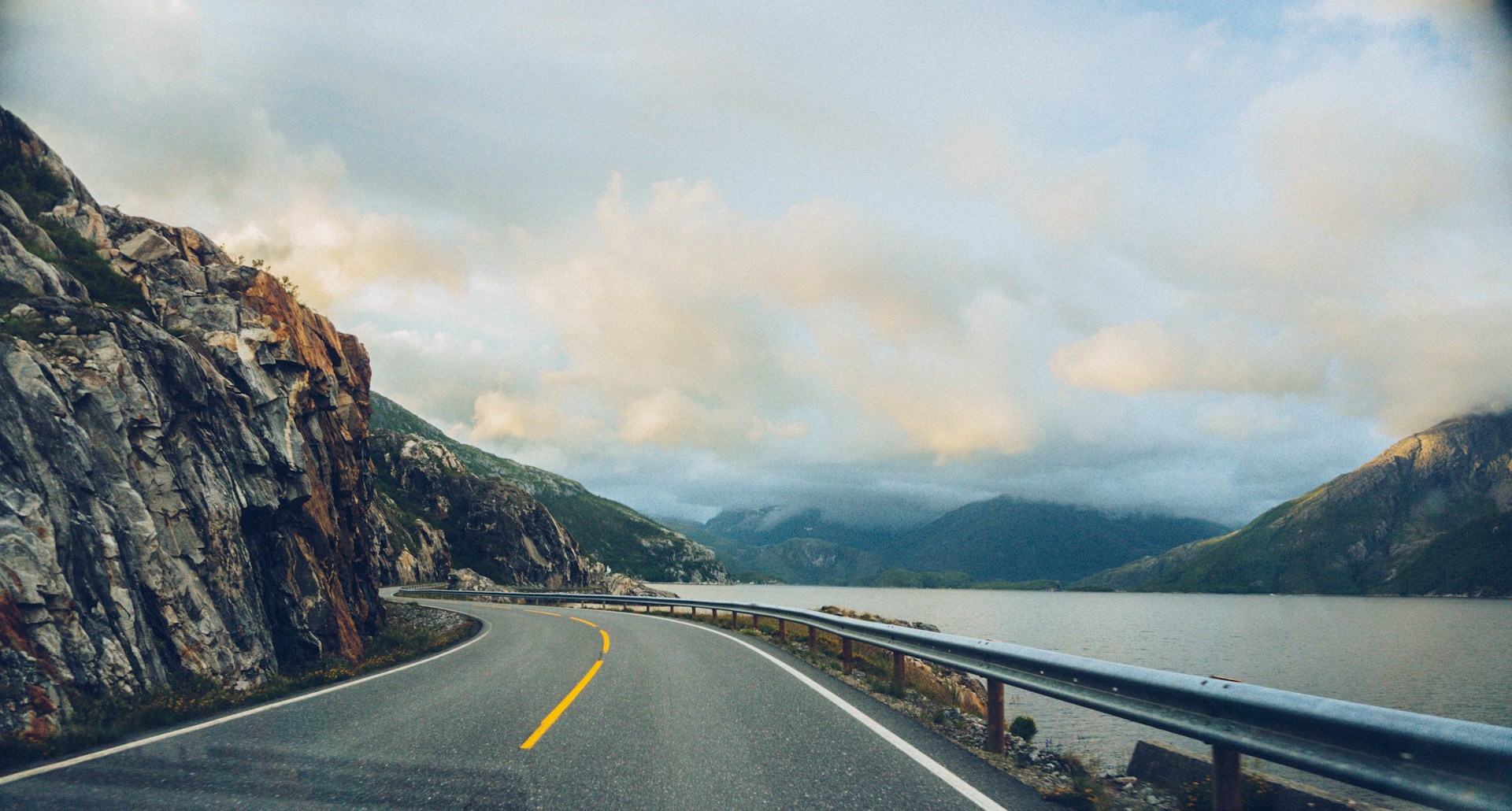
The best route depends on what you want from the crossing.
Drive the E6 to stand at a marker, take the Nordland Line for a car-free journey, or follow the Helgeland coast to see the island monument from the water. Here’s how the three options compare.
|
Route |
Where you cross |
Best for |
|
E6 by car |
Saltfjellet, at the Arctic Circle Centre |
Getting out, taking photos and standing at the marked line |
|
Nordland Line by train |
Across Saltfjellet on the Trondheim–Bodø route |
Crossing without a car and continuing to Bodø |
|
Helgeland coast by ferry |
Near Vikingen island on the Kilboghamn–Jektvik ferry |
Seeing the coastal monument and exploring Helgeland |
By car: the E6 over Saltfjellet
If the crossing itself is the highlight, take the E6 over Saltfjellet. Coming from the south, Mo i Rana makes a sensible overnight stop or starting point. From there, the road climbs into open mountain country, and the Arctic Circle Centre has a dedicated place to pull off. Allow time to get out and look around rather than treating it as a photo you’ll grab from the roadside.
The drive and the visitor centre are two separate things to check. The road may be passable when the building is closed, and mountain weather can change your plans even if the centre is scheduled to open. Check live E6 road conditions and the Arctic Circle Centre’s opening hours before setting out. This is especially useful if you’re making a return trip from Mo i Rana just to visit the marker.
By train: the Nordland Line from Trondheim to Bodø
The Nordland Line crosses the Arctic Circle on its way from Trondheim to Bodø. It’s a good choice if you want the landscape to be part of the journey without having to drive a long stretch of the E6. You cross on the train; it doesn’t serve the roadside visitor centre, so choose a different route if standing at the monument is the point of your trip.
Check the train timetable against daylight for your travel date. Booking a daytime departure doesn’t necessarily mean you’ll reach Saltfjellet in daylight, particularly in winter. If you mainly want to get to Bodø, that may not matter. If you’re choosing the train for the views, it’s worth checking when you’ll pass through the mountains.
By ferry: Kilboghamn to Jektvik on the Helgeland coast
The Kilboghamn–Jektvik crossing is the one to choose if your road trip is already taking you along the Helgeland coast. The ferry passes Vikingen, a small island with a globe marking the Arctic Circle. You see it from the water; the ferry doesn’t land on the island. Bring a warm layer if you plan to watch from outside, even when the weather feels mild at the terminal.
Build your day around the ferry timetable rather than the driving time alone. On a route with several ferry legs, a missed sailing can take a bite out of the time you’d planned for stops. The crossing is most rewarding when you have time to enjoy Helgeland along the way. If all you want is a photo at the line, the E6 is the more straightforward choice.
Where is the Arctic Circle monument in Norway?
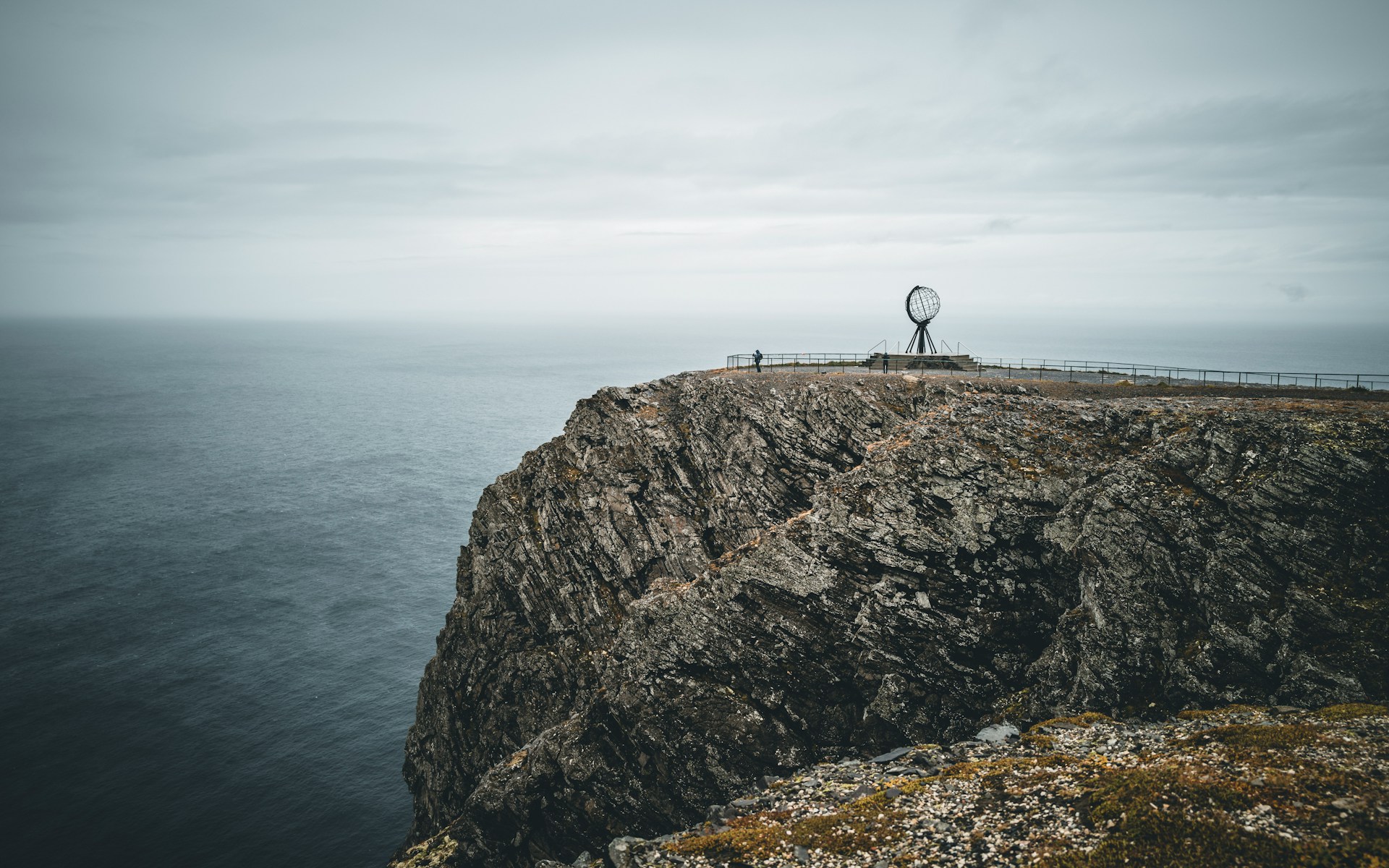
There are two landmarks visitors often mean when they ask about Norway’s Arctic Circle monument: the marked crossing at Saltfjellet and the globe on Vikingen. They’re on different routes, and only one is a stop where you can walk up to the marker.
The Arctic Circle Centre at Saltfjellet
The Arctic Circle Centre, or Polarsirkelsenteret, is on the E6 at around 680 metres above sea level. A marked line runs through the building, and the stop gives you a chance to step out into the mountain landscape instead of just watching the latitude change on a screen.
When the centre is open, there’s a shop and a place to get food. If you’re planning a winter drive, check ahead before counting on either.
The Arctic Circle globe on Vikingen
The Vikingen globe is the coastal landmark. Rather than walking up to it, you watch it come into view from the ferry. It’s a small detail in a much bigger landscape, which is part of the appeal: the islands and coastline give a sense of where the line actually runs. If someone sends you a photo of a globe on a rocky island, this is the monument they mean.
Norwegian towns north of the Arctic Circle
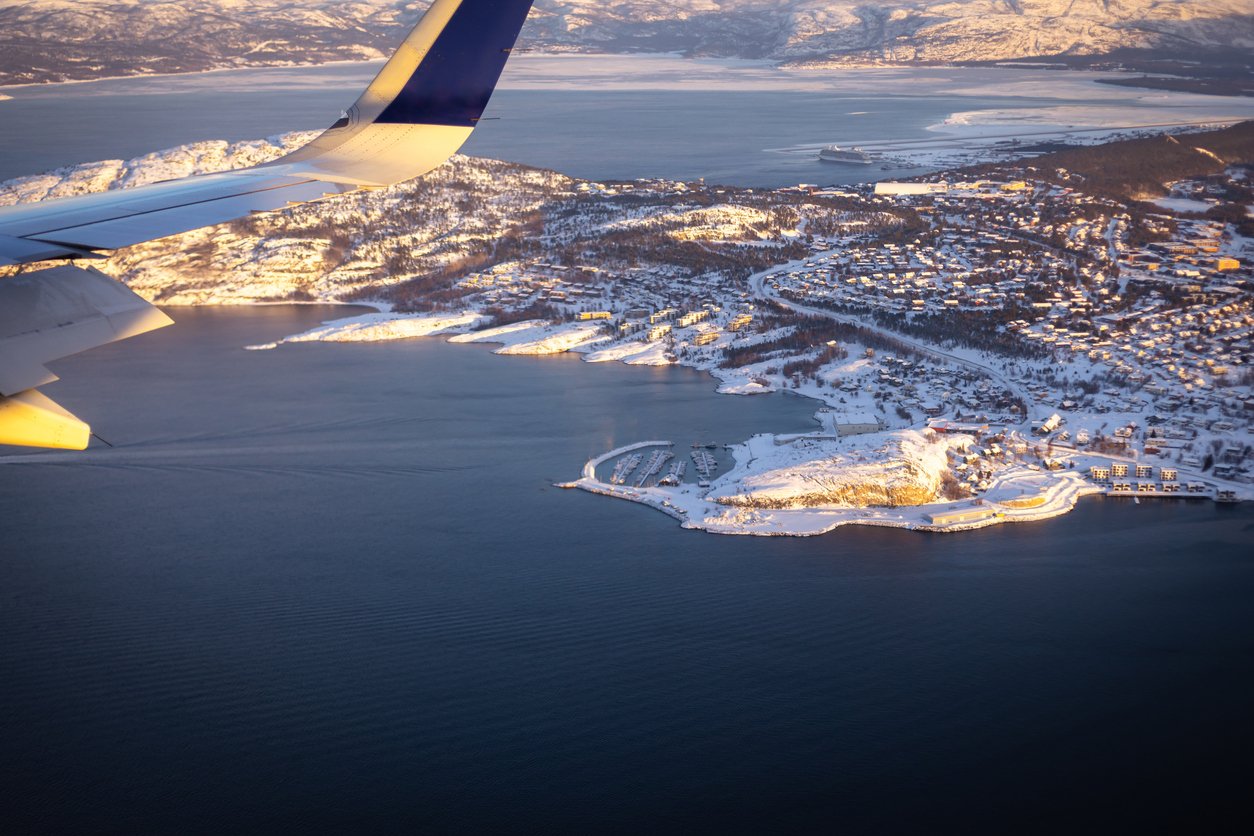
A crossing can take a few minutes. Choosing where to spend the next few days makes a much bigger difference to your trip.
Bodø works well after a crossing, Narvik suits travellers who want mountains close to town, Tromsø has the widest mix of city sights and excursions, and Alta is a good base for a winter trip built around time outdoors.
Bodø: a natural next stop after crossing
Bodø is the northern terminus of the Nordland Line, so it makes an easy first base if you’re coming by train. It also works if you’re combining an Arctic Circle crossing with a longer coastal trip.
If you have a day in the area, consider Saltstraumen, where the tide pushes water through a narrow strait. Look up the tide times before you go; when you arrive matters more than how long you allow for the visit.
Narvik: mountains right above town
Narvik is a good fit if you want a mountain stop without having to base yourself far from town. The Narvikfjellet cable car gives you a view over the town, harbour and surrounding fjords when conditions are clear.
It’s a useful stop on a road trip across northern Nordland, especially if you’re deciding between spending another day on the coast and heading into the mountains.
Is Tromsø, Norway, in the Arctic Circle?
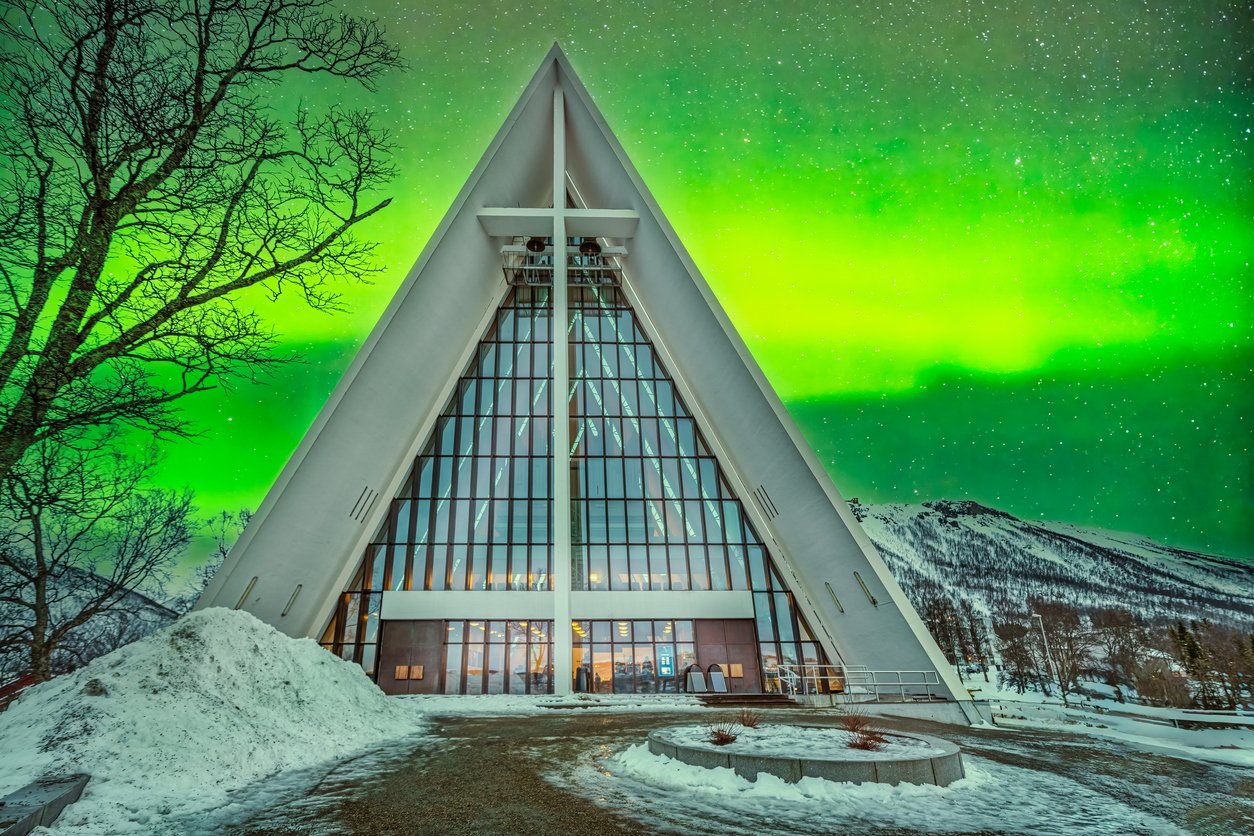
Yes. Tromsø is around 350 kilometres north of the Arctic Circle. It’s a good first Arctic base if you want a city with museums and restaurants plus the option to get out into the surrounding fjords and mountains.
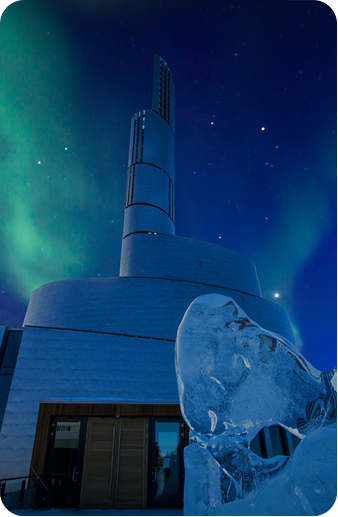
The Polar Museum, Polaria and the Arctic Cathedral give you things to do if the weather changes or you want an easy day between excursions. If you’re visiting in the darker months, our guide to the Northern Lights in Tromsø can help you decide how to plan your evenings.
Alta: Northern Lights and inland winter landscapes
Alta is farther north and lies in Finnmark. It suits a trip where the aurora is only half the plan: you can spend your days out in the snow and leave several evenings open for clear skies.
The landscape also gives the trip a different feel from Tromsø, where many outings begin on the coast. Start with our guide to seeing the Northern Lights in Alta if you’re weighing up when to visit and how many nights to allow.
Mo i Rana: just south of the Arctic Circle
Mo i Rana belongs on this list as a staging point. It’s south of the Arctic Circle, which makes it a practical place to break up the journey if you want to cross the line the following morning. If your itinerary ends in Mo i Rana and you want to say you’ve crossed, you still need to continue north.
Midnight sun, polar night and Northern Lights: what can you see?
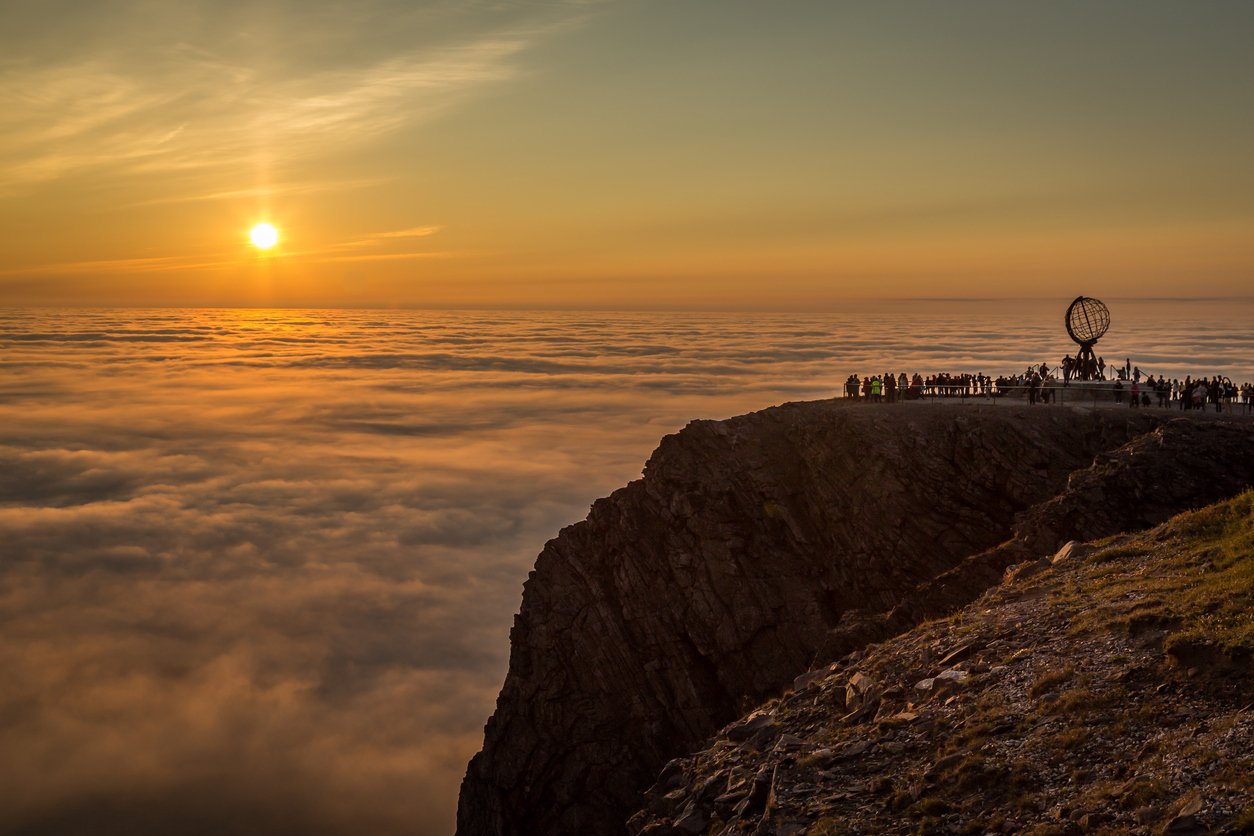
These are three different reasons to travel north, and they’ll lead you to different dates. Pick the one you’re most excited about before you book a route or choose a base.
Midnight sun: for long summer days outdoors
The midnight sun happens when the sun stays above the horizon through the night. The farther north you go, the longer the season lasts. In Tromsø, it generally runs from late May to late July.
Hills, clouds and buildings can block your view of the sun itself, so pick somewhere with an open horizon if you want to see the disc at midnight. Even without a clear view, the long light changes how you can spend the day: there’s no need to rush back from an evening walk just because it’s getting late.
See Visit Tromsø’s midnight sun guide for local viewing advice.
Polar night: for twilight and winter scenery
During the polar night, the sun doesn’t rise above the horizon. That can still leave hours of twilight around midday, with blue light over the snow and, on clear days, colour along the horizon.
How much usable light you get depends on where you are and when you visit. Plan scenic drives, photos and outdoor activities around the brightest part of the day, then leave the evening free if you’re hoping for the aurora.
Northern Lights: for dark skies and several chances
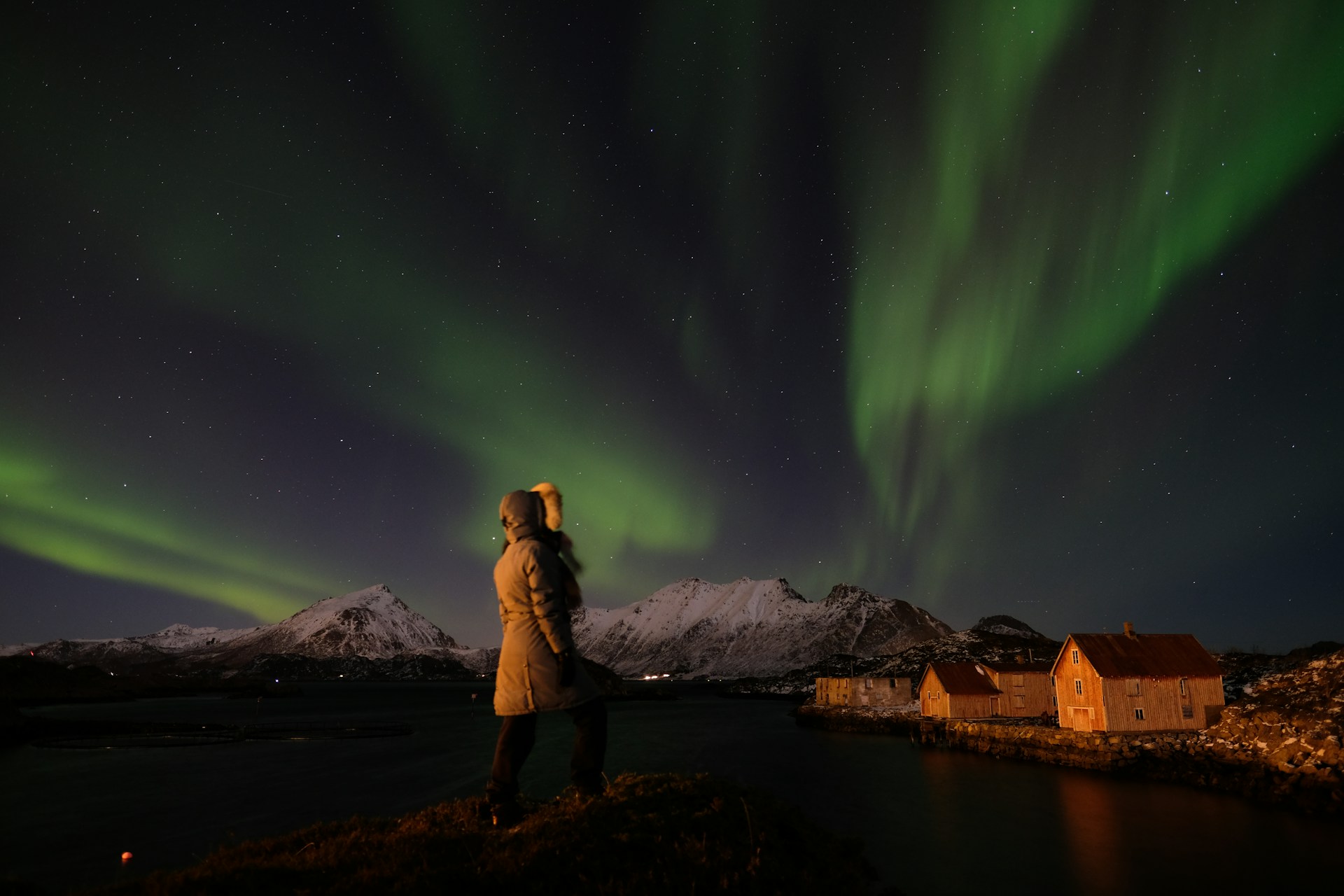
The Arctic Circle is a daylight boundary. The Northern Lights can appear on either side of it, and being north of the line doesn’t guarantee a sighting. Dark skies, gaps in the cloud and auroral activity matter more than having your photo taken at a crossing marker.
If the lights are a priority, give yourself several nights in one area so a cloudy evening doesn’t decide the whole trip. Our guide to the best time to see the Northern Lights in Norway walks through the seasonal trade-offs.
How to plan an Arctic Circle trip in Norway
If you want the classic crossing photo
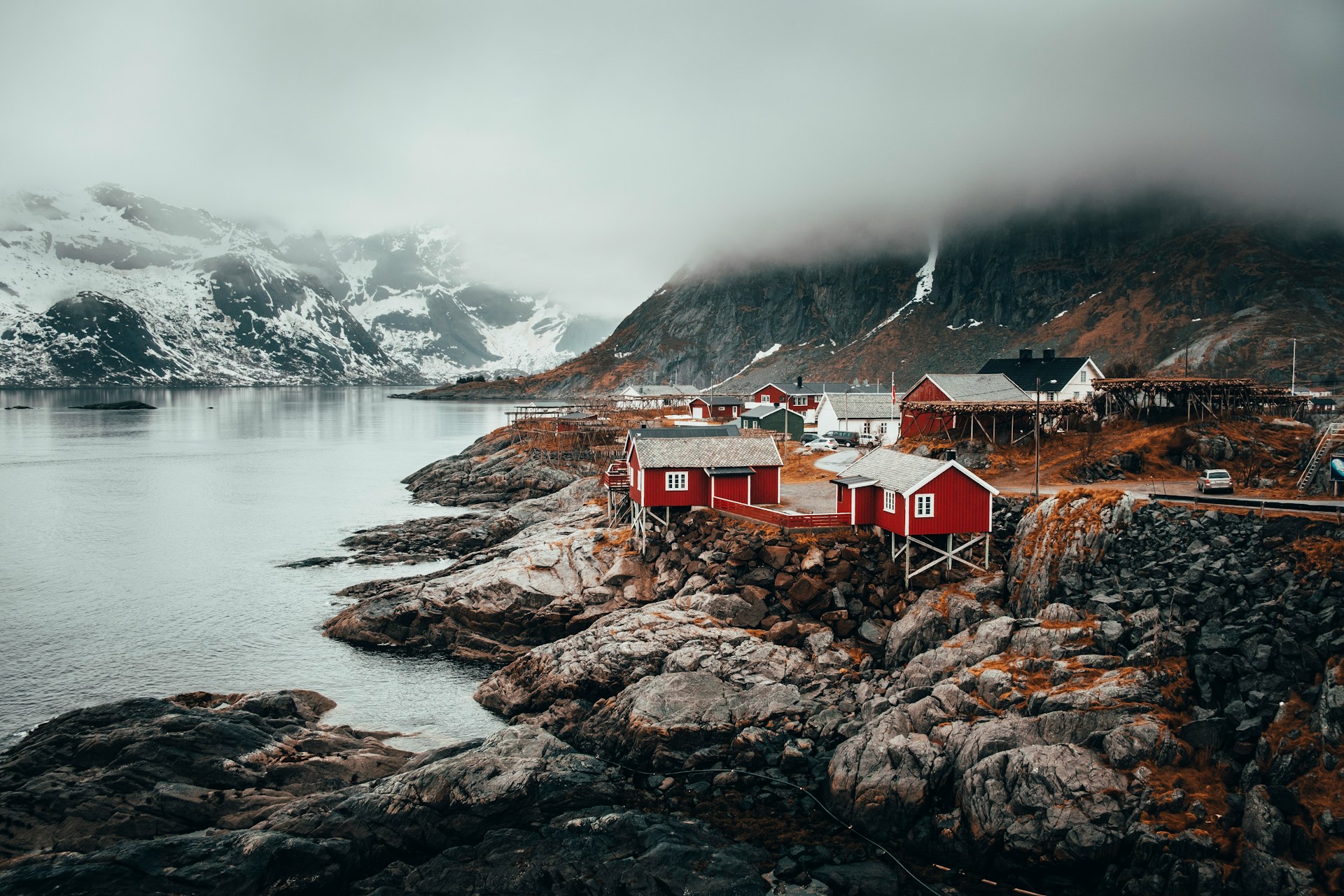
Start in Mo i Rana, drive north to Saltfjellet and stop at the Arctic Circle Centre. Continue towards Bodø if you want the crossing to be the beginning of the next part of your trip.
If you’re returning south the same day, check the road and opening hours before you leave and give yourself enough time for the drive back. This is the itinerary to pick if standing at the marker matters more to you than how you get there.
If the journey is the point
Take the Nordland Line from Trondheim to Bodø if you want a car-free route, or put the Kilboghamn–Jektvik ferry into a slower Helgeland road trip. Either lets you cross the line as part of a journey you’d want to take anyway.
If you’re also visiting southern Norway, use our Norway travel guide to work out which regions fit together without spending too much of your holiday in transit.
If you want an Arctic holiday
Base yourself in Tromsø or Alta and let the season shape the itinerary. In summer, make the most of the late light. In winter, choose daytime activities you’d still be glad you booked if the aurora doesn’t appear.
If you’d rather have the itinerary arranged, compare our Northern Lights tours in Norway.
The six-day Northern Lights trip in Alta, for example, combines time to look for the aurora with winter activities such as dog sledding and a snowmobile trip on Finnmarksvidda.
Frequently asked questions About the Arctic Circle in Norway
Can you cross the Arctic Circle in Norway without a car?
Yes. Take the Nordland Line between Trondheim and Bodø. It crosses the circle on Saltfjellet without stopping at the visitor centre. If seeing a monument is the priority, look at the Kilboghamn–Jektvik ferry and check your connections to and from the terminals separately.
If I fly into Tromsø, have I crossed the Arctic Circle?
If you fly from south of the Arctic Circle, yes. Tromsø is well north of it, so you’ll arrive inside the circle. You won’t visit the Saltfjellet marker or see the Vikingen globe as part of that journey.
Can you visit the Arctic Circle Centre in winter?
You can cross the line on the E6 when the road is open, but check the centre’s opening hours and current road conditions before making a winter detour. Finding the building on a map doesn’t tell you whether you’ll be able to go inside that day.
Is Svalbard inside the Arctic Circle?
Yes. The whole archipelago lies well north of it, between roughly 74° and 81° N. You don’t need to go as far as Svalbard to visit the Arctic, though: you can cross the circle on mainland Norway.
Is the Arctic Circle crossing worth a detour?
Yes if you’re already travelling through Nordland or you’ve always wanted to stand at the line. If your main goal is the Northern Lights, midnight sun or a few days outdoors, spend the extra time at your destination instead. An extra evening under Arctic skies may be worth more to you than a long drive to the marker.
The best way to experience the Arctic Circle in Norway
If you’ve always wanted to stand on the Arctic Circle, take the E6 over Saltfjellet and stop at the Arctic Circle Centre. If you’re already travelling along the Helgeland coast, take the ferry past the globe on Vikingen. And if you’re travelling without a car, the Nordland Line lets you cross the circle on your way to Bodø.
If what drew you north was the thought of hiking in the midnight sun or watching the Northern Lights from a snowy hillside, give yourself more time in one place. In summer, that means an evening outdoors without watching the clock. In winter, it means another chance at clear skies if your first night is cloudy.
If you’re planning a winter trip, start with our guide to the best time to see the Northern Lights in Norway and choose your dates around what you want to experience.