
Few landscapes are as closely associated with Norway as its fjords. Deep blue water cuts between mountains, waterfalls tumble down near-vertical cliffs, and tiny villages sit in places that seem almost impossibly remote. But planning a trip to the Norway fjords can easily overwhelm you!
There are more than a thousand of them, they stretch across a huge part of the country, and the experience can be completely different depending on whether you explore by kayak, hike to a viewpoint, drive along the shoreline or simply watch the landscape pass from the deck of a boat.
So where should you actually go?
This guide covers what makes a fjord a fjord, where Norway's most spectacular fjords are found, which ones are worth putting on your itinerary, and some of the best ways to experience them once you're here.
What Is a Fjord in Norway?
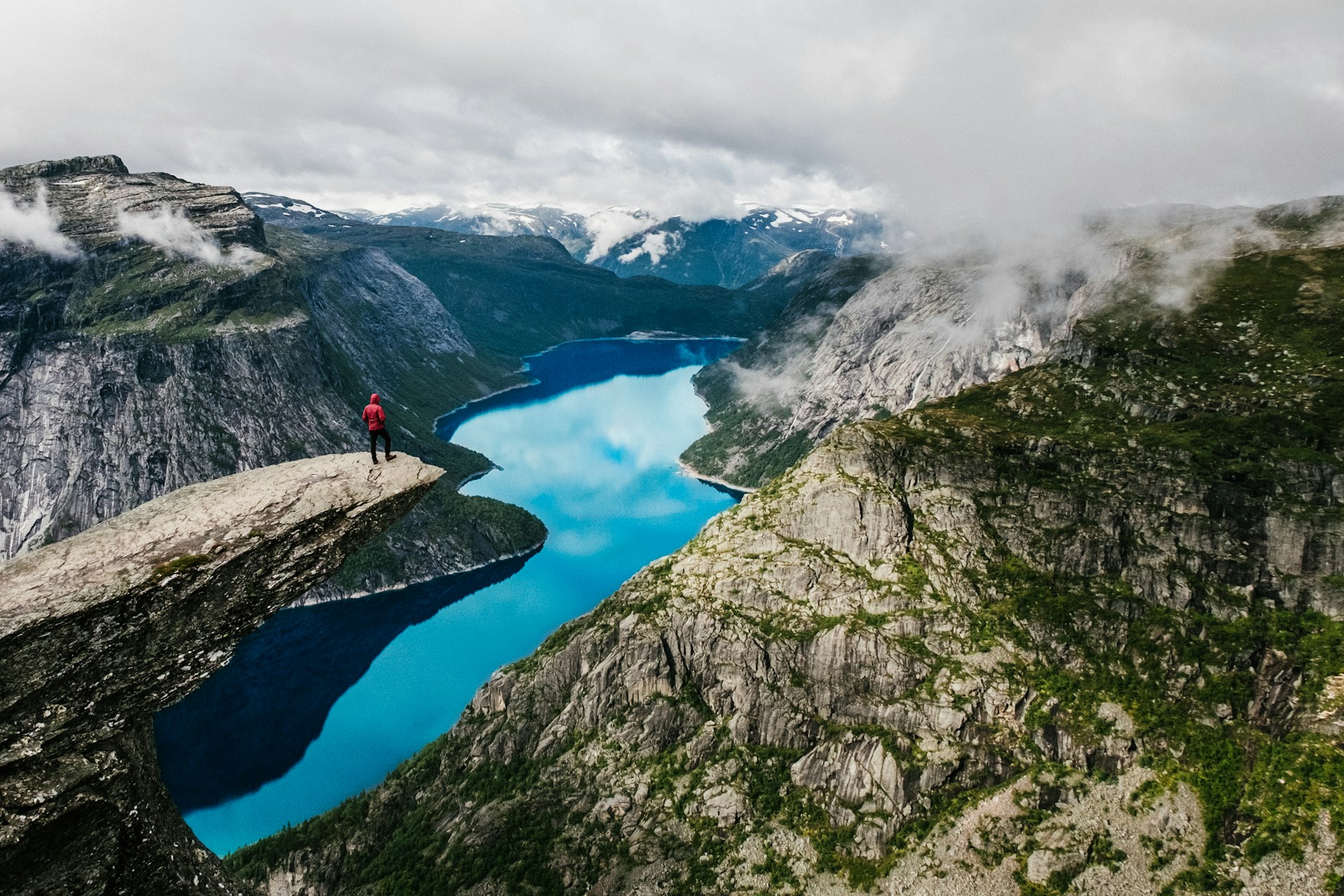
A fjord is a long, narrow inlet of seawater surrounded by steep mountains or cliffs. Unlike an ordinary bay, a true fjord was created by a glacier.
During the ice ages, enormous glaciers moved slowly through existing valleys. Stones and gravel trapped beneath the ice acted almost like sandpaper, gradually cutting deeper into the rock. Crucially, glaciers can erode the landscape below sea level.
When the climate warmed and the glaciers retreated, seawater flooded these deep U-shaped valleys. The result was the landscape we now recognise as a fjord.
It's a process that took place on a truly enormous scale!
Why Does Norway Have So Many Fjords?
Three factors: glaciers, mountains and a very long coastline.
Norway went through repeated periods of glaciation. Norway's Best estimates that the country experienced around 40 ice ages of varying duration. Successive glaciers, meltwater and rock debris cut the valleys deeper and deeper. Around 12,000 years ago, the ice finally retreated from the area around Sognefjord.
Those glaciers left behind a maze of deep valleys running towards the coast. Once the ice disappeared, the sea moved in.
It's why Western Norway in particular looks the way it does today: mountains separated by long fingers of seawater reaching far inland.
How Many Fjords Are There in Norway?
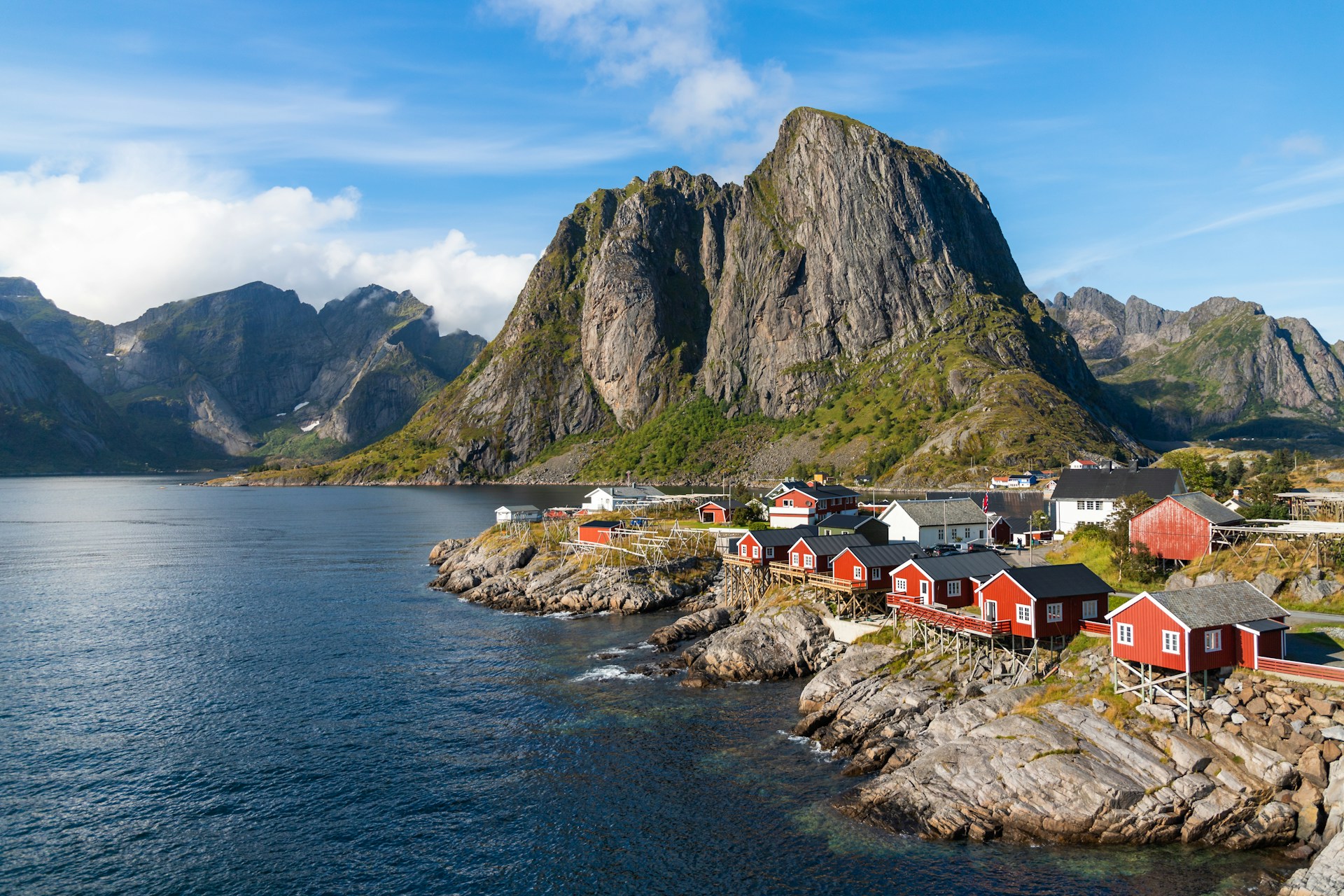
There isn't one universally accepted number of fjords in our country, partly because it depends on how individual fjords and their branches are counted.
There are over 1,700 named fjords (and even more unnamed ones) along Norway's roughly 57,000-kilometre coastline.
Either way, there's a lot more to Norway's fjord landscape than the handful of names that appear on postcards.
How Deep Are the Fjords in Norway?
The fjords in Norway are much deeper than they often look from the surface.
Sognefjord, Norway's longest fjord, reaches a maximum depth of around 1,308 metres below sea level. The mountains surrounding a fjord can then rise another thousand metres or more above you.
That's part of what makes being on the water there so impressive. You're not just travelling between mountains, it feels more like floating above an enormous submerged glacial valley.
Where Are the Fjords in Norway?
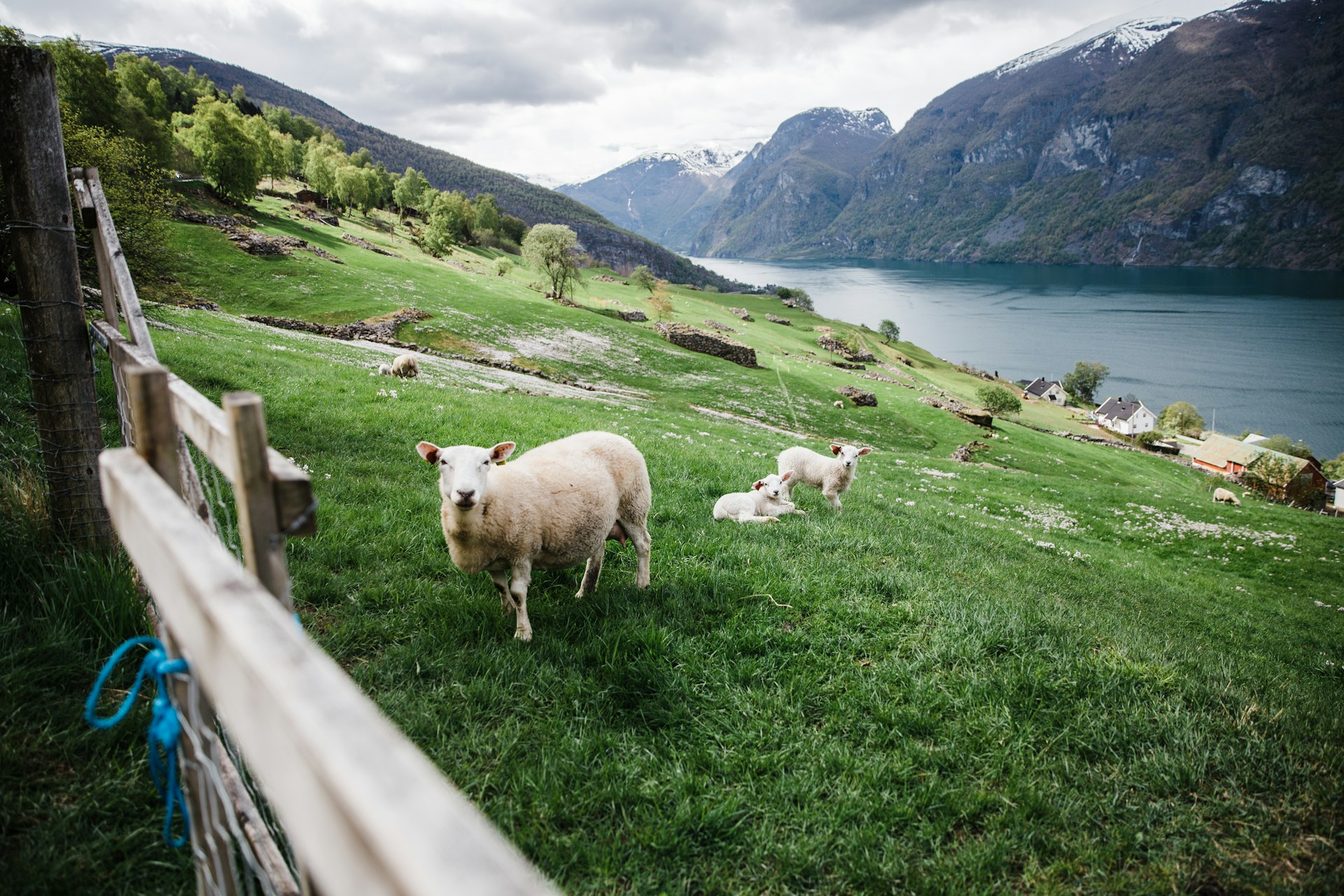
Fjords are scattered along much of Norway's coastline, including well into Northern Norway.
But if you're picturing the classic landscape of narrow blue water beneath huge green mountains and waterfalls, you're probably thinking about Fjord Norway in the west of the country.
This is where you'll find famous names such as Sognefjord, Nærøyfjord, Hardangerfjord and Geirangerfjord, as well as countless smaller fjord arms and valleys. Nærøyfjord and Geirangerfjord and their surrounding landscapes are part of the West Norwegian Fjords UNESCO World Heritage Site.
Further south, near Stavanger, you'll find Lysefjord, overlooked by Preikestolen and Kjerag.
Travel north and the landscape changes again. Fjords such as Hjørundfjord cut through the Sunnmøre Alps. Northern Norway has Arctic fjords surrounded by some of the country's wildest mountain scenery.
At Lyngenfjord, for example, the fjord experience can be combined with the Midnight Sun in summer or Northern Lights from autumn into winter.
So you don't need to ask only where are the fjords in Norway?
The much more useful question is what kind of fjord experience do you want?
Which Norway Fjords Should You Visit?
You could spend months travelling between Norwegian fjords and still have plenty left to see.
For a first trip, don't try.
Choose one or two areas that match the way you like to travel and give yourself enough time to actually explore them. Here are some of our standout choices.
Nærøyfjord: Best for Getting Close to the Landscape
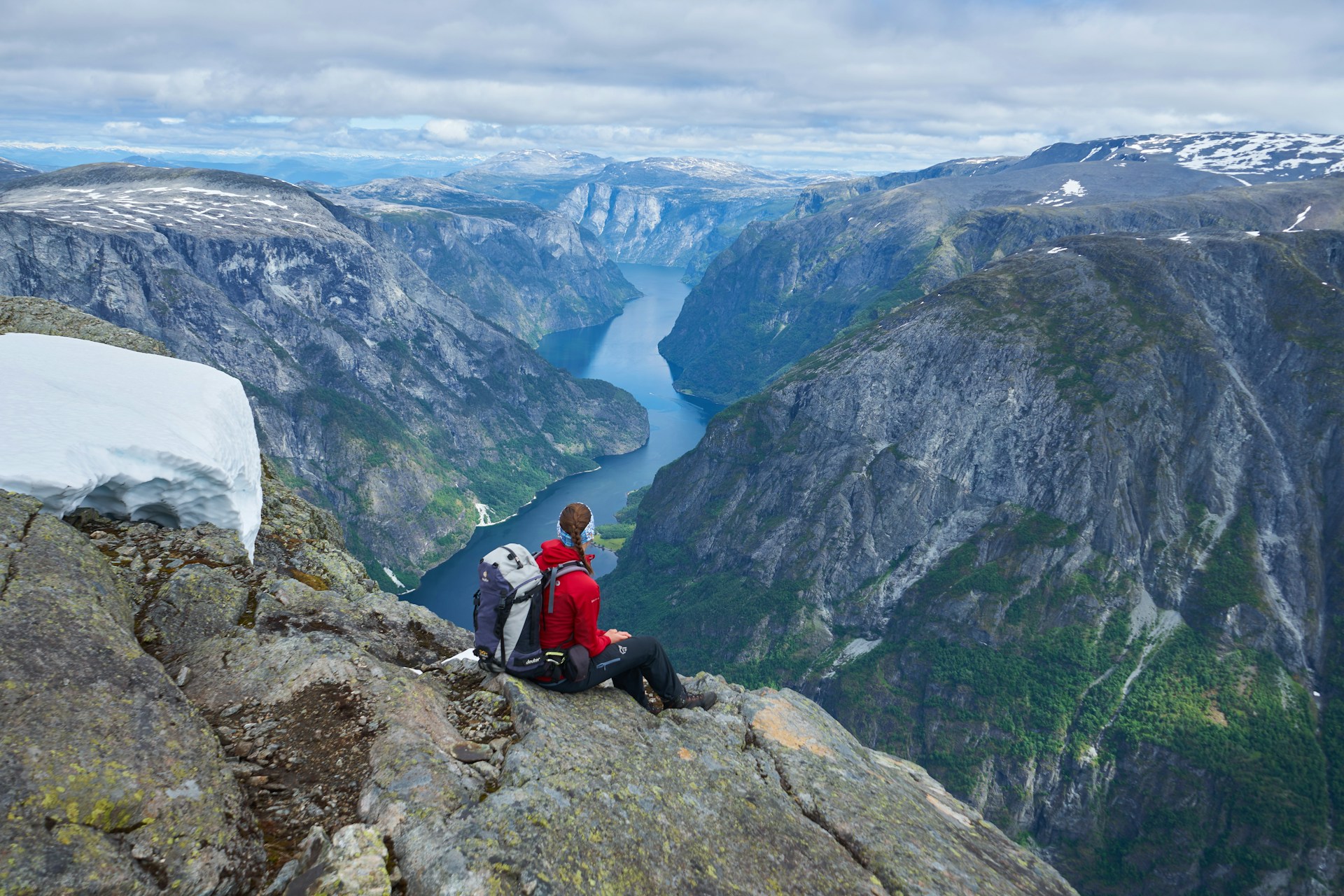
Nærøyfjord is one of the most dramatic fjords in Norway and one of two Norwegian fjord landscapes recognised by UNESCO.
It's a branch of the larger Sognefjord system, with mountains rising more than 1,000 metres around a remarkably narrow stretch of water. At the head of the fjord sits the small village of Gudvangen.
Unsurprisingly, it's also popular. Real popular.
That's why we think one of the best ways to experience Nærøyfjord is to get off the larger boats and down to water level.
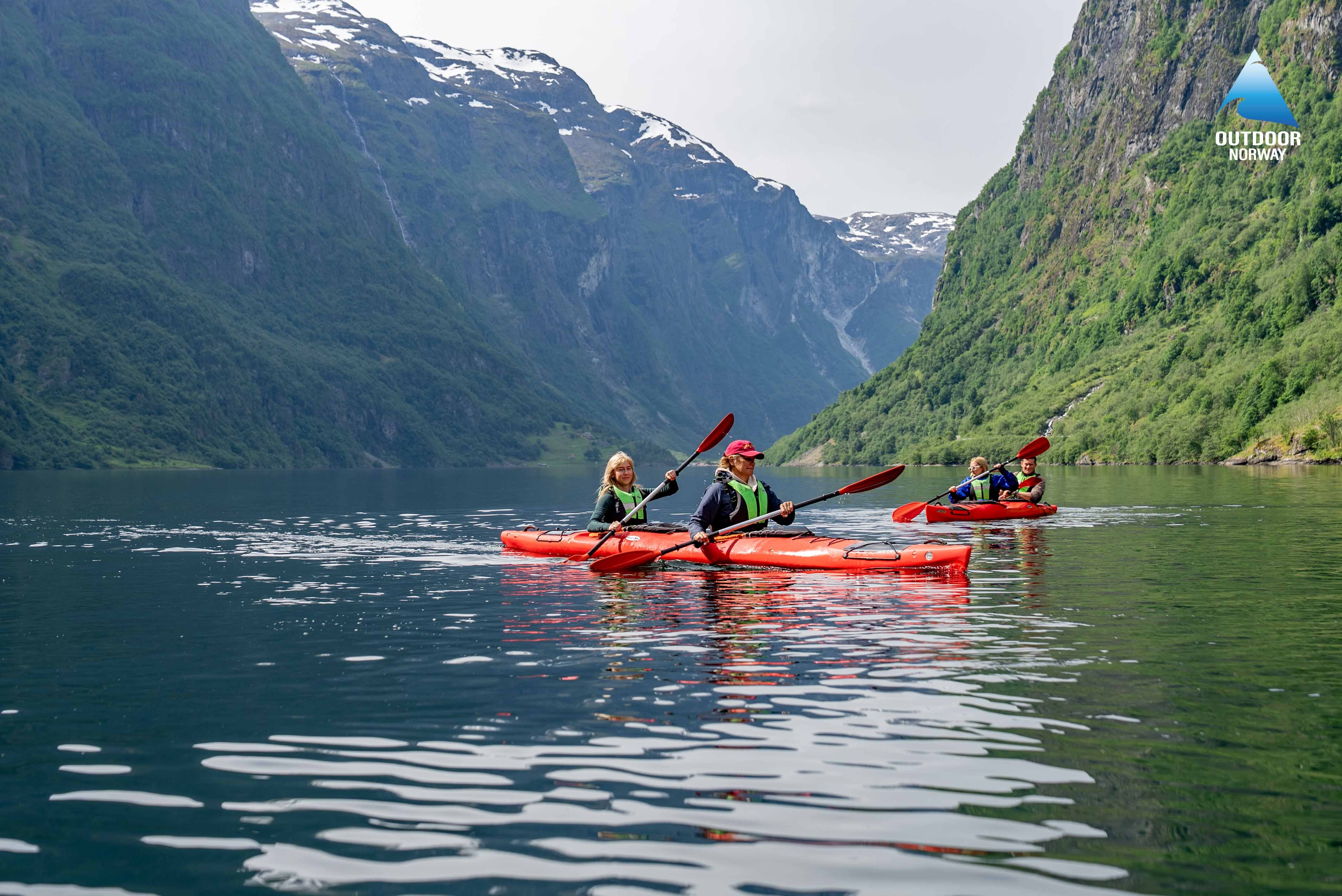
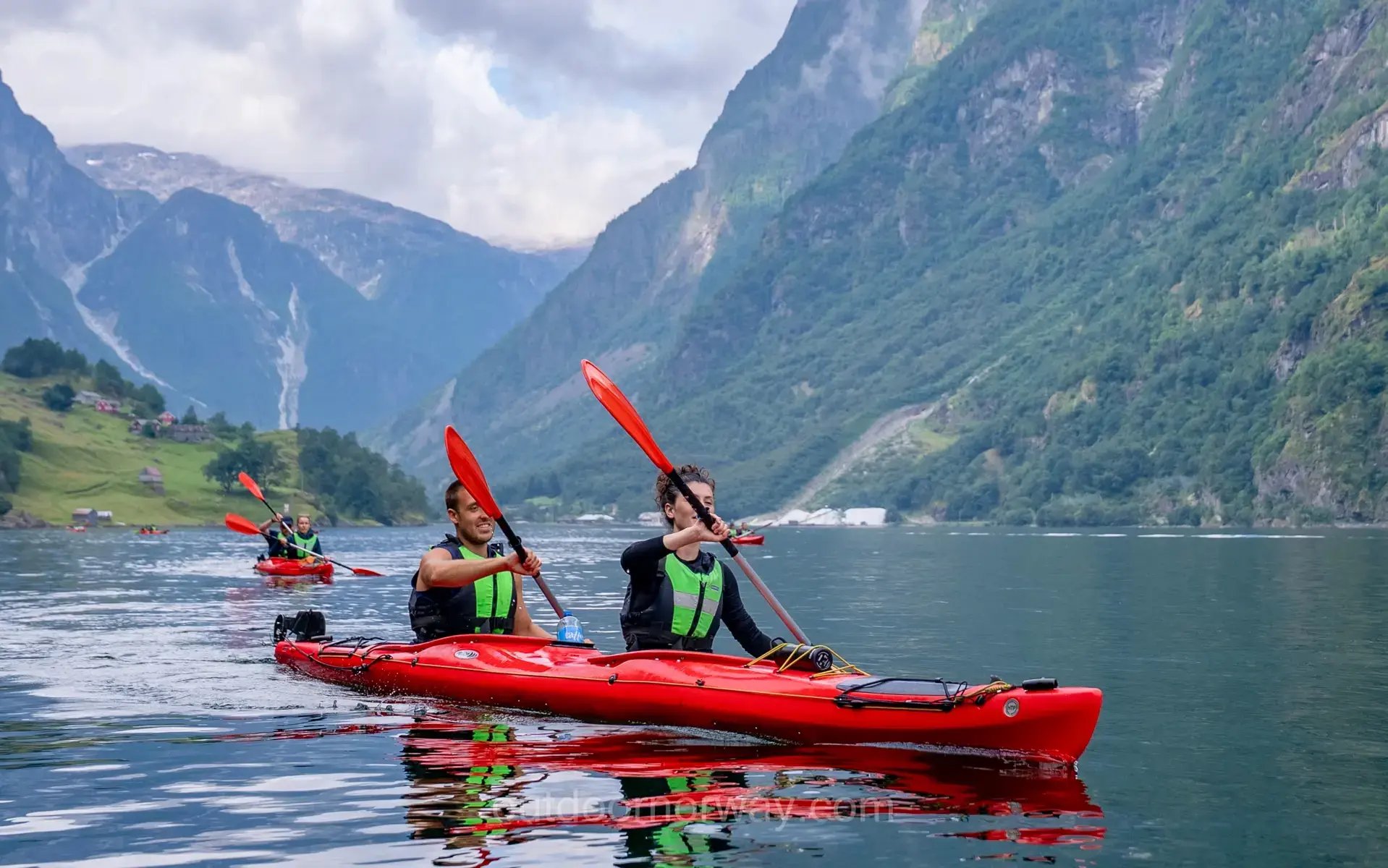
From a kayak, the scale changes completely. You're paddling beneath the mountains rather than simply looking at them from a distance, with the freedom to explore quieter stretches of shoreline along the way.
We might be biased, but we always recommend guided sea kayaking on Nærøyfjord from Voss as a way to experience the fjord beyond the busiest summer crowds.
Best for: Kayaking, dramatic scenery and first-time fjord visitors.
Sognefjord: Best for Sheer Scale
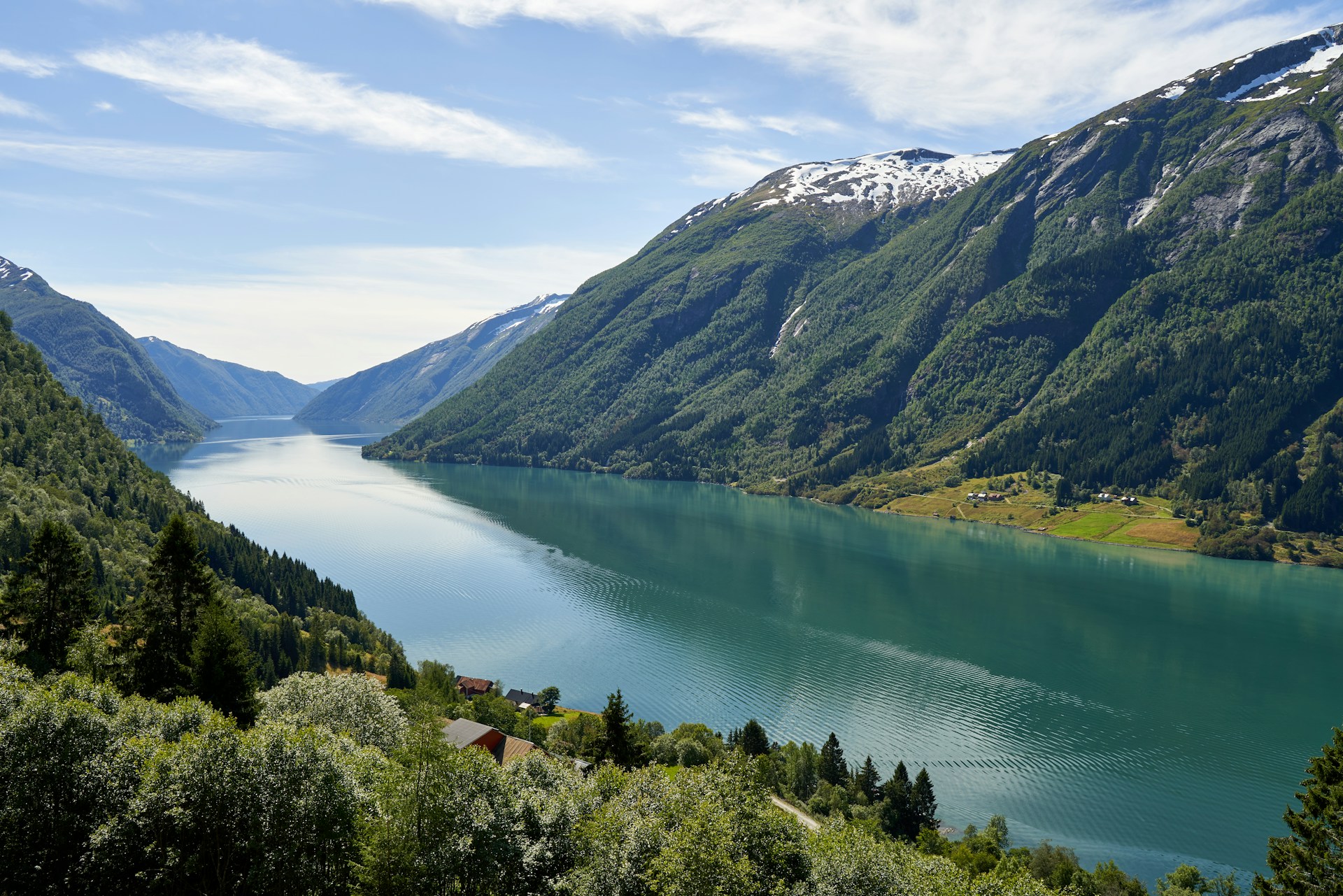
If Nærøyfjord is about intimacy, Sognefjord is about scale.
Stretching around 204 kilometres inland, Sognefjord is Norway's longest fjord. It reaches approximately 1,300 metres at its deepest point and has around 30 fjord arms, including Nærøyfjord, Aurlandsfjord, Fjærlandsfjord and Lustrafjord.
If you’re visiting Sognefjord, don’t really think about arriving at one viewpoint, taking a photo and leaving. The scale makes that impossible. It's an entire region.
It’s cool to cruise between villages, hike above the water, explore glaciers, drive mountain roads or spend several days moving between the fjord's different branches.
It's also relatively accessible on a day trip from Bergen, which makes it a logical addition to a wider Western Norway itinerary.
Best for: Longer trips, road trips and travellers who want variety.
Hardangerfjord: Best for Fjords and Outdoor Adventures
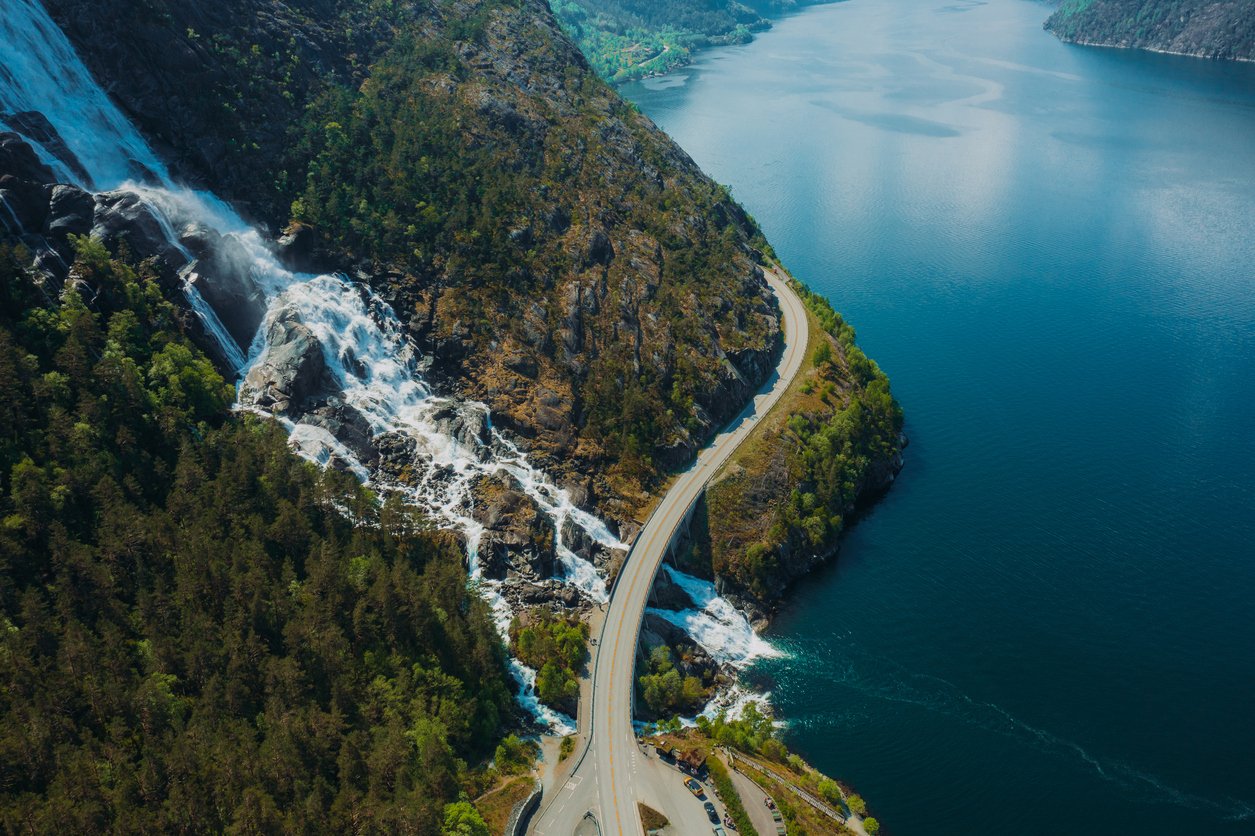
Hardangerfjord is Norway's second-longest fjord and one of the easiest major fjord areas to combine with an active holiday.
The landscape is particularly famous in spring, when fruit trees around the fjord come into bloom. The wider Hardanger region is also home to mountain hikes, waterfalls and some of Norway's most recognisable scenery, including Trolltunga.
It's also convenient if you're travelling through Bergen and Voss, Hardangerfjord is a natural choice if you want the fjord experience without designing your entire Norway itinerary around a single destination.
Read our complete guide to Hardangerfjord to learn how to perfectly plan your trip!
Best for: Active travellers, hiking and combining Bergen, Voss and the fjords.
Geirangerfjord: Best for the Classic Norway View
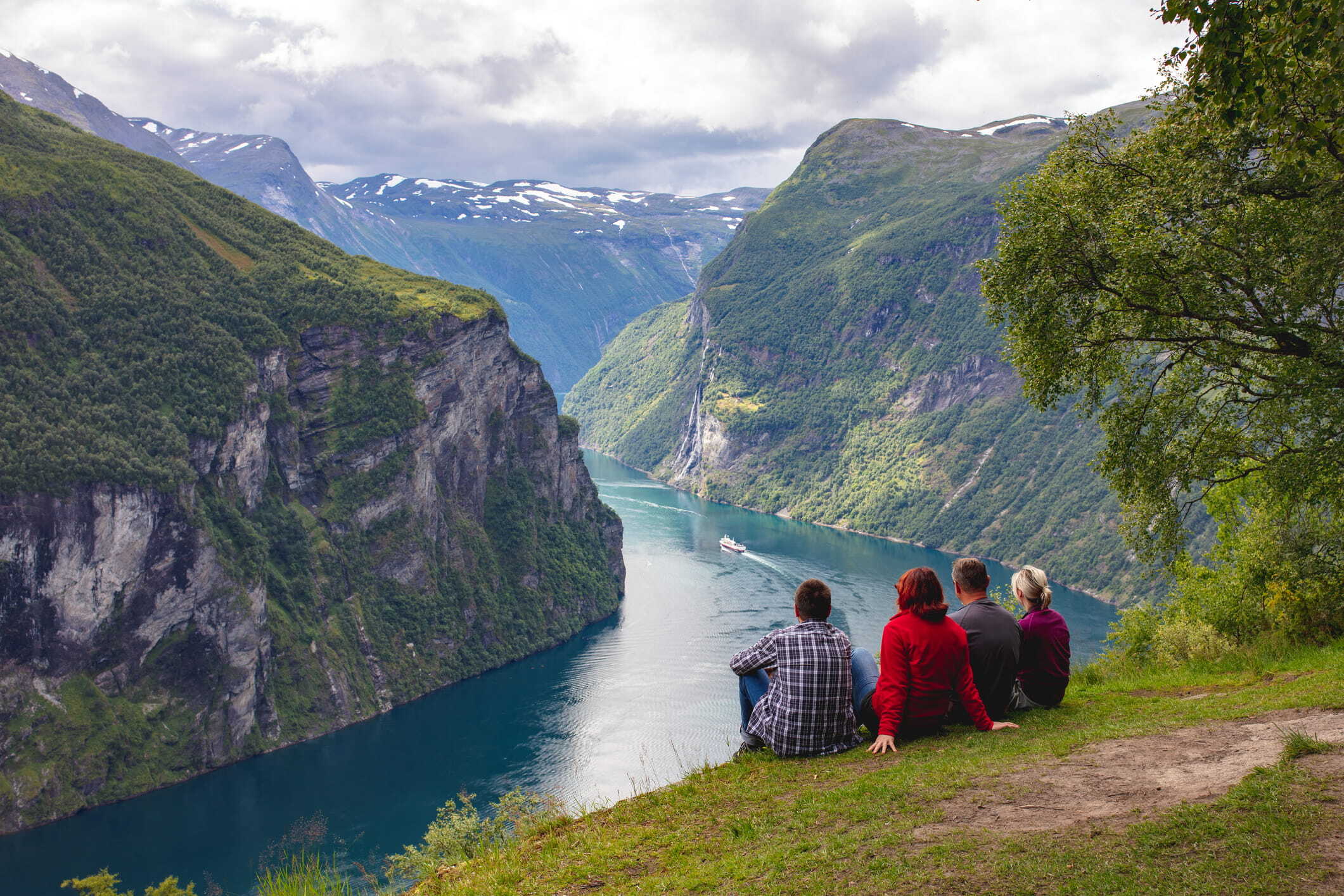
Seen a photograph of a Norwegian fjord surrounded by steep mountains and waterfalls? There's a reasonable chance it was Geirangerfjord.
Geirangerfjord is part of the UNESCO-listed West Norwegian Fjords landscape and has become one of Norway's most famous natural attractions. Waterfalls plunge from the surrounding mountainsides, while old farms cling to seemingly impossible positions above the water.
The downside of being this beautiful is hardly surprising: you're unlikely to have it to yourself.
Geiranger receives large numbers of visitors (upwards of 300,000 a year), particularly during the summer cruise season. For many people, especially locals, the crowds are the main reason it isn't their favourite fjord despite its extraordinary scenery.
If you visit, consider seeing it from more than one perspective. Get onto the water, but also climb to one of the viewpoints above the fjord.
Best for: Awesome scenery and first-time visitors who don't mind sharing it.
Lysefjord: Best for Seeing a Fjord From Above
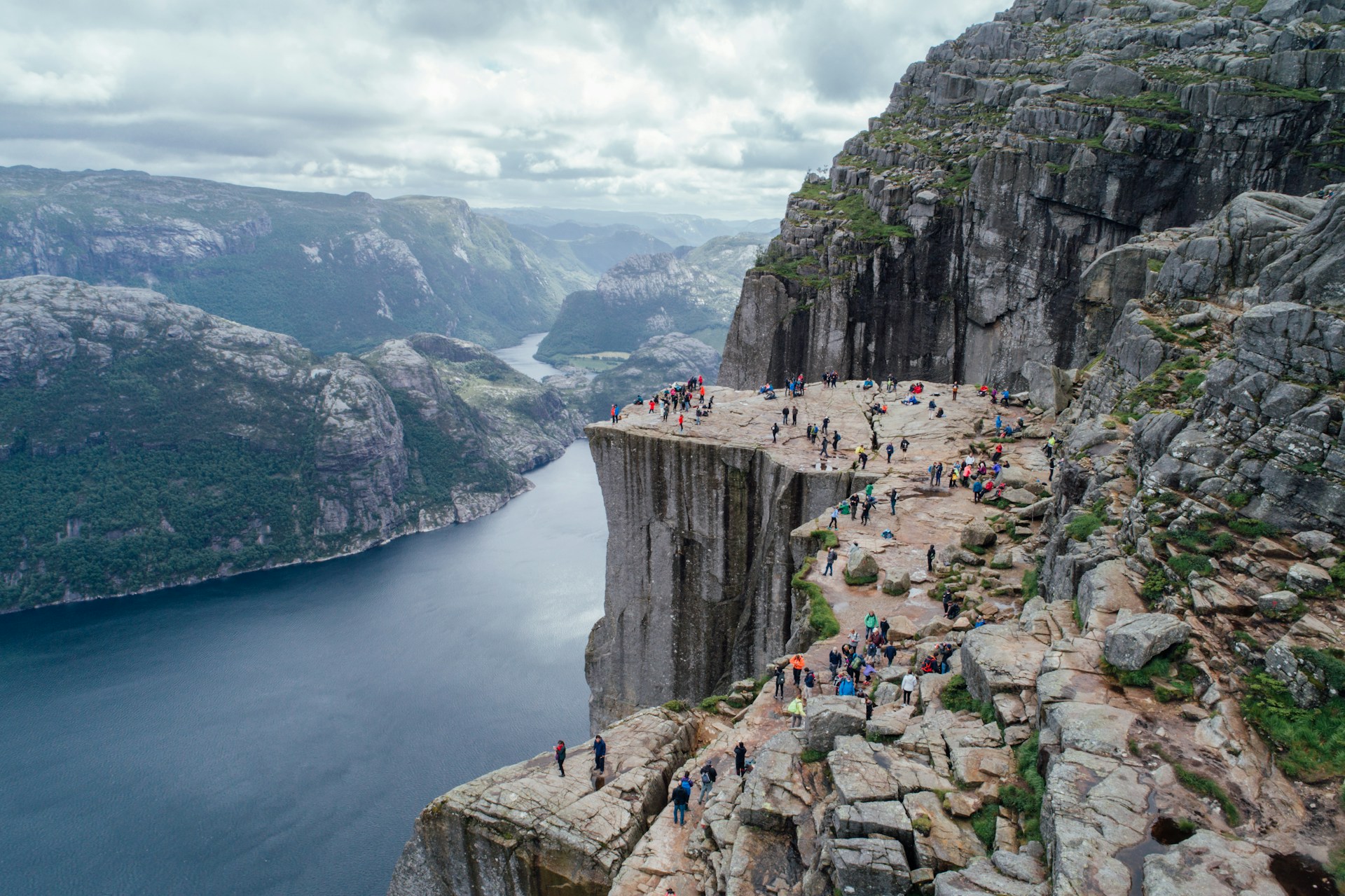
Lysefjord near Stavanger proves that you don't necessarily need to be on the water to have an unforgettable fjord experience.
Two of Norway's best-known mountain attractions sit above it: Preikestolen (Pulpit Rock) and Kjerag (Kjeragbolten).
At Kjerag, the mountainsides drop more than 1,000 metres towards Lysefjord, while Preikestolen offers one of the country's most recognisable viewpoints over the water.
You can still explore Lysefjord by boat, but this is the fjord we'd rec if your idea of a perfect Norway trip involves putting on hiking boots and earning the view.
Best for: Hiking and dramatic viewpoints.
Hjørundfjord: Best for Escaping the Busiest Fjords
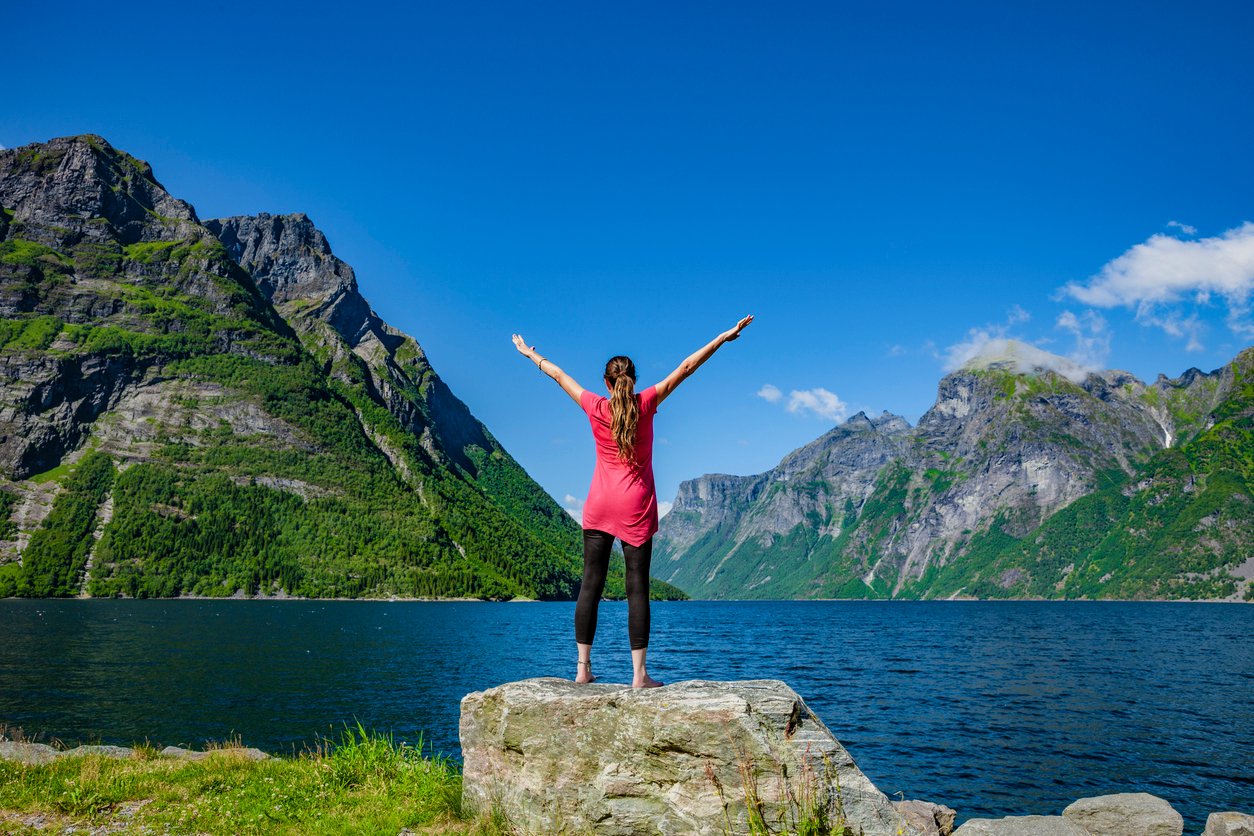
Hjørundfjord runs for around 33 kilometres through the mountains of the Sunnmøre Alps.
Some of the small communities around the fjord remain connected primarily by boat, and the surrounding mountains make the area particularly attractive for hiking, kayaking and skiing.
It's also considerably less famous internationally than Geirangerfjord.
Hjørundfjord is one of our favorite Norwegian fjords. When people ask us about it, we always highlight both the sights you’ll find there and its quieter nature compared with better-known destinations such as Geirangerfjord and Sognefjord.
Best for: Mountain scenery, active travel and fewer crowds.
Lyngenfjord: Best for an Arctic Fjord Experience
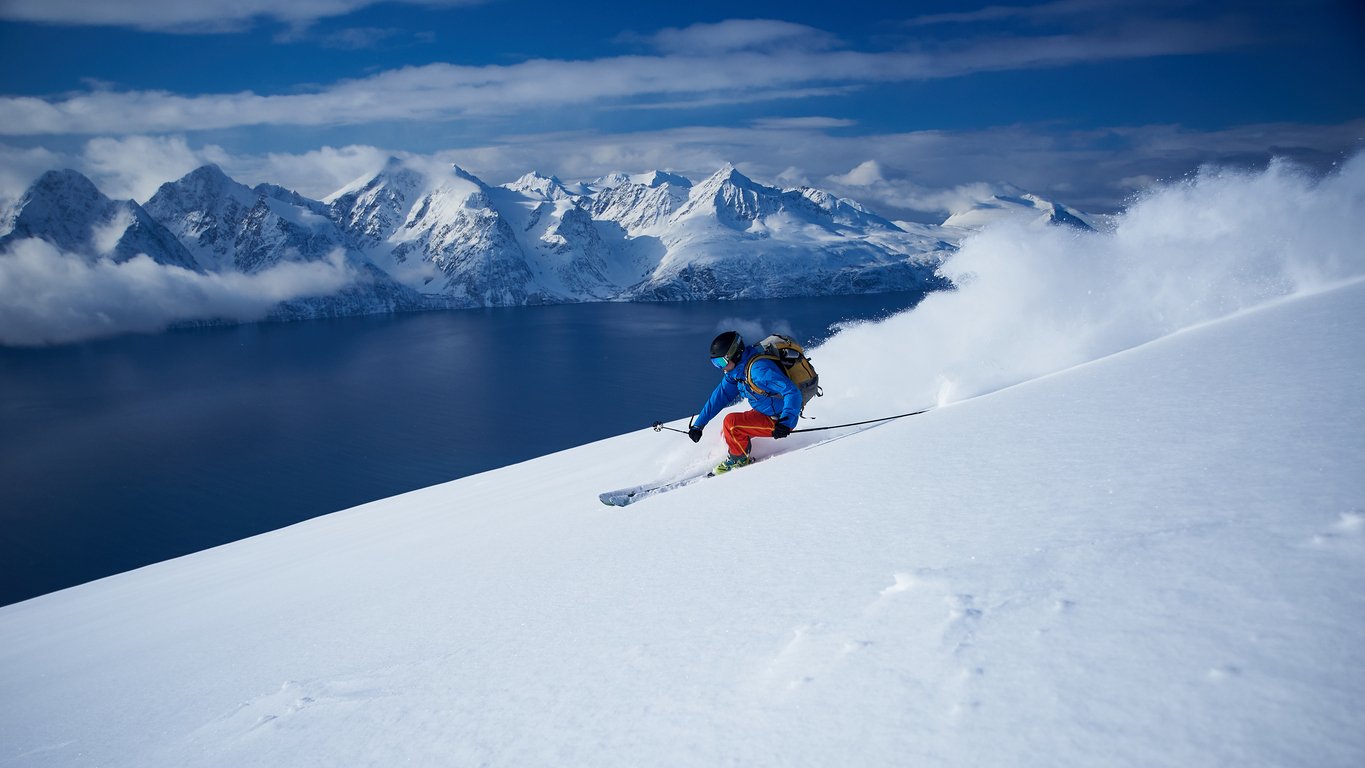
Want something completely different? Go north!
Lyngenfjord has all the fjord vibes you’d want together with the sharp mountains and Arctic conditions of Northern Norway.
In summer, that can mean exploring beneath the Midnight Sun. From September through March, the region also enters Northern Lights season.
It's a good reminder that the Norway fjords aren't exclusively a Western Norway experience.
Best for: Arctic landscapes, Northern Norway and combining fjords with seasonal phenomena.
What's the Best Way to See the Fjords in Norway?
Ask ten travellers this question and you'll probably get ten answers.
A cruise may be perfect for one person. Another will remember the moment they reached a mountain summit and saw a fjord thousands of feet below them. For us, getting into a kayak and travelling through the landscape under your own power is hard to beat.
The best Norway trip combines several perspectives.
Kayaking: Best for Experiencing the Fjord Up Close
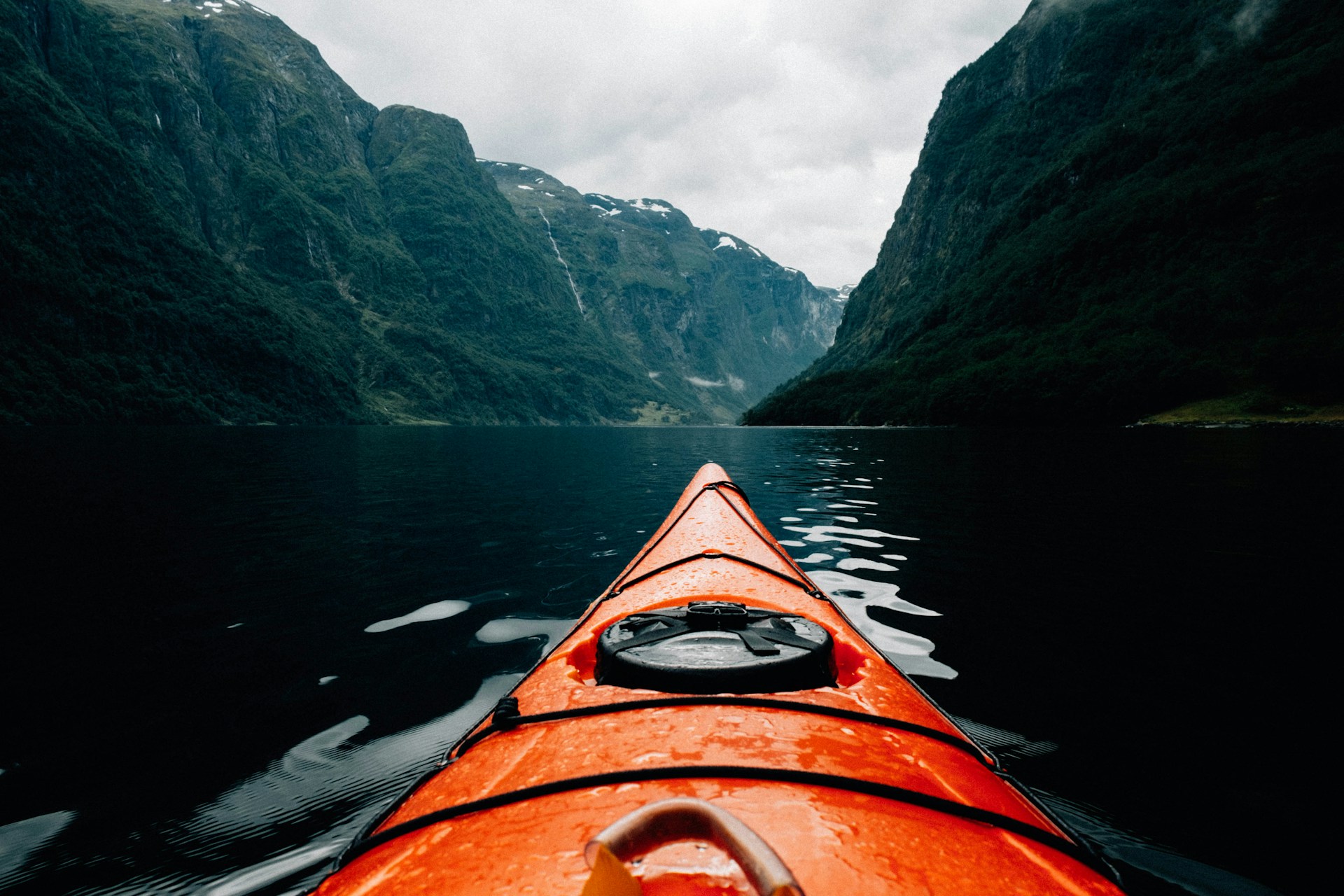
There's a huge difference between seeing a fjord and being in it.
Kayaking puts you almost directly at water level. Suddenly the mountains feel enormous, waterfalls become something you paddle towards, and small details along the shoreline that disappear from a larger vessel become part of the experience.
It's particularly rewarding somewhere like Nærøyfjord, where the narrowness of the fjord exaggerates the scale of the mountains around you.
For active travellers, this would be our first choice.
Hiking: Best for Seeing the Full Landscape
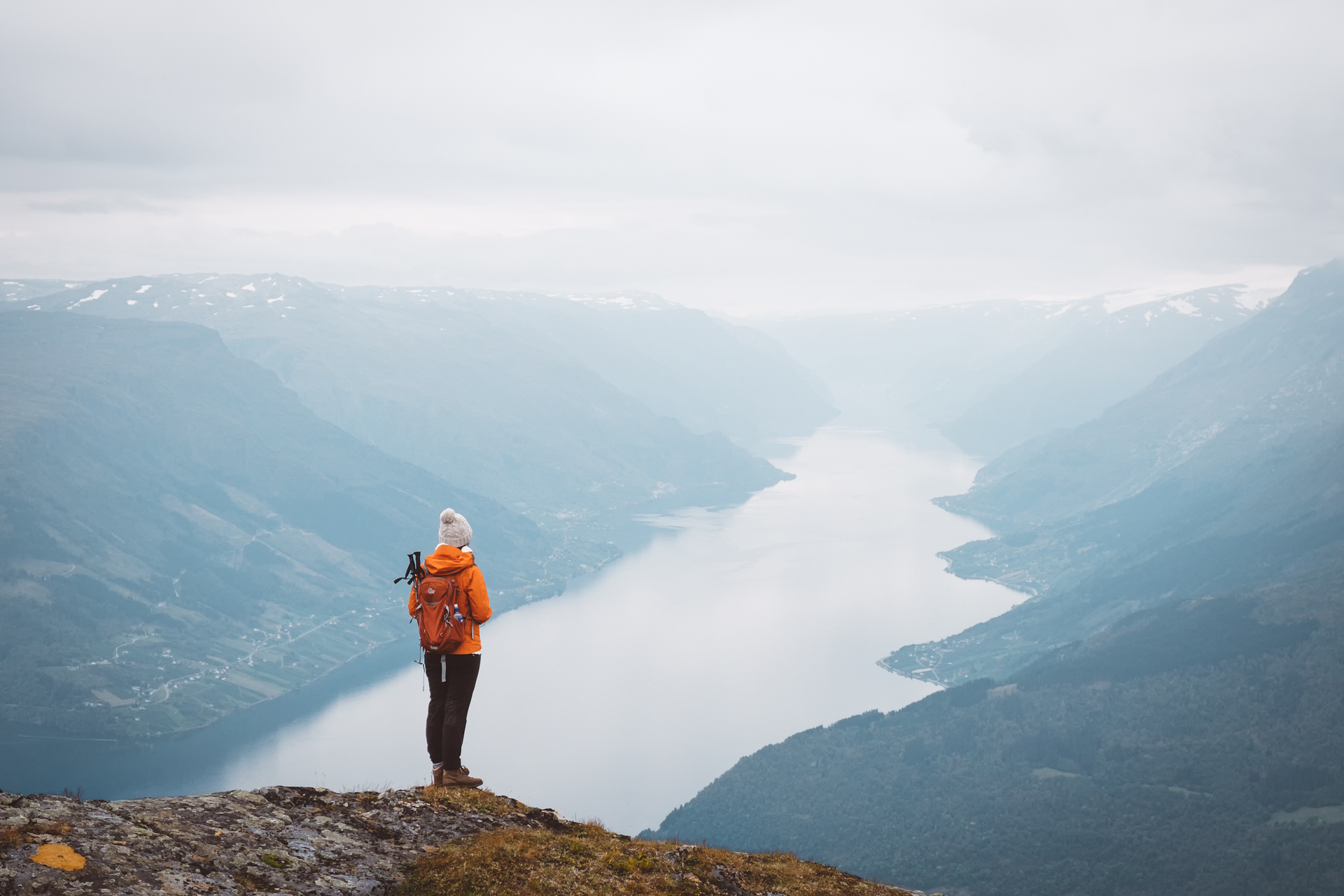
At water level, the mountains dominate your view.
From above, you finally understand the shape of the landscape.
Hiking tours will reward you with the classic perspective of blue water winding between mountains, whether that's from a famous viewpoint above Lysefjord or a quieter trail elsewhere in Fjord Norway.
Combining the two is even better: paddle one day, climb above the fjord the next.
Road Trip: Best for Freedom
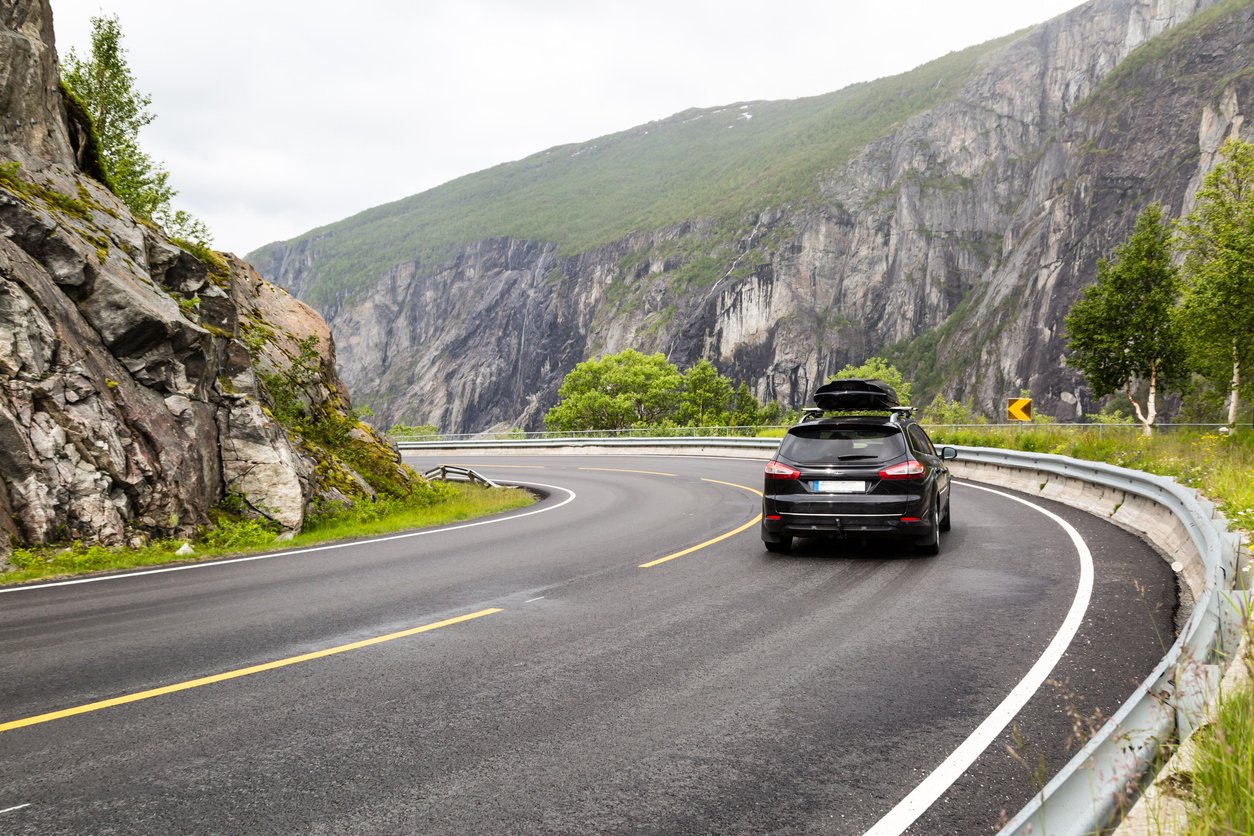
Driving gives you something organised transport can't always provide: the ability to stop.
And in Western Norway, you'll want to stop. A lot.
Roads twist alongside fjords, climb over mountain passes and disappear into tunnels before emerging into another valley entirely. Having your own vehicle makes it easier to explore smaller villages and less-visited areas away from the main tourism routes.
We favour driving for exactly this flexibility, particularly given the limited frequency of some Norwegian public transport.
Just don't underestimate distances because two places look close on the map. Mountains and fjords have a habit of getting in the way.
Fjord Cruise: Best for an Easy Introduction
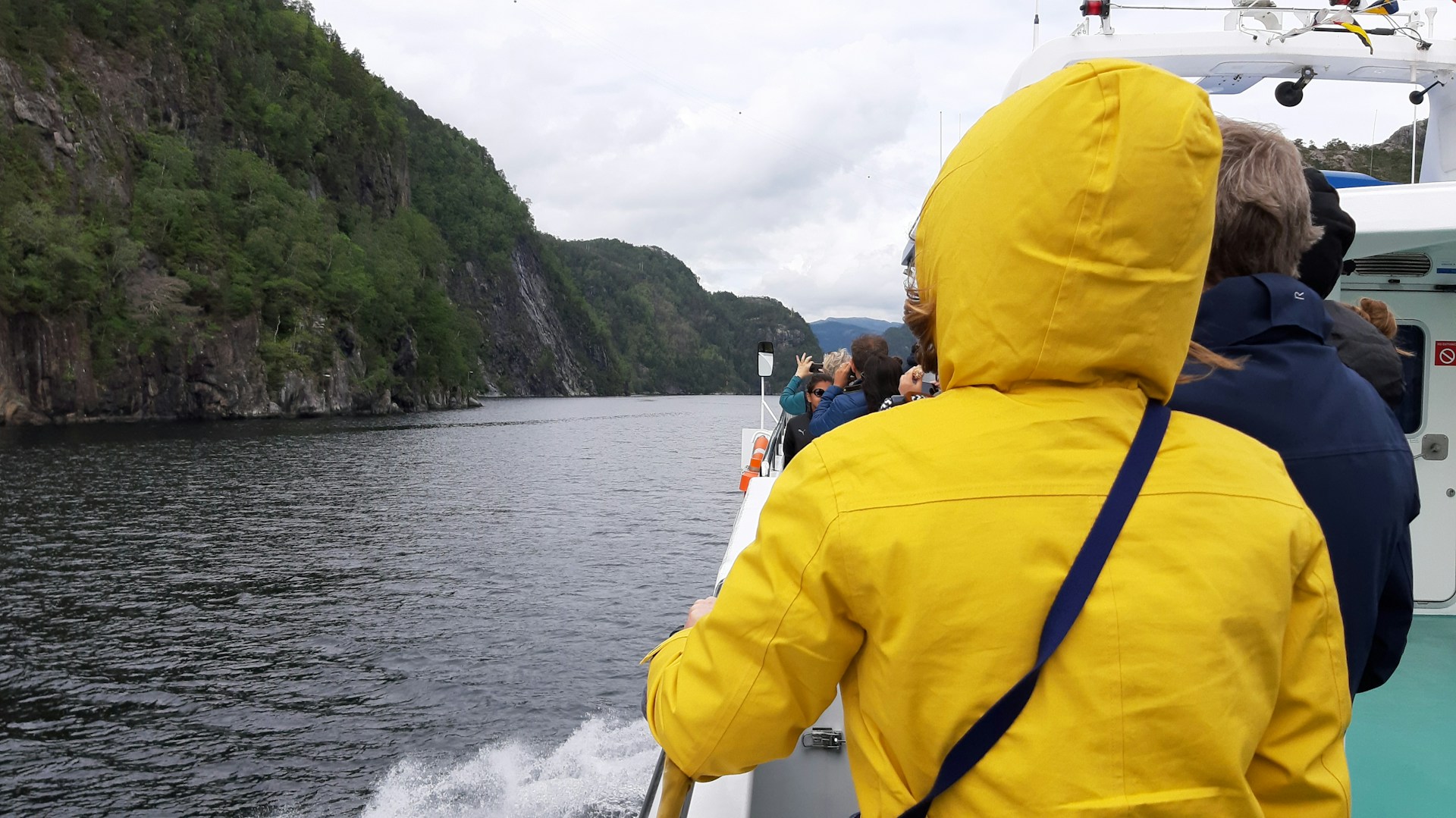
There's a reason fjord cruises are popular.
They're accessible, require little physical effort and let you cover a lot of scenery in a relatively short period. Electric and conventional ferry services also operate through parts of Fjord Norway throughout the year.
If you have limited mobility, limited time or simply want to spend a few hours watching the landscape go by, a boat can be an excellent choice.
We just wouldn't make it your only experience of the fjords if you have more time.
Train, Bus and Boat: Best Without a Car
You absolutely don't need to rent a car to see the Norwegian fjords.
Rail connections provide access to parts of Fjord Norway, while buses, ferries and passenger boats connect many of the towns and villages. Visit Norway notes that arriving in Fjord Norway by train is both scenic and a practical way to reach the region.
Bergen is particularly useful as a starting point for exploring the western fjords.
So, What's the Best Way to See the Fjords in Norway?
If we had to recommend one approach, it would be this:
Don't experience every fjord the same way.
Kayak through one. Hike above another. Take a ferry when the journey itself makes sense. Drive into the mountains and stop somewhere you hadn't planned to.
You'll understand far more about the landscape by experiencing it from different angles than you will by trying to tick as many fjords as possible off a list.
When Is the Best Time to Visit Norway's Fjords?
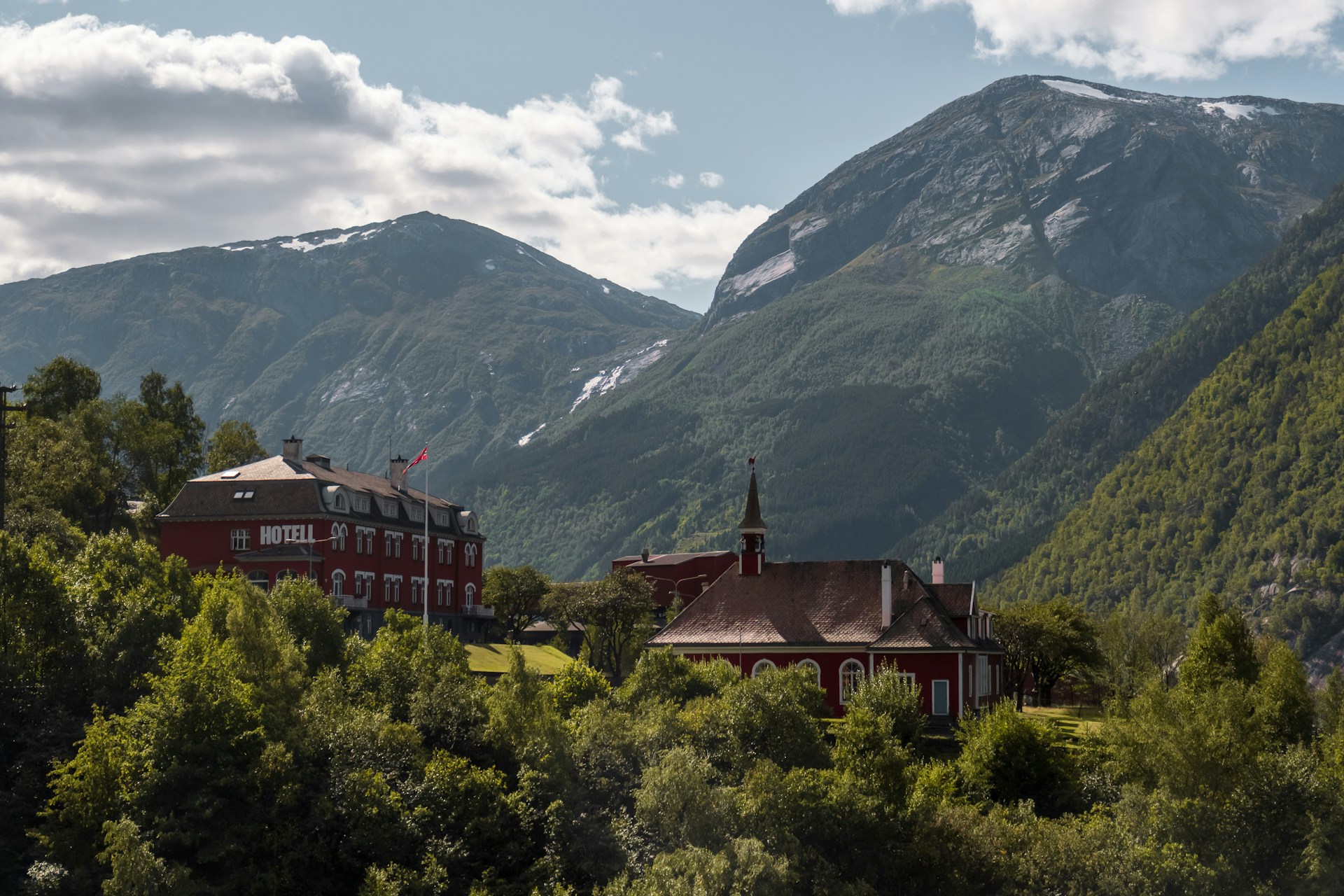
There isn't a single best month.
The fjords change dramatically with the seasons, so the right time depends on what you want to do.
Spring: Waterfalls, Snowy Mountains and Blossom
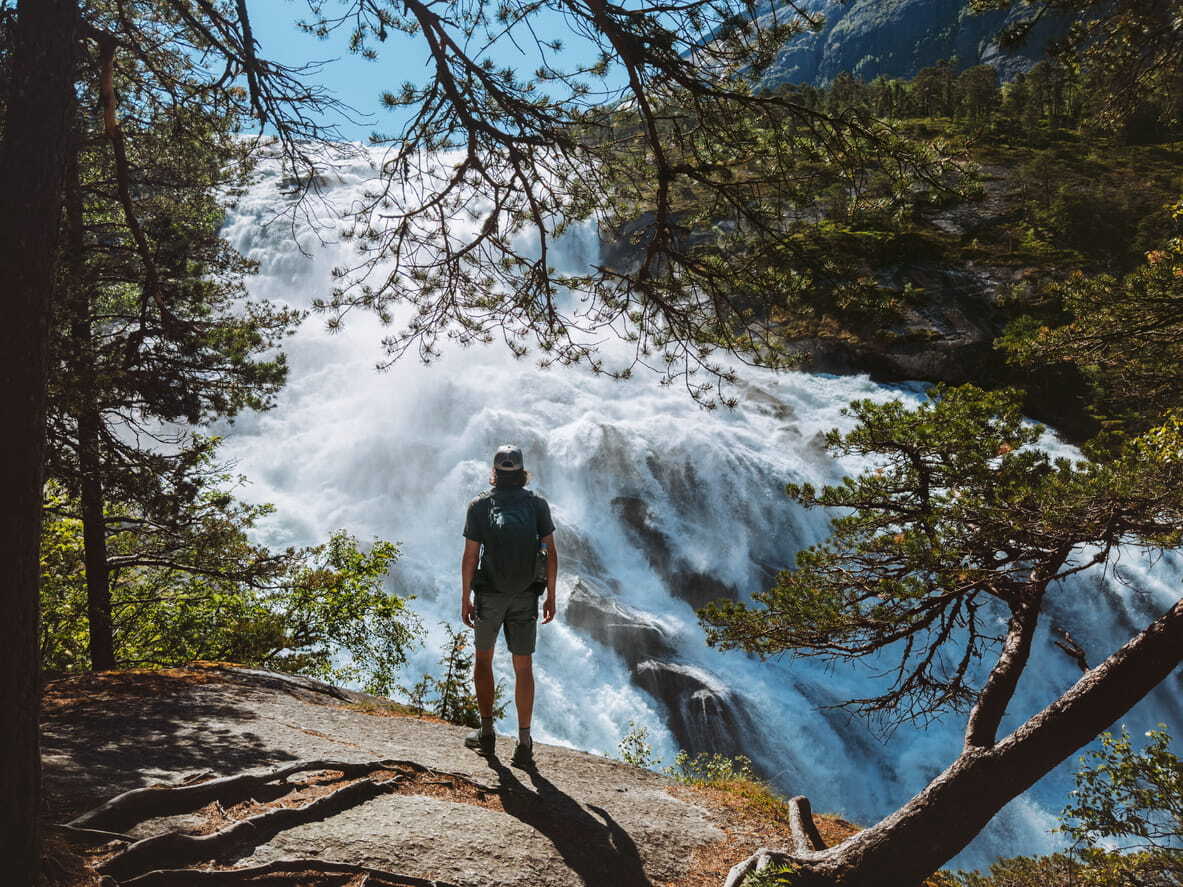
Spring is one of the most visually interesting periods in Fjord Norway.
Snow can remain high on the mountains while valleys turn green, and melting snow feeds the region's waterfalls. Around Hardangerfjord, fruit orchards typically blossom in spring, adding another layer to the landscape.
Conditions can still feel surprisingly wintry, though, particularly at elevation.
Summer: Long Days and Maximum Choice
Summer gives you long daylight hours and the widest range of outdoor activities.
It's an excellent time for kayaking, hiking, cycling and road trips. It's also peak visitor season, particularly at places such as Nærøyfjord and Geirangerfjord.
If you're visiting the famous fjords in July or August, consider getting out early, staying overnight rather than passing through on a day trip, or exploring from the water or trails where possible.
Autumn: Colour and Quieter Trails
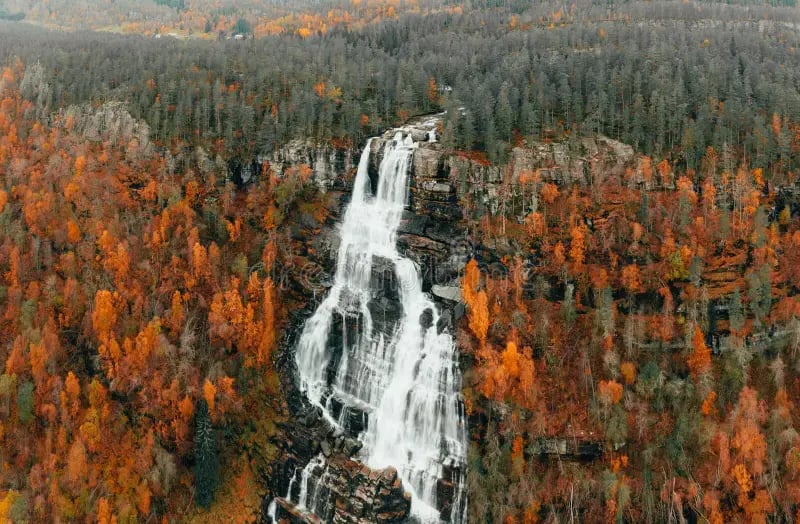
Autumn brings cooler temperatures, changing vegetation and generally fewer visitors.
The fjords' autumn colours are one of the main attractions of travelling here outside summer, in our view.
It's a particularly good season if you're less interested in ticking off attractions and more interested in slowing down and spending time outdoors.
Winter: A Completely Different Fjord Landscape
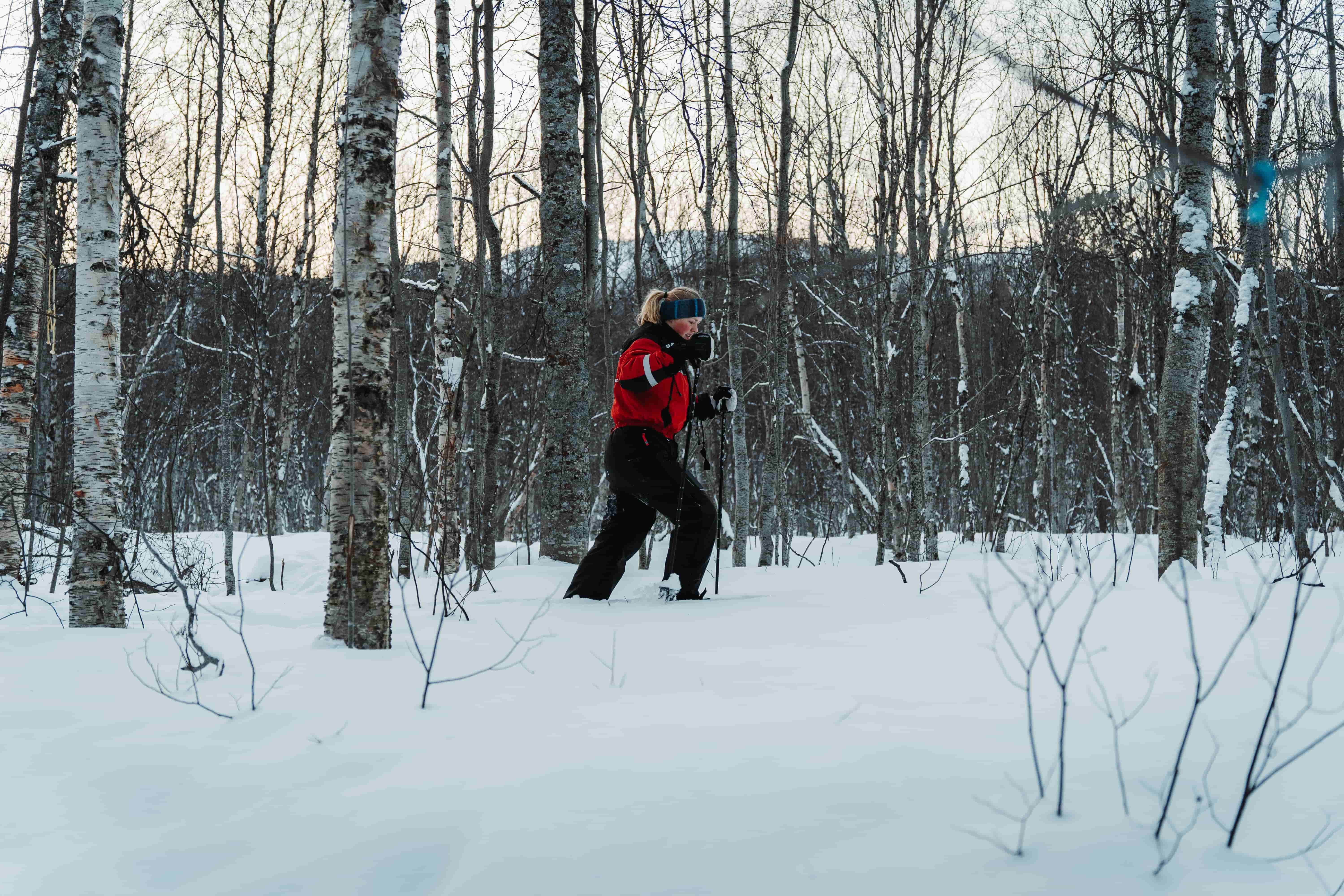
Winter replaces green mountainsides with snow-covered peaks and gives the fjords a completely different atmosphere.
Many Norwegian fjords remain largely ice-free, and some ferries and fjord experiences operate year-round. But individual activities, hiking routes and roads can become seasonal, so winter requires more planning than summer.
Whichever season you choose, don't trust the sky outside your hotel window too much.
Weather changes quickly around the mountains. Rapidly shifting conditions here are completely normal, so we always recommend packing proper waterproofs, thermal layers and insulation even outside winter.
(That's good advice at almost any time of year.)
Can You See Whales in Norway's Fjords?
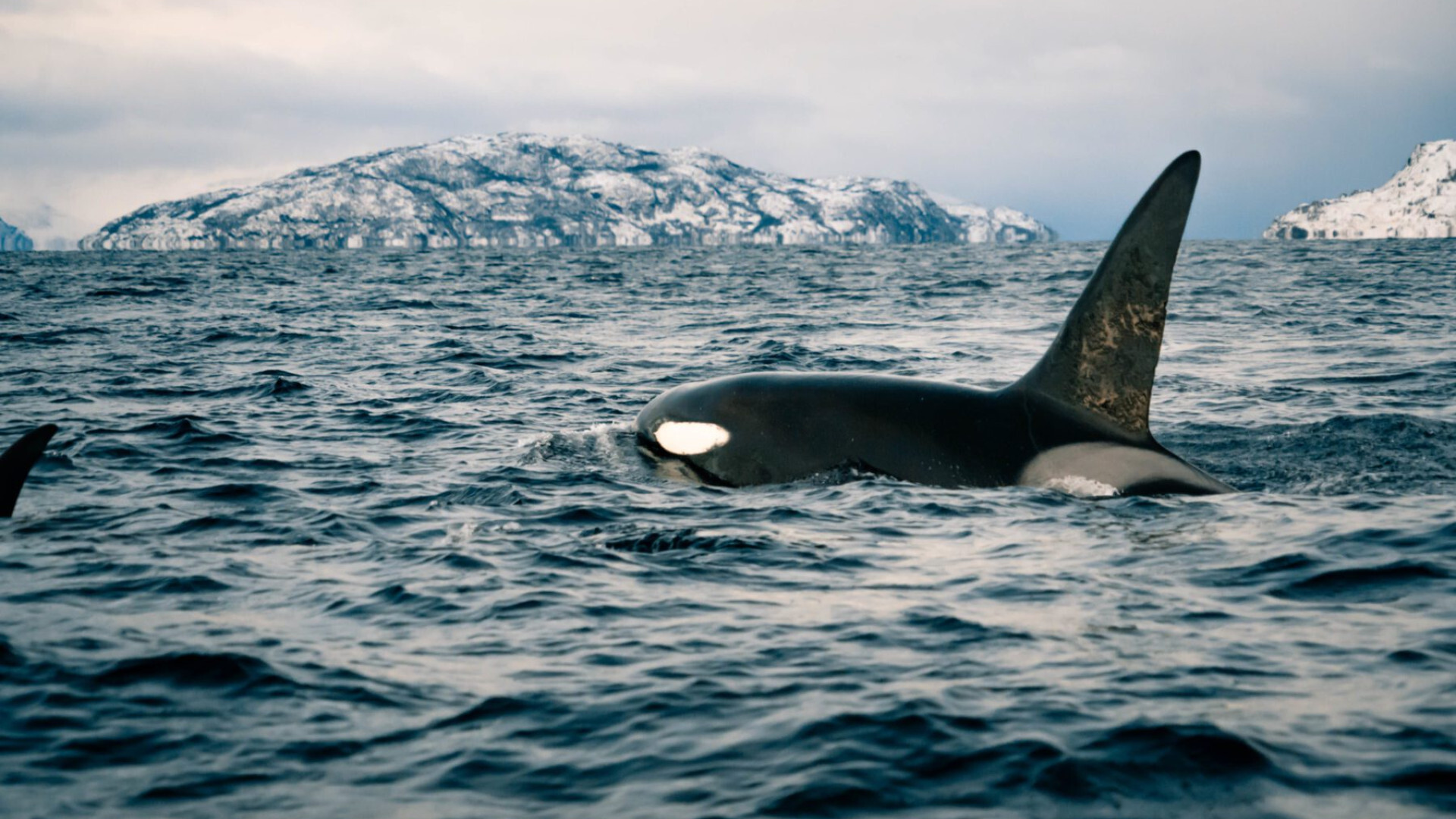
Yes, whales can be seen in Norwegian waters and fjords, but you shouldn't expect whale sightings simply because you're visiting a fjord.
Norway's coastline covers an enormous distance, and wildlife varies significantly between regions and seasons. If seeing whales is one of the main reasons for your trip, plan around a destination and season known specifically for whale watching rather than treating it as a likely bonus on a Western Norway fjord trip.
In other words, don't book a kayaking trip on the Norwegian fjords expecting humpbacks to appear beside you.
Think of whales and the fjords as two Norwegian experiences that can overlap, particularly farther north, rather than something every fjord visitor will see.
How to Plan a Norwegian Fjords Trip
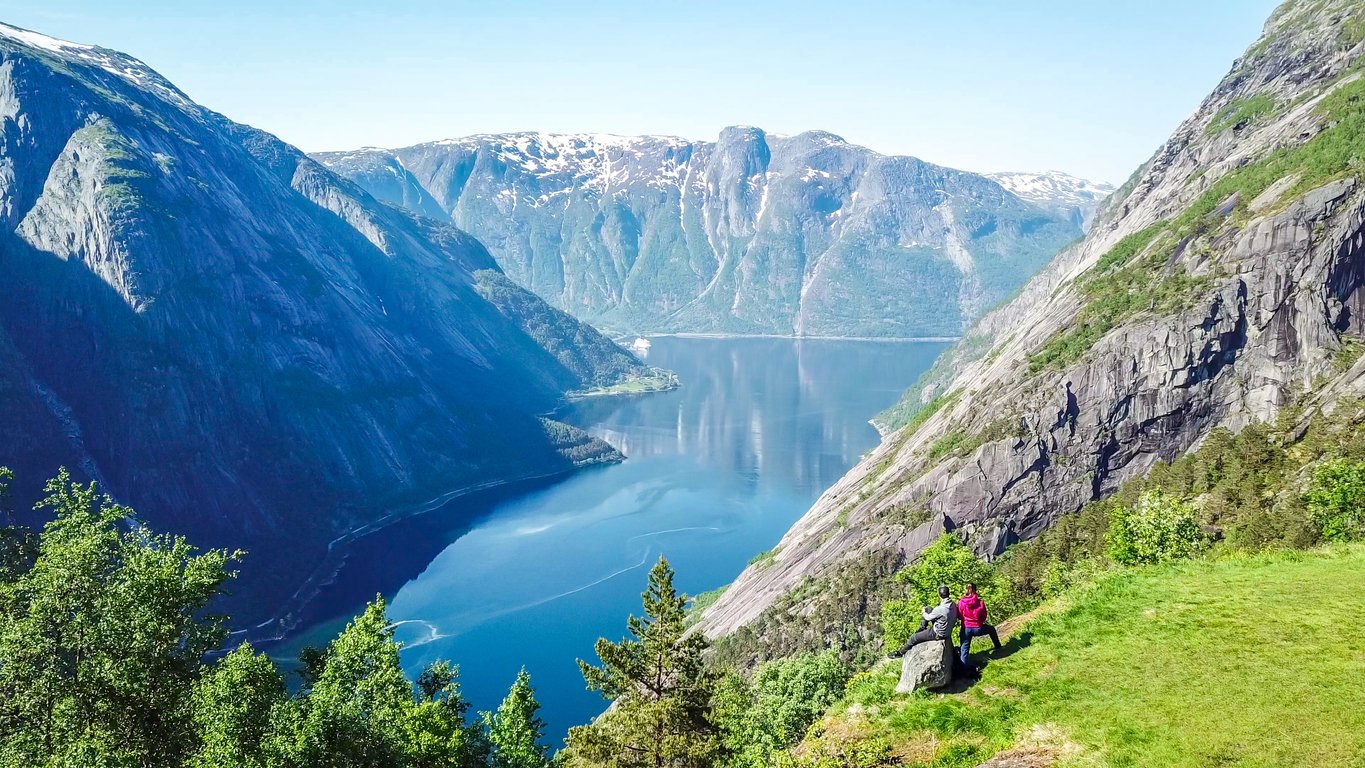
The biggest mistake we see people make when visiting Norway for the fjords is trying to see too many of them in one trip.
Norway looks deceptively manageable on a map. Once mountains, ferries, winding roads and the temptation to stop every fifteen minutes for another view enter the equation? We bet your itinerary will quickly slow down!
How Many Days Do You Need for the Norway Fjords?
If you only have one day, choose one accessible fjord experience and accept that you're getting an introduction.
With three or four days, you can base yourself in one region and combine the water with hiking, cycling or another activity.
With a week or more, you can start connecting several fjord areas without spending your entire holiday in transit.
We'd choose depth over distance every time.
Three days properly exploring one fjord region will usually give you a better sense of Norway than racing between five famous viewpoints.
(If you’re thinking about how to combine the fjords with your Bergen trip, check out our How many days in Bergen article)
Is Bergen or Oslo Better for Visiting the Fjords?
If the classic Western Norway fjords are your priority, Bergen is generally the more convenient gateway.
The city puts you much closer to areas such as Hardangerfjord and the Sognefjord region, while Voss provides another useful base between Bergen and some of the country's best-known fjord landscapes. Getting from Bergen to Voss is also a breeze.
Oslo can still form part of an excellent Norway itinerary, particularly if you're crossing the country by train. Traveling from Oslo to Voss is also not too complicated.
However, it isn't surrounded by the towering glacial fjords most international visitors have in mind.
For more info, check out our guide on the best fjords to visit from Bergen.
Do You Need a Car to Visit the Fjords?
No.
Norway's trains, ferries, buses and guided tours make it possible to build a fjord itinerary without driving.
A car does give you greater flexibility, especially if you want to explore smaller communities and stop at viewpoints along the way.
Which option works depends on the itinerary you've built for yourself.
For a compact Bergen–Voss–fjord trip, public transport and guided experiences can work extremely well. For a longer journey through several fjord regions, driving can make exploring more flexible.
Frequently Asked Questions About Norway's Fjords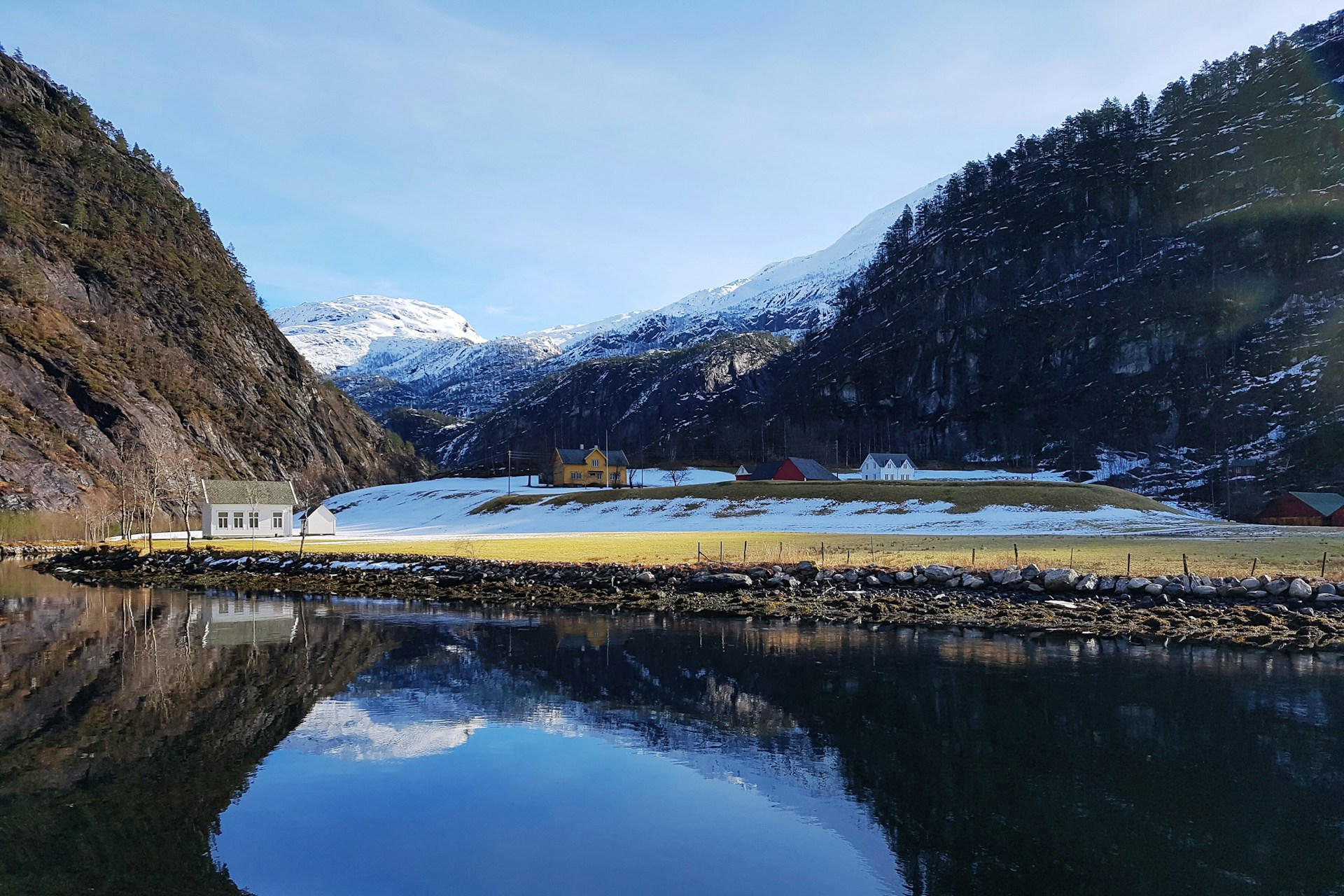
What is a fjord in Norway?
A fjord is a long, narrow inlet surrounded by steep mountains or cliffs that was carved by a glacier and later flooded by seawater. Norway's fjords were shaped through repeated periods of glaciation.
Where are the fjords in Norway?
Fjords are found along much of Norway's coastline, but many of the country's most famous and dramatic examples are in Western Norway, including Sognefjord, Nærøyfjord, Hardangerfjord and Geirangerfjord. Fjords are also found much farther north, including throughout Northern Norway.
How many fjords are there in Norway?
There are well over 1,000 fjords in Norway. Most locals list more than 1,700 named fjords along the Norwegian coast. The number varies depending on how fjords and their individual branches are counted.
How deep are the fjords in Norway?
Some Norwegian fjords are extremely deep. Sognefjord reaches approximately 1,308 metres below sea level at its deepest point, making it Norway's deepest fjord.
What is the longest fjord in Norway?
Sognefjord is Norway's longest fjord, stretching approximately 204 kilometres inland through Western Norway. Around 30 fjord arms branch from the larger Sognefjord system.
What is the most beautiful fjord in Norway?
There's no objective winner. Geirangerfjord and Nærøyfjord are two of the most famous and are recognised by UNESCO, while less-visited fjords such as Hjørundfjord offer spectacular scenery with fewer visitors. The best choice depends on whether you're looking for iconic viewpoints, kayaking, hiking, Arctic landscapes or somewhere quieter.
What's the best way to see the fjords in Norway?
For the fullest experience, combine different perspectives. Kayak or take a boat onto the water, hike to a viewpoint above the fjord, and explore the surrounding valleys by road, rail or bike. Travellers with limited time can also see several major fjord areas using Norway's train, bus and ferry network.
Can you see whales in Norway's fjords?
Whales can be seen in Norwegian waters, but sightings aren't a standard part of visiting the Western Norway fjords. If whale watching is a priority, choose a destination and time of year specifically associated with whale activity rather than expecting to see them on a general fjord trip.
Can you visit the Norwegian fjords without a car?
Yes. Trains, buses, passenger boats, ferries and guided tours make many of Norway's fjords accessible without renting a car. Bergen is an especially useful starting point for exploring the fjords of Western Norway.
How many days do you need to see the Norwegian fjords?
Allow at least three to four days if you want to properly experience one fjord region rather than simply pass through it. With a week or more, you can combine several areas and spend time kayaking, hiking or exploring smaller communities along the way.
Experience Norway’s Fjords, Don't Just Look at Them
It's easy to think of the Norwegian fjords as scenery.
They're much better when they become part of the adventure.
Paddle beneath mountains that were carved by glaciers thousands of years ago. Hike until the fjord appears hundreds of metres below your feet. Cycle through the valleys connecting water and mountain. Spend a night in a small fjord village rather than rushing back to the city.
Norway's fjords don't need much help looking impressive.
But the moments you remember tend to happen when you stop looking at the landscape from a distance and get into it.
If you're travelling through Fjord Norway, Voss makes an excellent base for doing exactly that, with access to Nærøyfjord, Hardangerfjord and some of Western Norway's best outdoor terrain.