
Possibly the most common question we get asked by our foreign friends is “what is Norway known for, exactly?”
You’re probably familiar with Norway for the fjords, Northern Lights, Viking history, mountains and awesome outdoor landscapes. The more in-the-know would say it's also famous for skiing, salmon, colourful coastal towns, the Midnight Sun and a culture built around spending time outdoors.
But Norway isn't defined by one landscape or experience.
Travel from Bergen and the western fjords to the mountains around Voss and then north into Arctic Norway, and it can feel like you've visited several different countries.
There are waterfalls dropping from mountainsides, roads disappearing into tunnels, fishing villages squeezed between peaks and the sea, and winter nights when people willingly stand outside in freezing temperatures staring at the sky.
Then there are the slightly less obvious things Norway has given the world: brown cheese, trolls, Scandinavian design and one very large sovereign wealth fund.
We've spent years exploring Norway's rivers, fjords, trails and mountains, so some of the things on this list are naturally closer to our hearts than others.
Here are 25 things Norway is famous for, and a few you might not expect!
1. Norway's Fjords
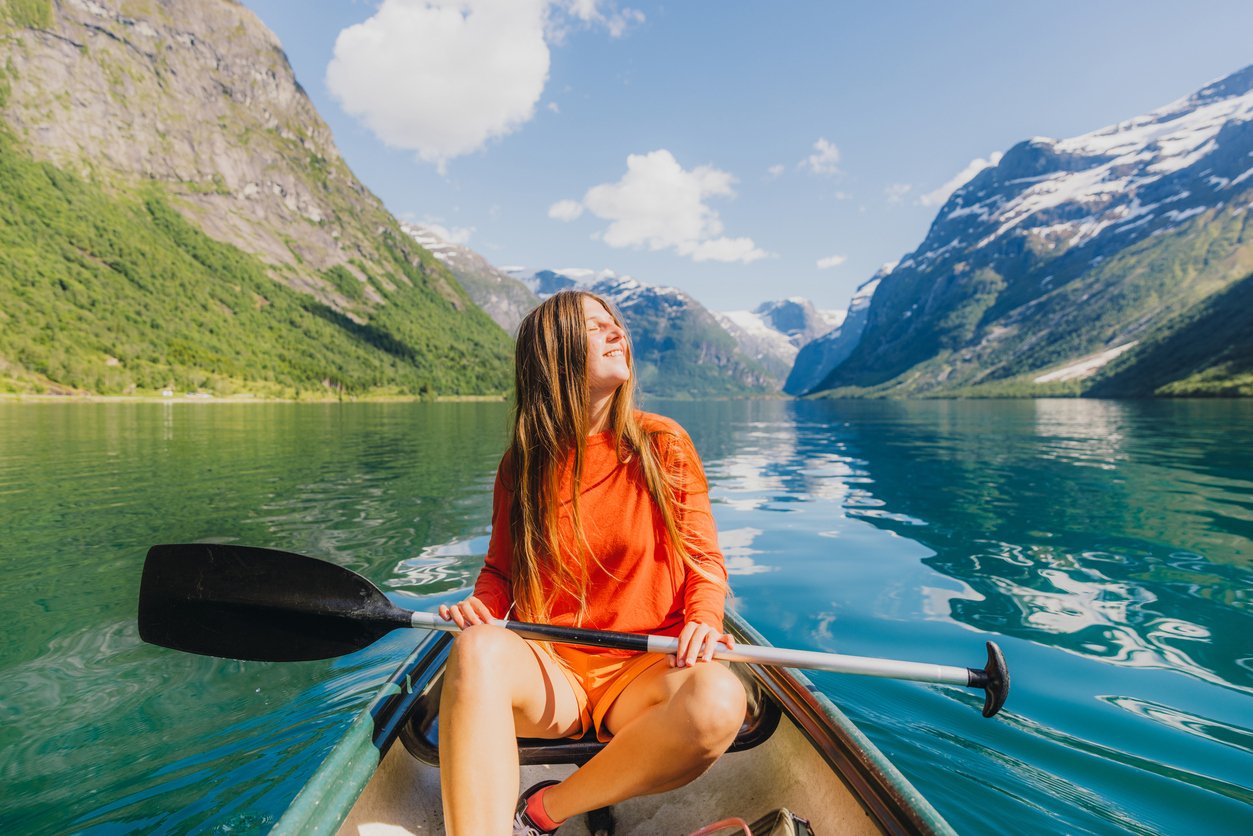
If Norway had to be represented by one landscape, it would probably be a fjord.
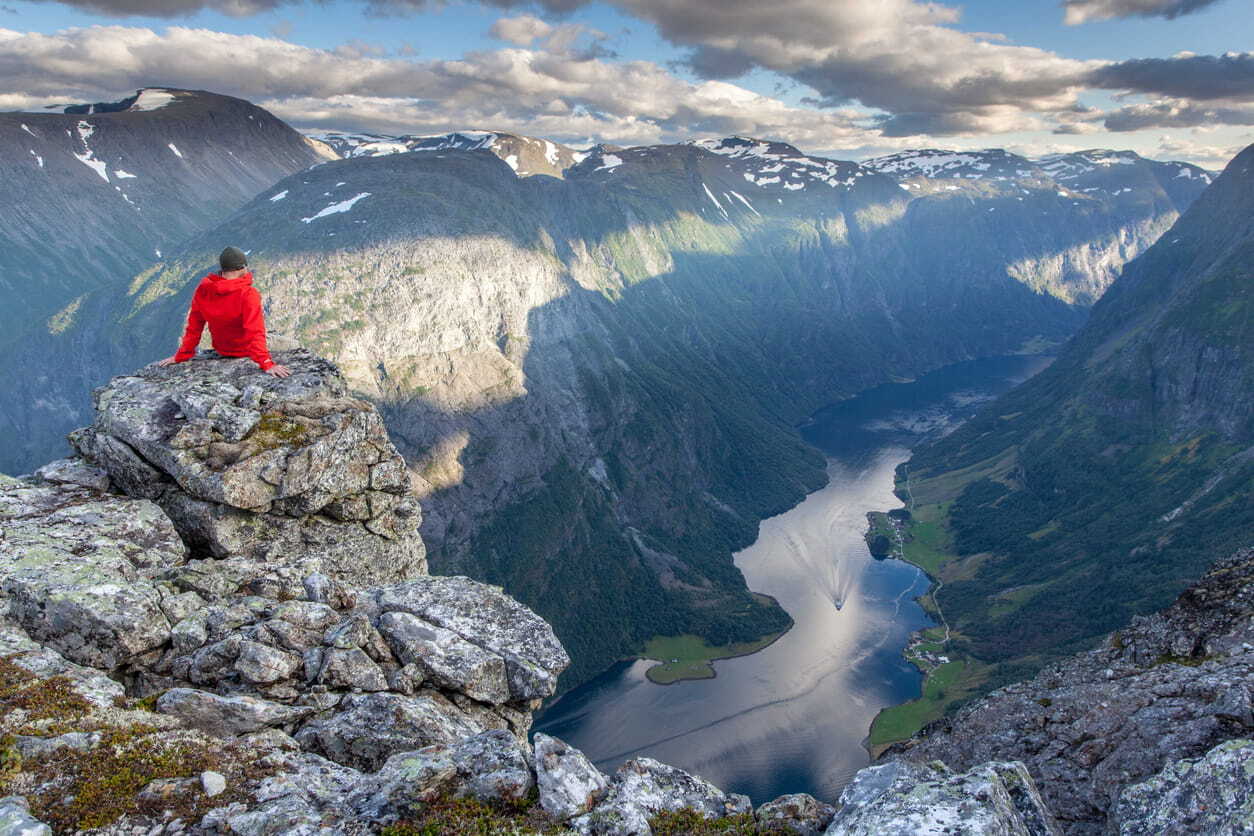
These long, narrow waterways were carved by glaciers over thousands of years, leaving behind deep water surrounded by mountains that rise sharply from the shoreline. There are fjords throughout Norway, but the west of the country is where you'll find many of the landscapes that made them famous.
Sognefjord is Norway's longest and deepest fjord. Geirangerfjord is known for its towering cliffs and waterfalls. Nærøyfjord squeezes through one of the narrowest and most dramatic fjord landscapes in the country.
Then there's Hardangerfjord, surrounded by mountains, waterfalls, orchards and some of Western Norway's best outdoor terrain, and Lysefjord, home to the famous Preikestolen (Pulpit Rock) viewpoint.
You can experience Norway's fjords from viewpoints, trains, ferries and roads.
But we're slightly biased here:
Looking at a fjord from a viewpoint is one thing. Paddling through one is another.
Kayaking puts you at fjord level, away from the roadside viewpoints and cruise decks, with nothing between you and the surrounding mountains except a paddle and a lot of cold, clear Norwegian H2O.
2. The Northern Lights
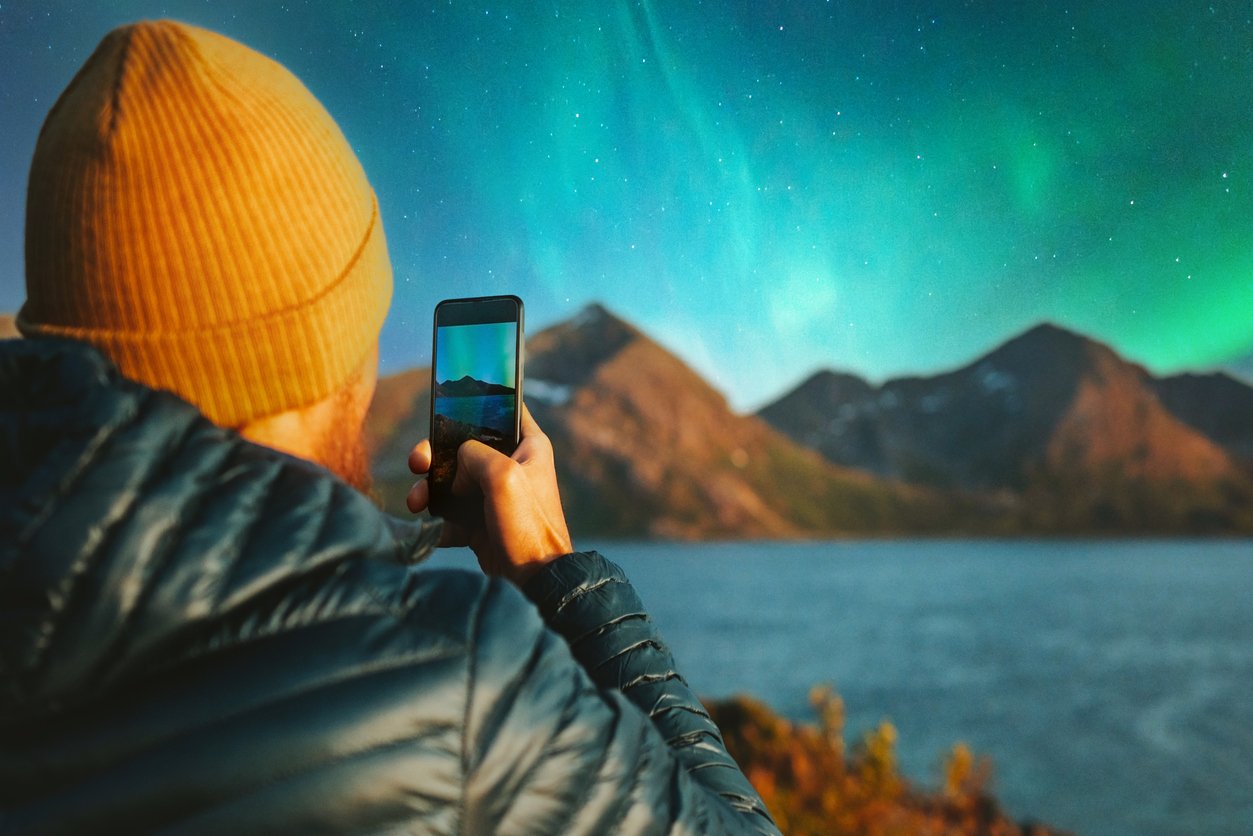
Head far enough north in winter and you’ll see that one of Norway's biggest attractions isn't on the ground at all.
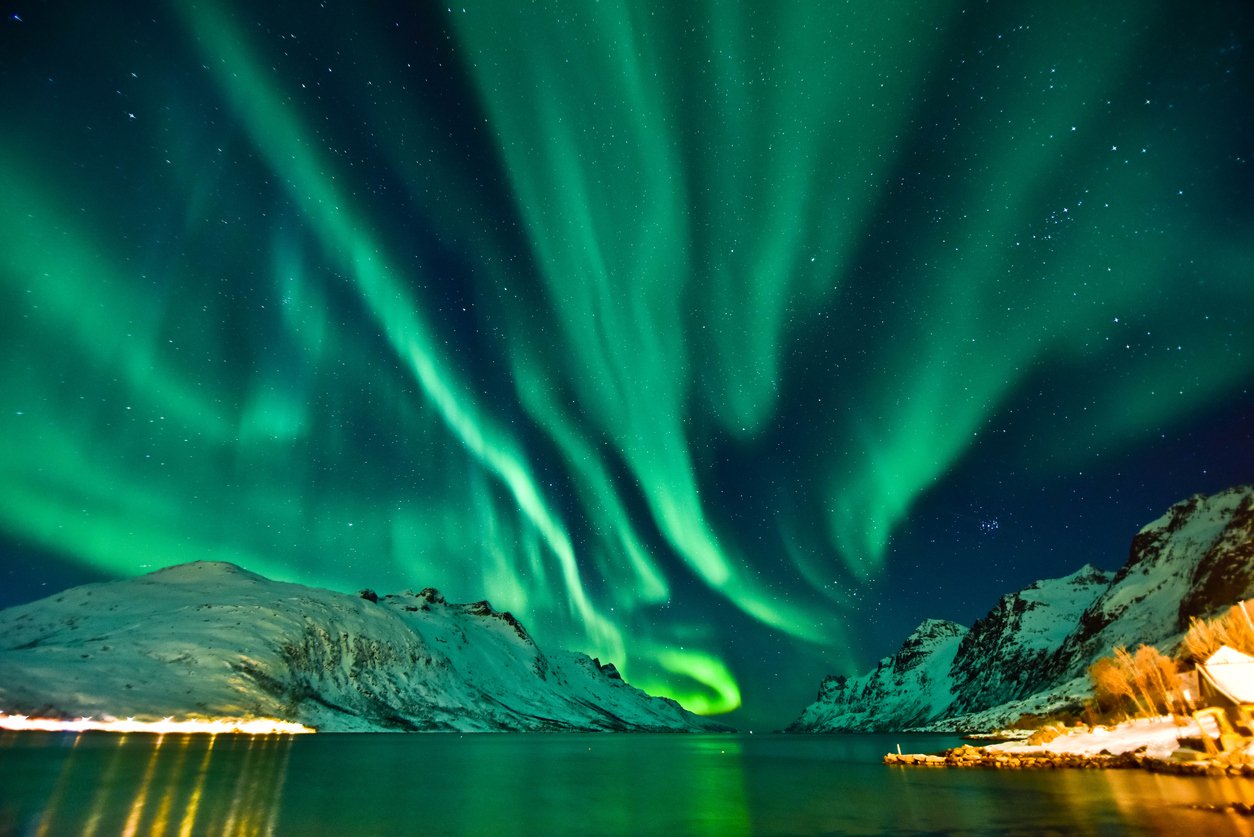
The Aurora Borealis, better known as the Northern Lights, occurs when charged particles from the Sun interact with gases in Earth's upper atmosphere. Under the right conditions, the result can be green, pink or violet light moving across the night sky.
Northern Norway sits beneath the auroral oval. This makes places such as Alta and Tromsø popular bases for travellers hoping to see it.
But there's one thing worth knowing before booking a flight north:
Nobody can guarantee the Northern Lights.
Cloud cover, solar activity and local conditions all matter.
If seeing the Aurora is one of the reasons you're coming to Norway, give yourself several opportunities rather than betting the trip on a single night.
And choose somewhere you'd still be happy to visit if the sky stayed quiet.
Alta gives you Arctic wilderness, dog sledding, snowmobiling and huge winter landscapes. In Tromsø you can do a combined trip: Aurora hunting with the restaurants, museums and convenience of an Arctic city.
The Northern Lights might be what gets you there.
They don't have to be the only reason you're glad you went.
If you want to go to Norway to see the Northern Lights, here is our guide on where to do it!
3. The Midnight Sun
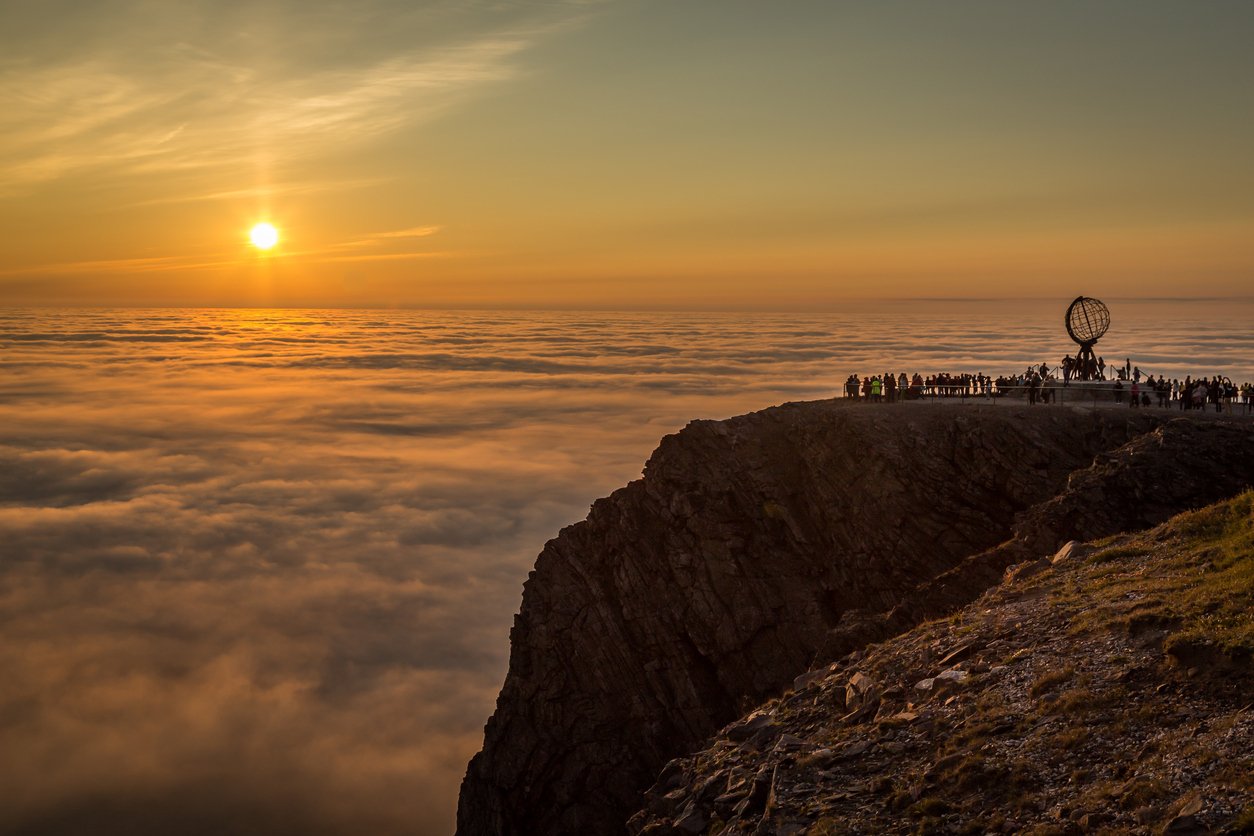
Norway's Arctic winter gets most of the attention, but summer does something equally strange.
The sun stops setting.
Above the Arctic Circle, the Earth's tilt means the sun can remain above the horizon for 24 hours a day during part of the summer.
Exactly how long the phenomenon lasts depends on how far north you travel. In Northern Norway, that can mean hiking late in the evening, sitting outside at midnight in broad daylight or looking at your watch and wondering how it possibly became 1 am!
It's the opposite side of the same Arctic geography that creates Norway's long winter darkness.
Warning: It can completely mess with your sense of bedtime.
4. Vikings
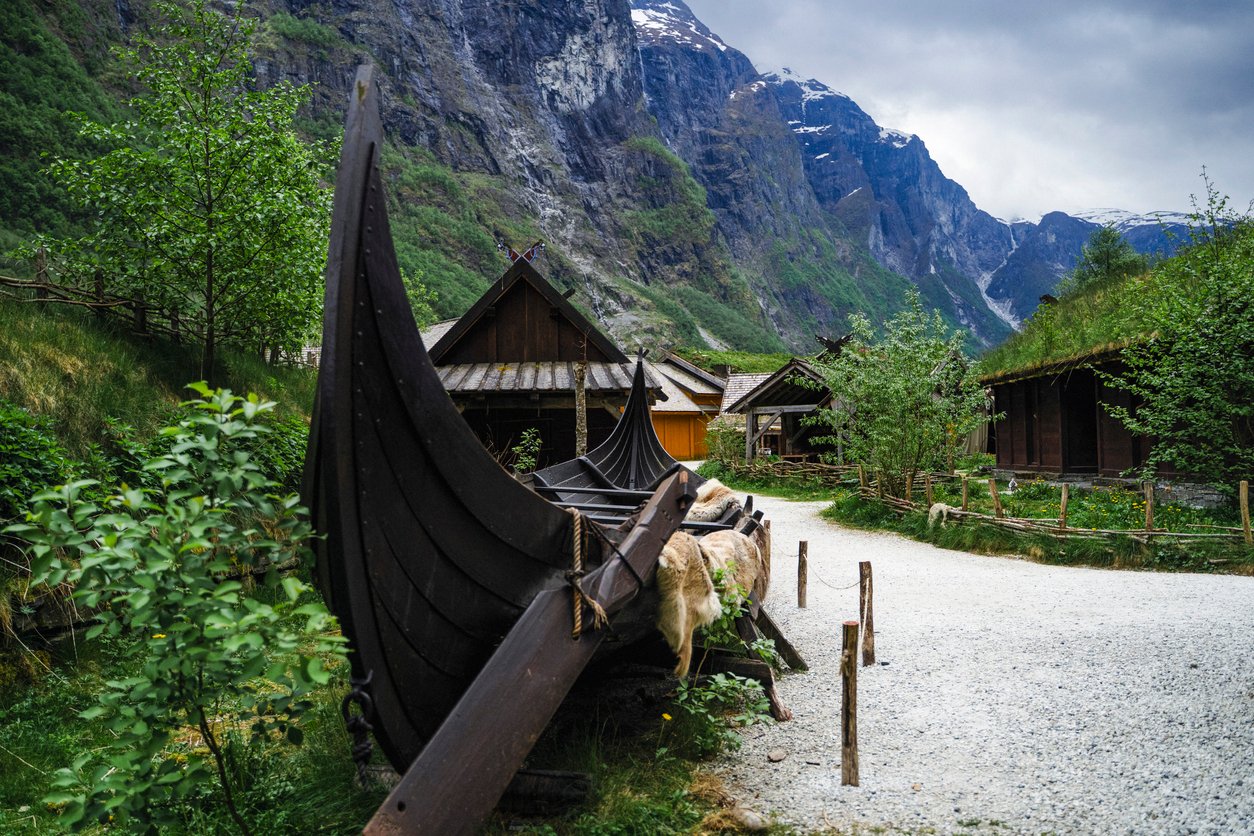
Long before Norway became known for fjord cruises and electric cars, it was known for Vikings.
The Viking Age, generally dated from the late 8th to the 11th century, saw seafarers from Norway and elsewhere in Scandinavia travel enormous distances to trade, settle, raid and explore.
Norwegian Vikings travelled west towards Britain, Ireland, Iceland and Greenland, and their ships became some of the most recognisable symbols of Scandinavian history.
But the popular image of Vikings as permanently angry men wearing horned helmets doesn't tell much of the story.
They were also farmers, traders, craftspeople, shipbuilders and explorers. And no, the famous horned helmets weren't standard Viking battle gear.
Today, Viking history remains one of the strongest cultural associations people have with Norway, with archaeological sites, reconstructed settlements and museums keeping that history visible across the country.
5. Mountains
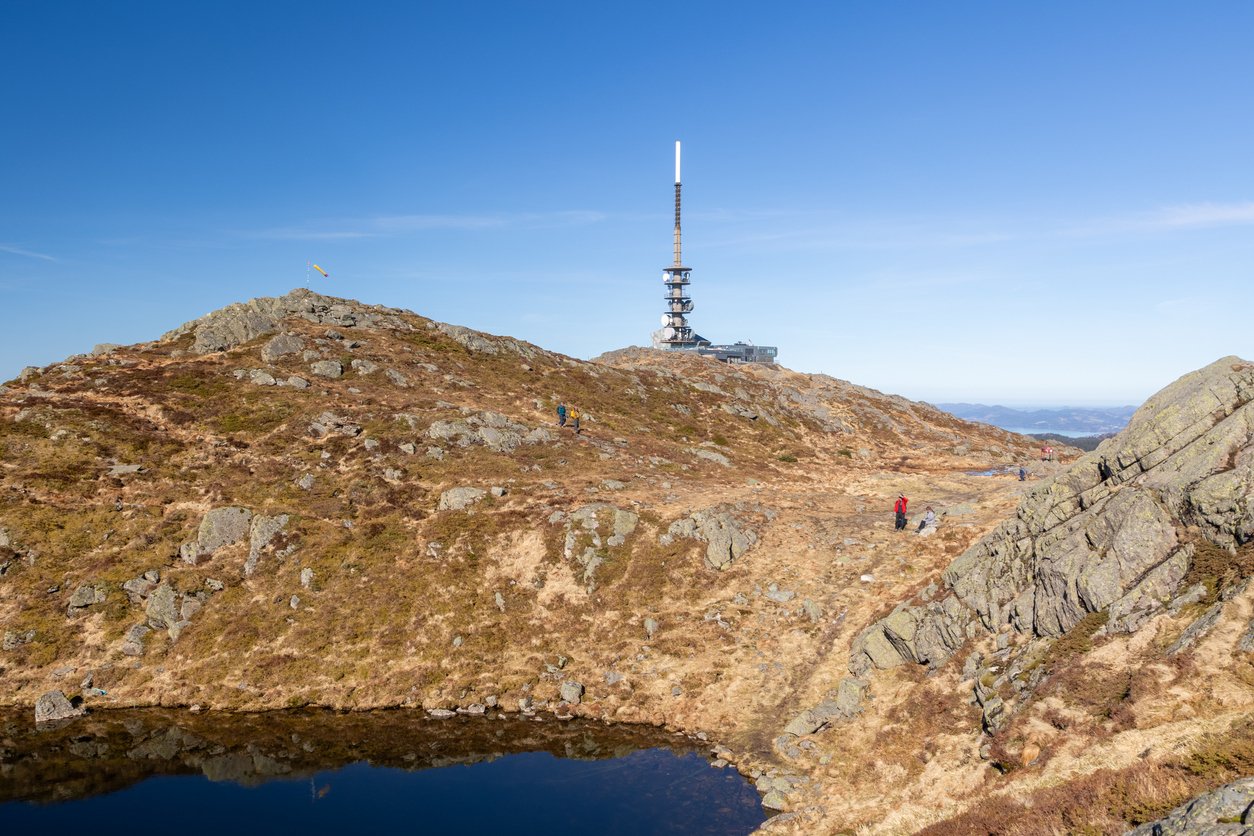
Norway doesn't just have mountains.
It sometimes feels as though Norway is mostly mountains with roads squeezed between them.
Mountain landscapes run through much of the country, from the high peaks of Jotunheimen and dramatic terrain around Romsdalen to the jagged mountains of Lofoten and the steep walls surrounding the western fjords.
Around Voss, our hometown, mountains form the backdrop to almost everything.
That geography has shaped many of the other things Norway is famous for.
The mountains helped create the fjords. They feed the waterfalls. They hold snow well into the warmer months. And they provide the terrain for hiking, skiing, mountain biking and climbing.
Some of Norway's mountains have even become attractions in their own right thanks to famous hikes such as Trolltunga and Preikestolen.
But you don't need to hike one of Norway's headline trails to experience the mountains.
Often, the best mountain day is simply the one where you leave the crowds behind.
6. Waterfalls
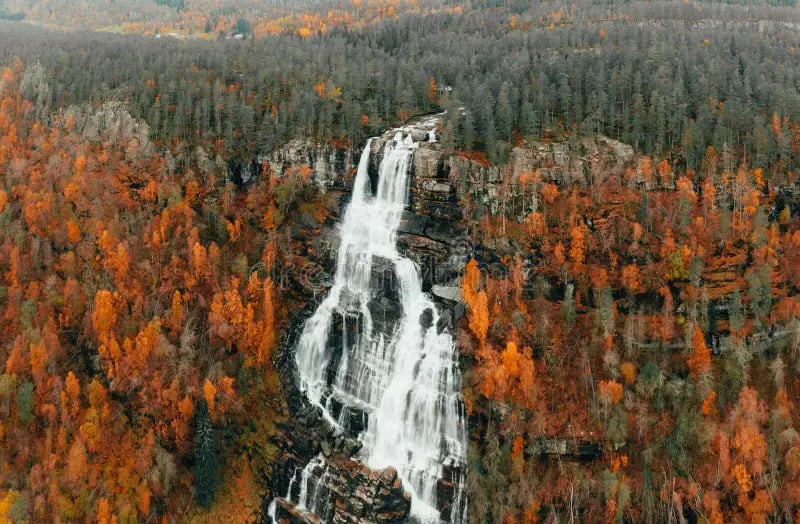
With all those mountains, fjords, glaciers and plenty of precipitation, Norway was always going to be good at waterfalls.
You'll find them all over the country, from enormous cascades dropping towards fjords to smaller falls appearing beside the road after heavy rain or during the spring snowmelt.
Some have become attractions in their own right.
Vøringsfossen plunges into the Måbødalen valley near Hardangerfjord, while Steinsdalsfossen lets visitors walk behind the falling water. The Seven Sisters tumble down the mountainside towards Geirangerfjord.
There are Tvindefossen near Voss and Langfoss further south, too.
But part of the fun of travelling through Norway is that not every waterfall needs a name, viewpoint or car park.
Drive through Fjord Norway after a wet spell and you'll understand what we mean.
Water simply seems to be coming down the mountains everywhere!
7. "Friluftsliv"
.webp?width=5483&height=3655&name=MOUNTAIN%20BIKING%20AND%20RAFTING%202925%202%20(2).webp)
There's a Norwegian word that explains quite a lot about life here: friluftsliv.
Literally translated as "open-air life", it's the idea of spending time outdoors as a normal and valuable part of everyday life. Not to brag, but this is exactly why we're some of the healthiest people in the world!
That doesn't necessarily mean climbing the highest mountain or disappearing into the wilderness for a week.
It can mean hiking after work, skiing at the weekend, staying in a mountain cabin, cycling, paddling, picking berries or simply getting outside despite weather that would persuade plenty of people to stay on the sofa.
In Norway, the outdoors isn't really treated as an attraction, but more like part of everyday life.
And if you want to understand Norway beyond its famous viewpoints, joining in is a pretty good place to start.
That's also the thinking behind many of our adventures. Norway makes more sense when you're actually out in it.
8. Skiing
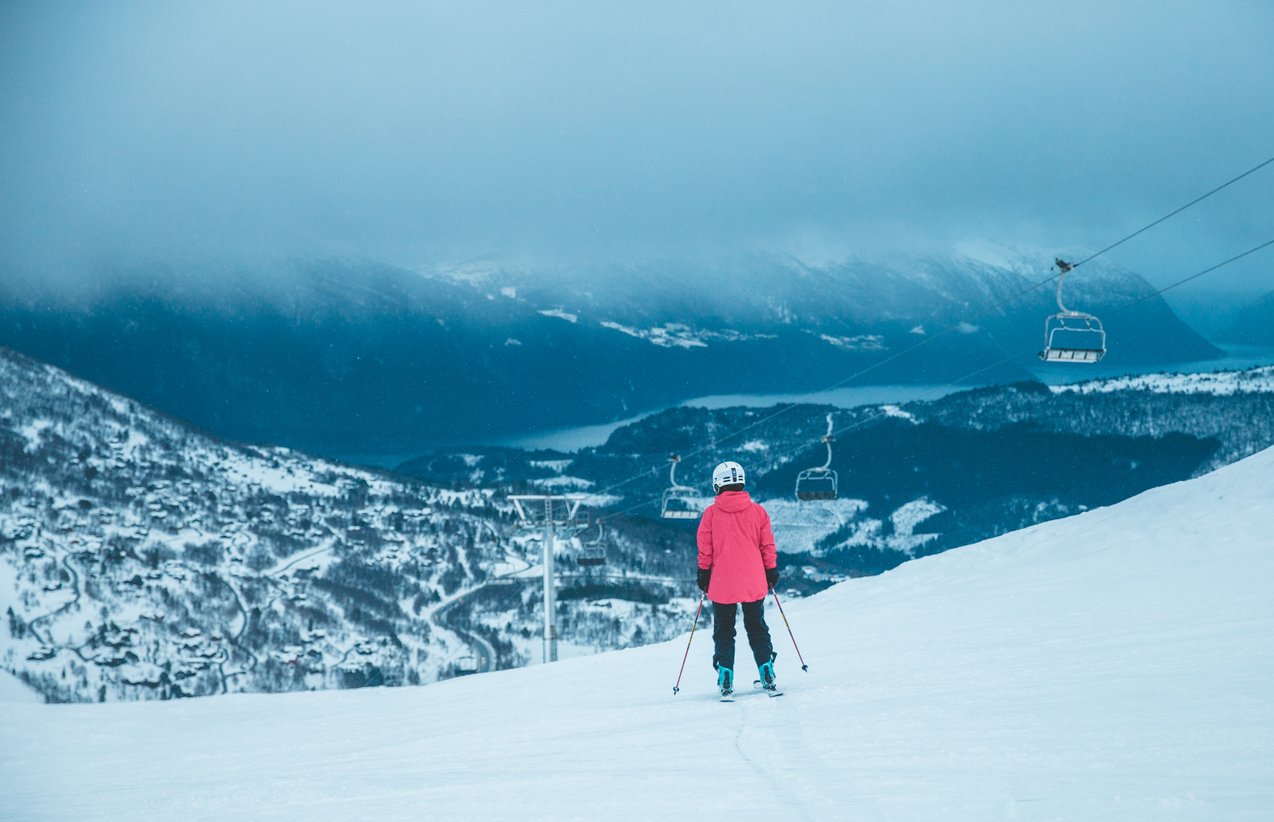
Norwegians have been moving around on skis for thousands of years, and skiing remains deeply embedded in the country's culture.
There's even a well-known Norwegian expression that people are "born with skis on their feet."
You probably shouldn't take that literally.
What you should take seriously is how many different ways there are to ski here.
Cross-country skiing is enormously popular. Alpine resorts are generally packed on their lift-served slopes. Norway's mountains are a completely different world for experienced skiers interested in backcountry skiing and ski touring.
When skiing in Voss and Fjord Norway, you can spend one day on groomers at a resort and the next heading further into the mountains with a guide.
That's one of the things we like most about skiing here.
You're not coming to Norway for the skiing.
You're skiing as a way to see Norway.
9. Spectacular Hiking
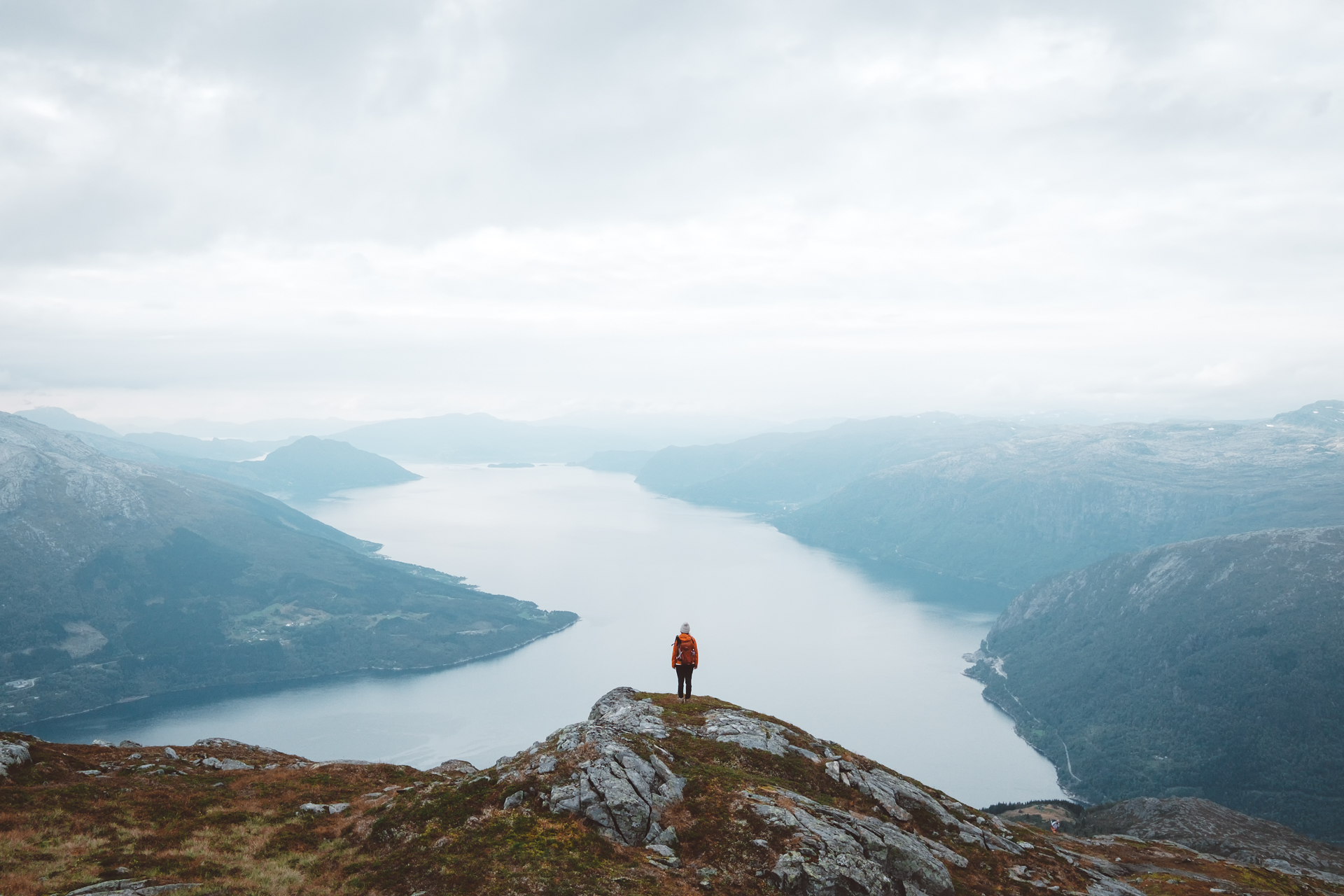
When the snow retreats, many of those same mountains turn into hiking country.
Norway has some internationally famous trails.
Trolltunga extends dramatically above Ringedalsvatnet. Preikestolen rises high above Lysefjord. Besseggen follows a spectacular ridge in Jotunheimen, while Romsdalseggen offers huge mountain views above Romsdalen.
Then there's Lofoten, where mountains seem to rise almost directly out of the sea.
They're famous for good reason.
They're also only a tiny fraction of what's out there.
Norway has hiking trails through forests, valleys, mountain plateaus and fjord landscapes. Easy walks to demanding full-day mountain routes and longer multi-day treks.
Hiking in the Voss area can take you from the valley floor towards viewpoints where mountains, water and glaciers suddenly appear beneath you.
And remember: sometimes the trail nobody back home has heard of turns out to be the one you remember most.
10. Arctic Norway
Keep travelling north and Norway starts to change.
The distances get bigger. The settlements become smaller. Mountains meet the sea, reindeer appear beside the road and daylight behaves increasingly strangely.
Welcome to Arctic Norway.
Places such as Alta, Tromsø, Lofoten, Finnmark and Svalbard are a very different beast from the fjords and green valleys of Western Norway.
Winter there is snow, long nights, dog sledding, snowmobiling and opportunities to see the Northern Lights.
With summer come the Midnight Sun and seemingly endless days for hiking and exploring.
Alta and Tromsø make particularly useful bases, but for quite different reasons.
Norway might look relatively small on a map.
Travel from Bergen to the far north and it won't feel that way.
11. Wildlife
Norway's landscapes aren't empty.
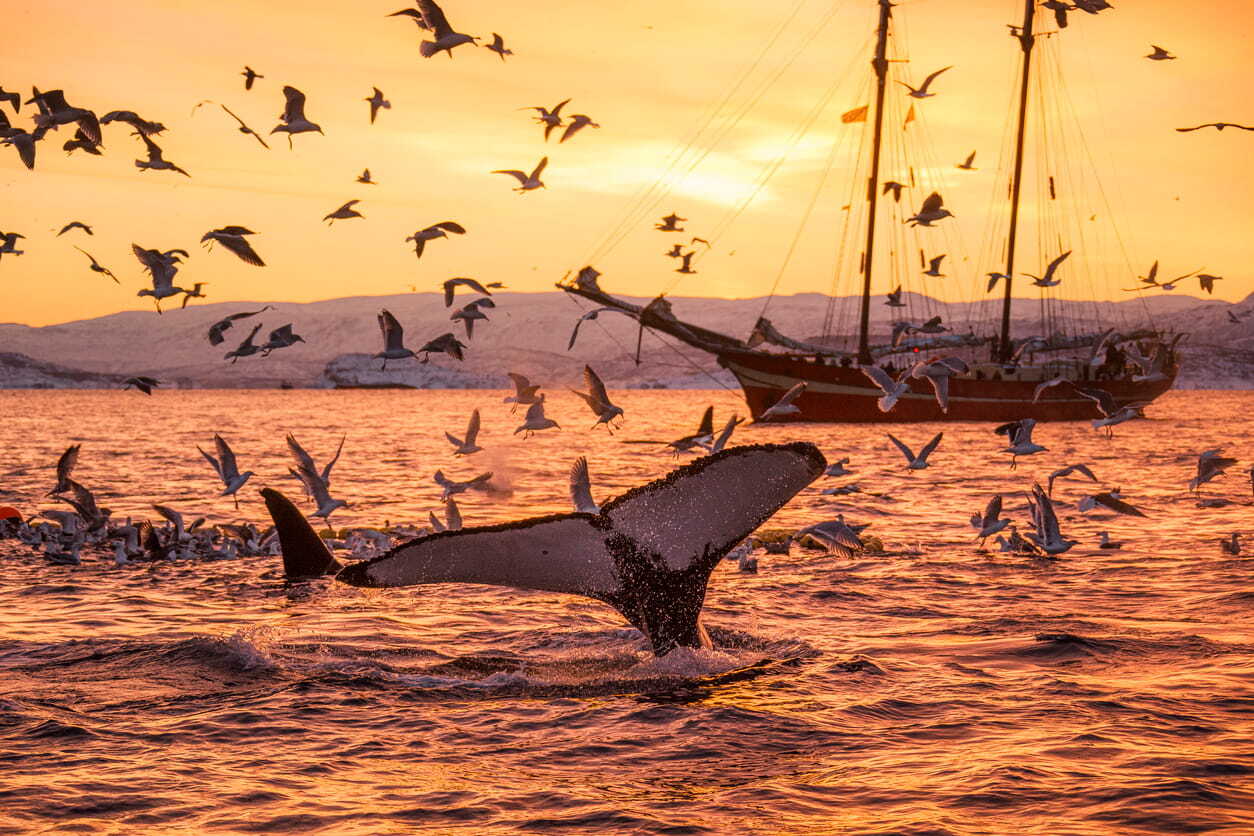
Depending on where you go, you might encounter moose, reindeer, musk oxen, Arctic foxes, sea eagles and whales.
Reindeer are particularly associated with Northern Norway, where reindeer herding is an important part of Sámi culture.
Musk oxen are much rarer, with Norway's wild population associated with the Dovrefjell area.
Then there's the coast.
Norwegian waters attract several whale species, and whale watching has become a popular winter experience in Northern Norway. In the north, boats head into the fjords in search of whales against a backdrop of snowy mountains.
Of course, wildlife hasn't read your itinerary.
Seeing wild animals is never something you should expect on command, and that's part of what makes an encounter special when it happens.
12. Salmon and Norwegian Seafood
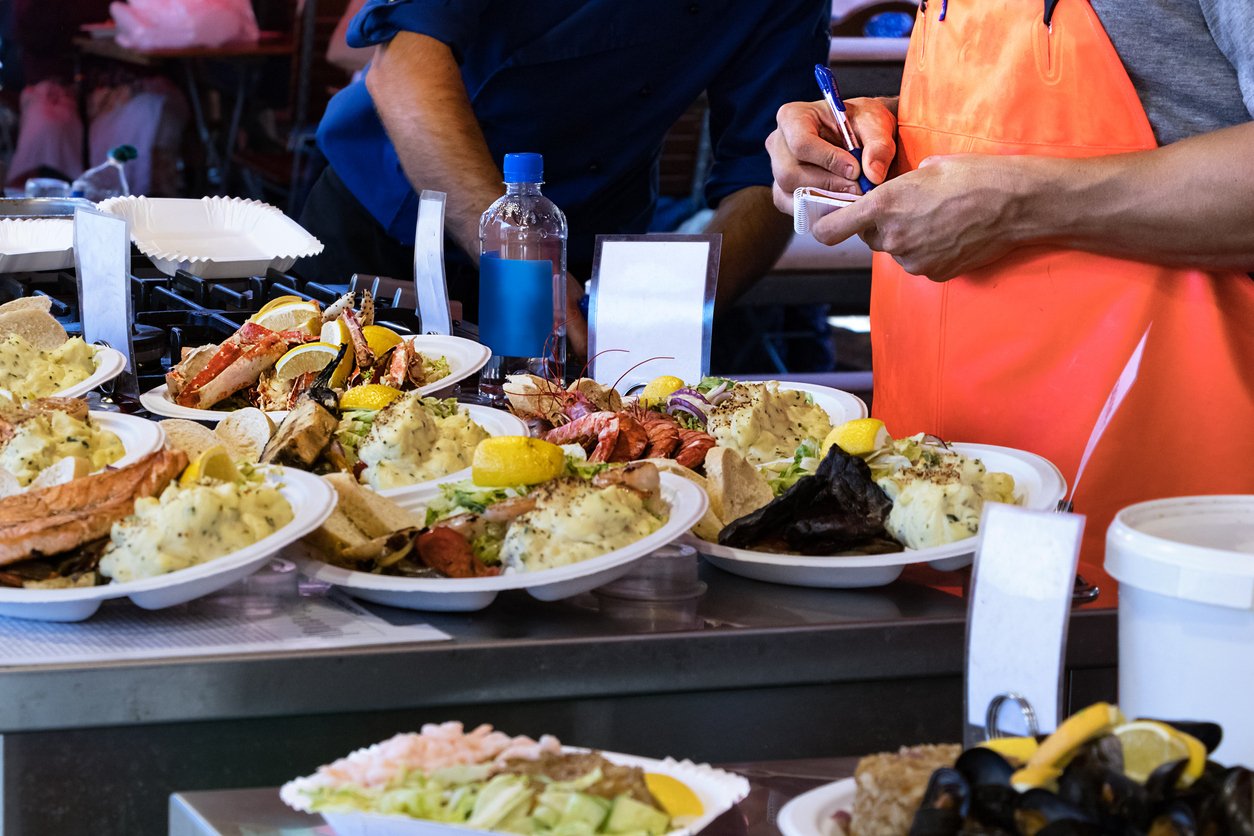
Norway has an exceptionally long and complex coastline, so it shouldn't be surprising that seafood is a big part of both its history and its modern economy.
Norwegian salmon is exported around the world and is probably the country's most internationally recognisable food product.
But Norway's relationship with seafood goes much further back.
Cod has supported coastal communities for centuries, particularly in Northern Norway. Dried stockfish from places such as Lofoten became an important export long before modern salmon farming existed.
Depending on where you travel, you'll also find trout, Arctic char, shellfish and king crab on menus.
For a country built around mountains, Norway spends an awful lot of time thinking about what's in the water.
13. Brown Cheese

And now for something slightly more divisive.
Brunost, or brown cheese, is one of those Norwegian foods that visitors tend to either become strangely obsessed with or spend several minutes trying to work out whether it actually counts as cheese.
Its brown colour and distinctive sweet, caramel-like flavour come from heating whey until the sugars caramelise.
It's commonly sliced thinly and eaten on bread, crispbread or Norwegian waffles.
If your first reaction is "this tastes nothing like the cheese I was expecting", you've understood brunost perfectly.
Give it another bite!
14. Norwegian Waffles
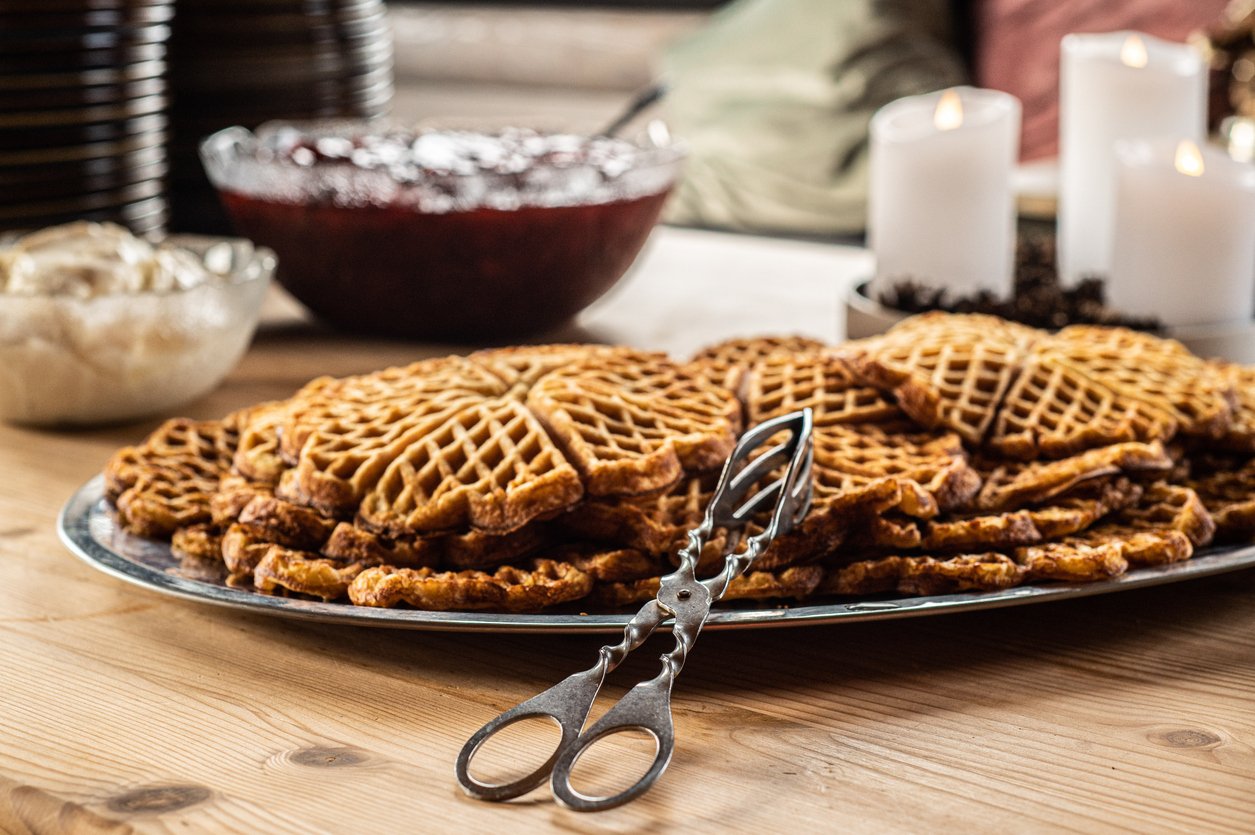
Norwegian waffles aren't quite the same as the thick Belgian waffles you might be picturing.
They're thinner, softer and usually made in a heart-shaped waffle iron.
You'll find them served in cafés, mountain cabins, homes and roadside stops, often topped with jam and sour cream (or, naturally, a few slices of brown cheese).
They're simple, comforting and particularly effective after you've spent several hours outside in Norwegian weather.
Which might explain their popularity.
15. Trolls and Norwegian Folklore
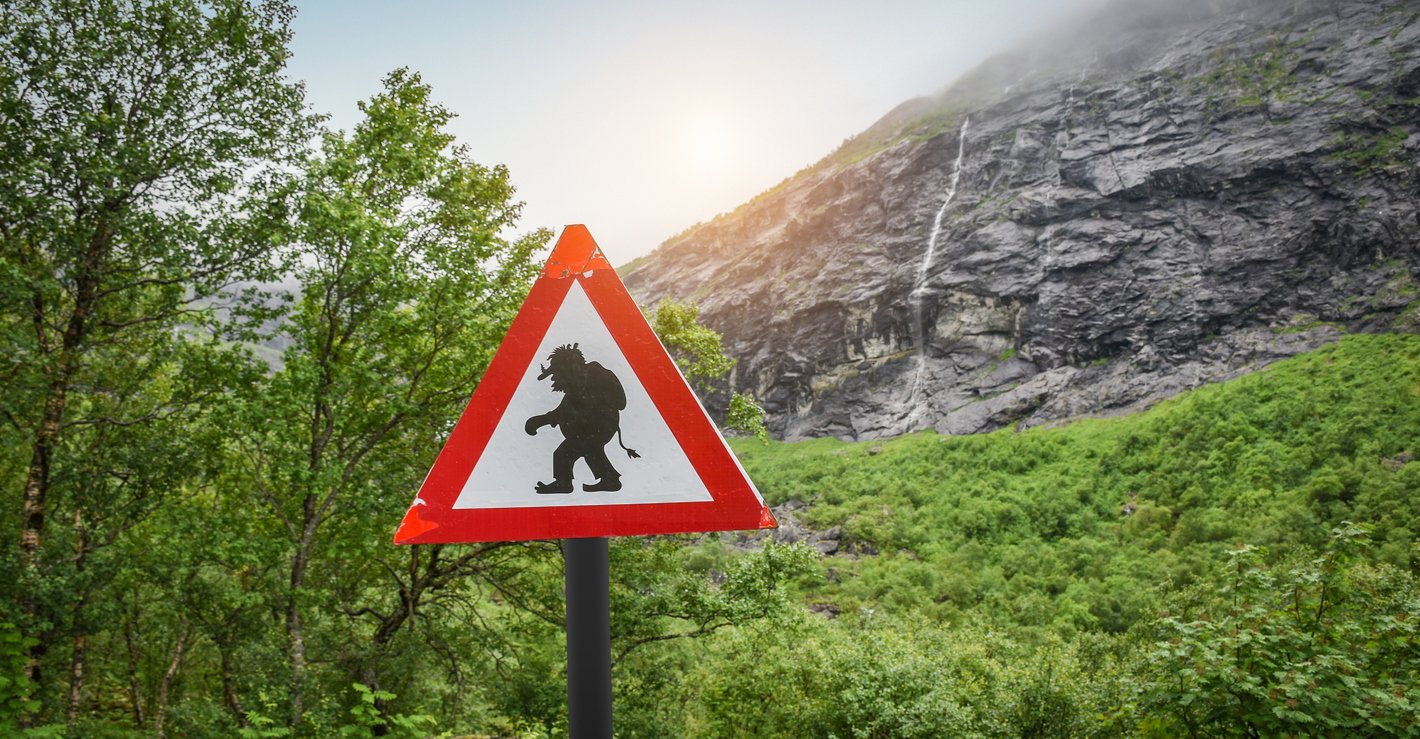
Before trolls became colourful souvenirs staring at you from gift-shop shelves, they were considerably less friendly.
Trolls have deep roots in Norwegian folklore and traditionally appear as mysterious or dangerous creatures associated with mountains, forests and remote places.
Norwegian folk stories helped carry those legends through generations, and trolls eventually became one of the country's most recognisable cultural symbols.
Their influence is still visible in names such as Trolltunga and Trollstigen, as well as throughout Norwegian art, stories and tourism.
Spend enough time driving through misty Norwegian mountains and you'll at least understand where people got the idea.
16. Colourful Wooden Towns
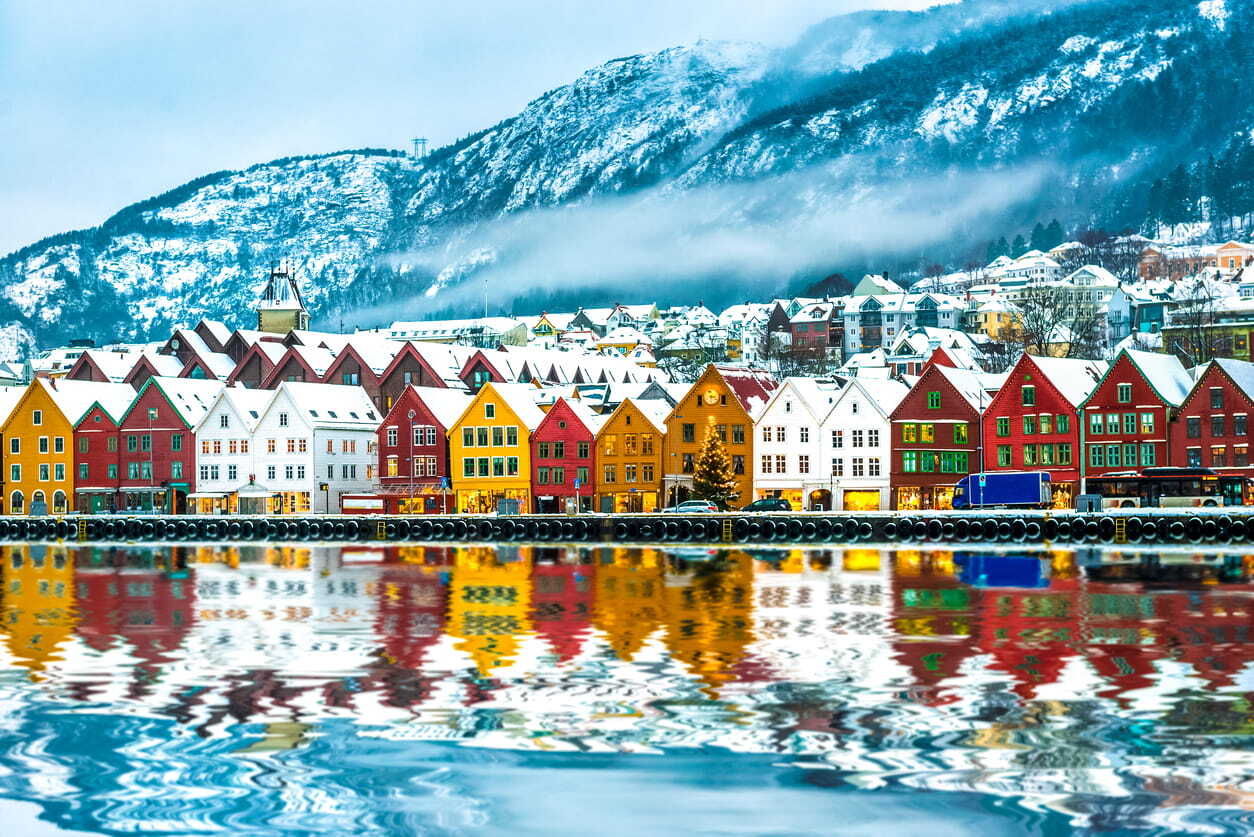
Norway isn't only famous for what nature built.
Its towns and villages have a distinctive look too, particularly along the coast and fjords.
The example you're most likely to have seen is Bryggen in Bergen, where colourful wooden buildings line the historic harbour. The wharf reflects Bergen's long history as a major trading centre and is now a UNESCO World Heritage Site.
Elsewhere, red, yellow and white wooden houses appear along fjords, fishing harbours and tiny coastal settlements.
Those colours weren't chosen simply because they'd look good in photographs hundreds of years later.
But they certainly do.
17. Scenic Railways
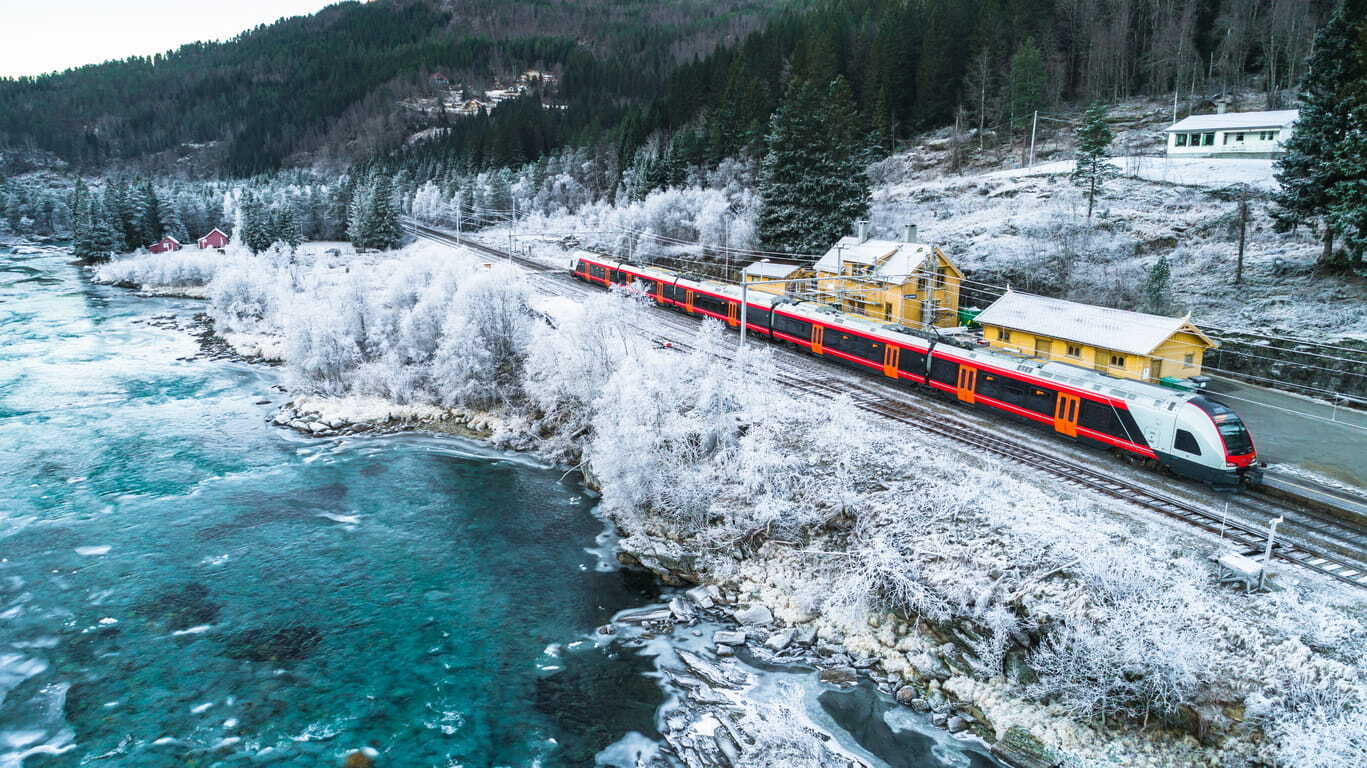
In a country where mountains constantly get in the way, Norway has become rather good at getting trains through them.
The Bergen Railway connecting Oslo and Bergen is one of the country's great rail journeys, crossing high mountain terrain on its way between Norway's two largest cities.
The Flåm Railway packs even more drama into a much shorter journey, descending between Myrdal and Flåm at the end of Aurlandsfjord.
There's also the Rauma Railway, which passes through some of the spectacular mountain scenery around Romsdalen.
For us in Voss, the railway is something much more practical too.
It means you can leave central Bergen, sit on a train through the mountains and arrive in Voss ready for hiking, rafting, skiing or another adventure without needing a car.
Sometimes getting there really is part of the experience.
18. Tunnels, Bridges and Some Serious Engineering
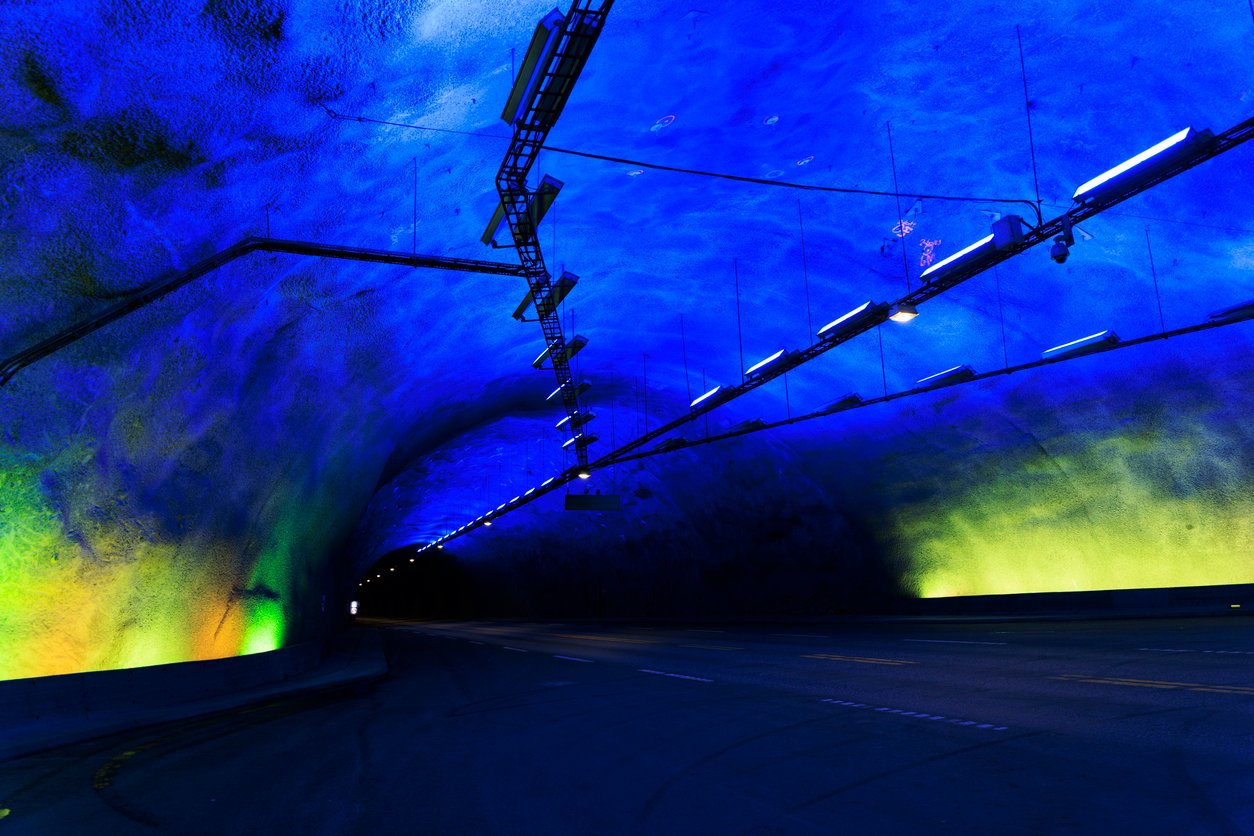
At some point, Norwegian road planners seem to have looked at the country's endless mountains and fjords and decided:
Fine. We'll just go through them.
Norway is full of tunnels, bridges and ferry crossings that make travelling around the country an experience in itself.
The Lærdal Tunnel, connecting Lærdal and Aurland, stretches for more than 24 kilometres through the mountains and is the world's longest road tunnel.
Elsewhere, roads disappear into mountains, emerge beside fjords and occasionally head beneath the sea.
It's impressive engineering.
It's also why looking at the distance between two places on a map doesn't always tell you very much about how the journey will actually feel.
19. Electric Cars
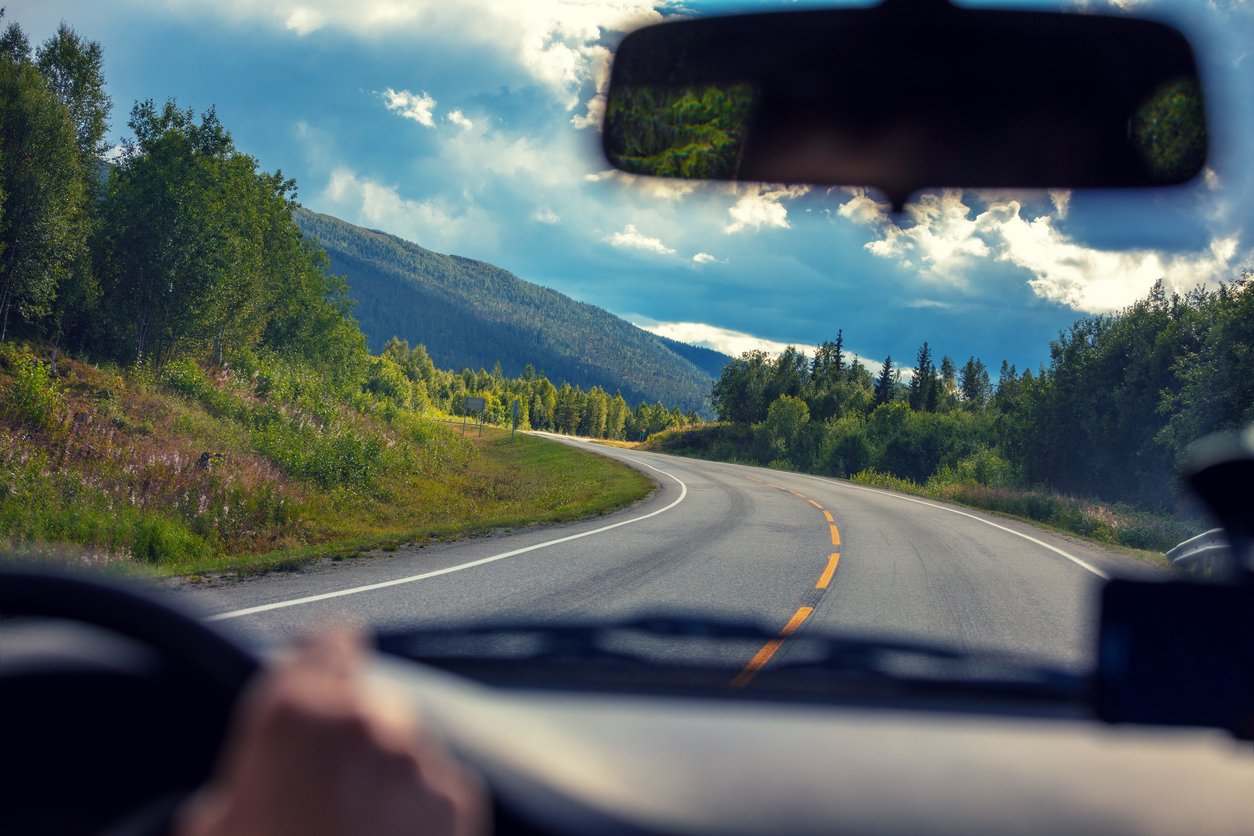
One of the more modern things Norway has become famous for is electric vehicles.
EVs have become a normal part of everyday life here, supported by years of government incentives and extensive charging infrastructure. Some even call Norway the EV capital of the world.
For visitors, it's particularly noticeable in Norwegian cities, where electric vehicles that might stand out elsewhere barely attract a second glance.
There's also an interesting contradiction at the heart of it.
Norway built much of its modern wealth on oil and gas while simultaneously becoming one of the world's most prominent examples of electric-car adoption.
Not many countries illustrate the complexity of the energy transition like Norway.
20. Oil, Energy and Wealth
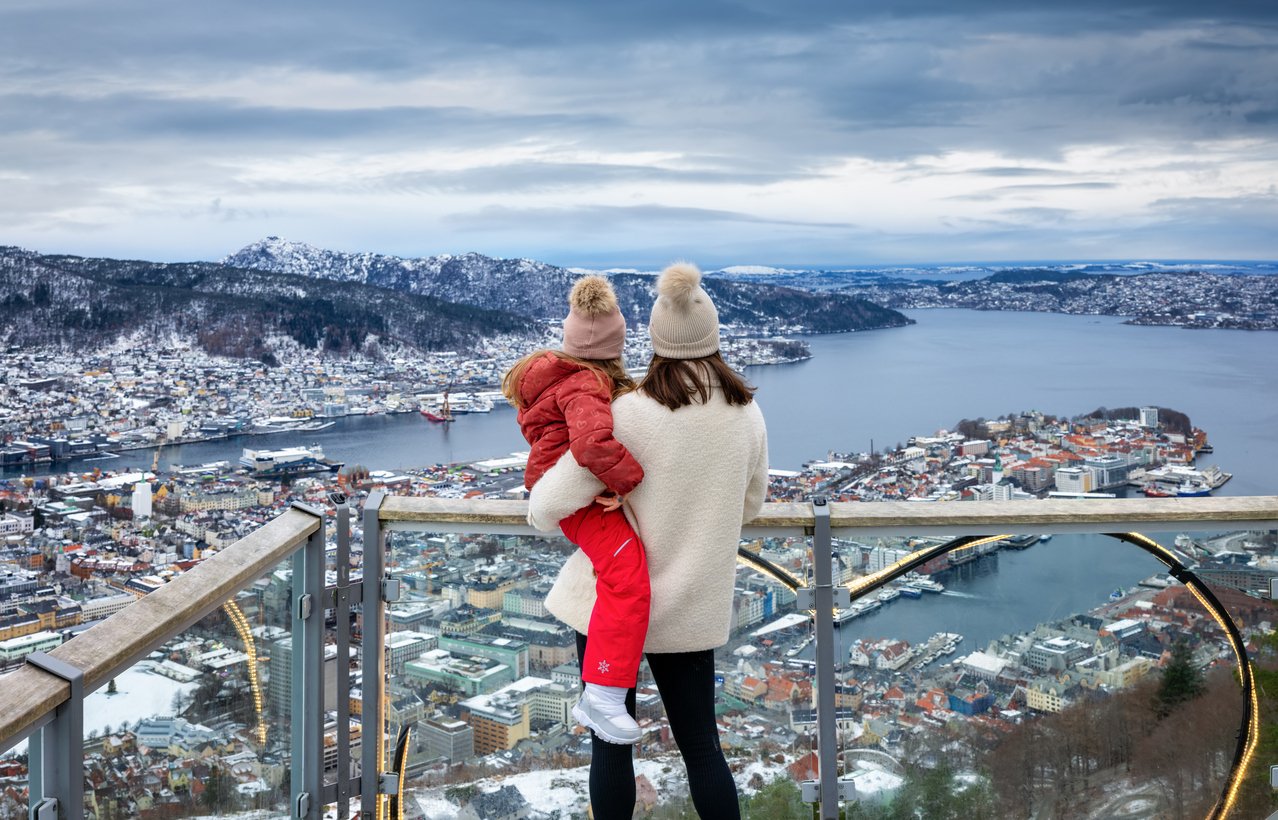
Not everything Norway is known for comes with a mountain view.
Oil and gas transformed the Norwegian economy after major petroleum discoveries were made in the North Sea in the late 1960s.
Rather than spending all of that petroleum revenue immediately, Norway invested a significant share through what is now the Government Pension Fund Global, commonly referred to as Norway's sovereign wealth fund or simply "the oil fund".
It has grown into one of the world's largest sovereign wealth funds.
At the same time, much of Norway's domestic electricity comes from hydropower. Another consequence of having plenty of mountains, rivers and water.
Turns out all those waterfalls are useful for more than photographs.
21. The Nobel Peace Prize
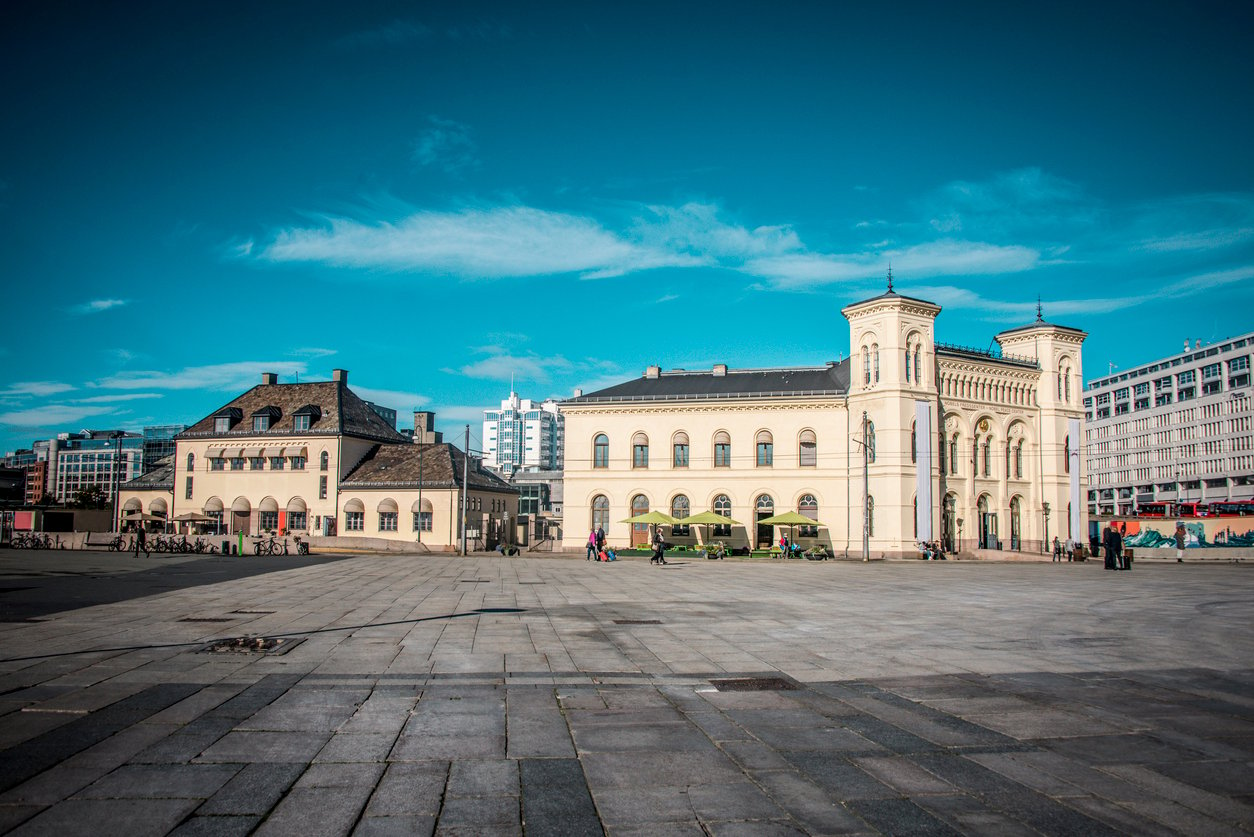
Here's a good Norway trivia question.
The Nobel Prizes are closely associated with Sweden, but the Nobel Peace Prize is awarded in Oslo, Norway.
This arrangement comes from Alfred Nobel's will, which specified that the Peace Prize should be awarded by a committee selected by the Norwegian Parliament.
So while Stockholm hosts the ceremonies for the other Nobel Prizes, the Peace Prize belongs to Oslo.
It's one of those small facts about Norway that surprises a lot of first-time visitors.
22. Scandinavian Design
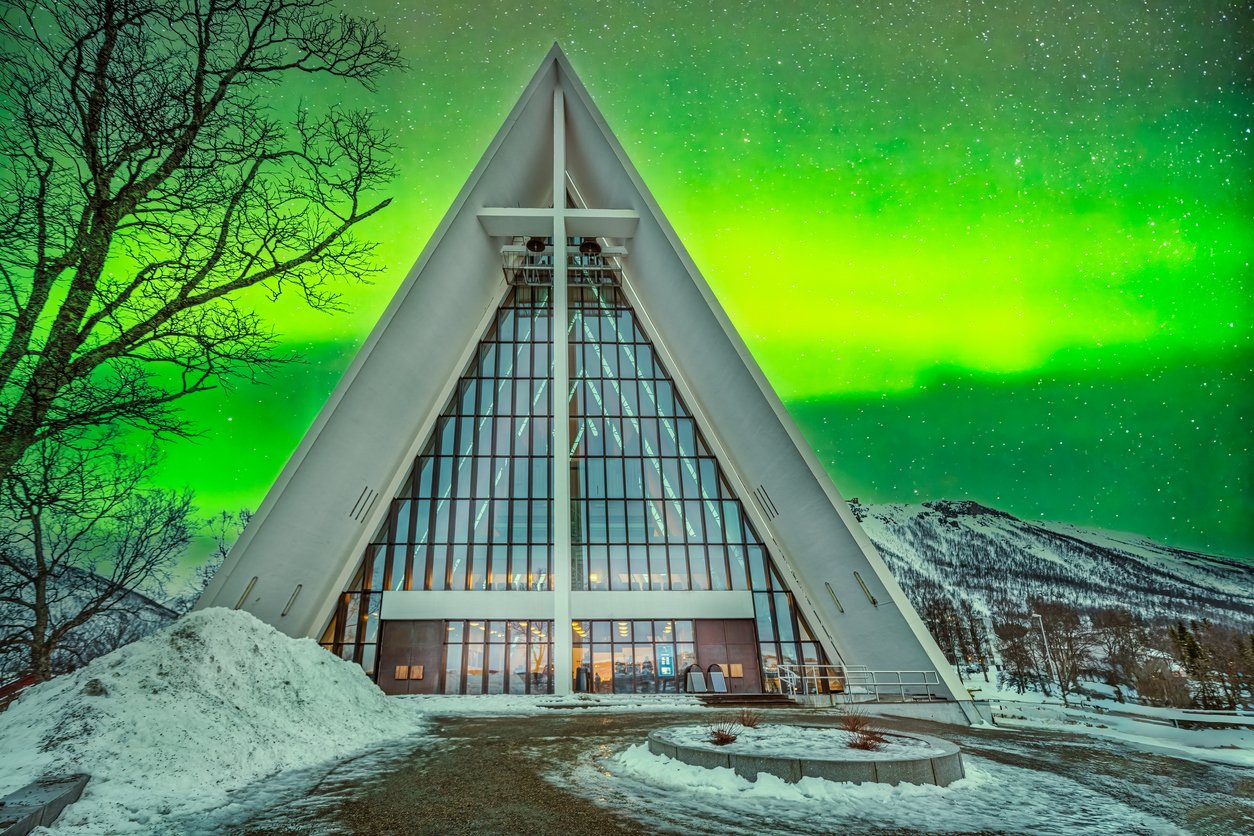
Norway shares many of the design traditions associated with its Scandinavian neighbours: simplicity, functionality, natural materials and a tendency to avoid adding something just because there's an empty space available.
You'll see that approach in architecture, furniture, cabins and contemporary urban spaces.
Norwegian design often feels closely connected to the landscape too, with wood, stone, natural light and buildings designed around their surroundings rather than fighting against them.
When the view outside your window is a Norwegian fjord, overdecorating the room would probably be a mistake anyway.
23. A High Quality of Life
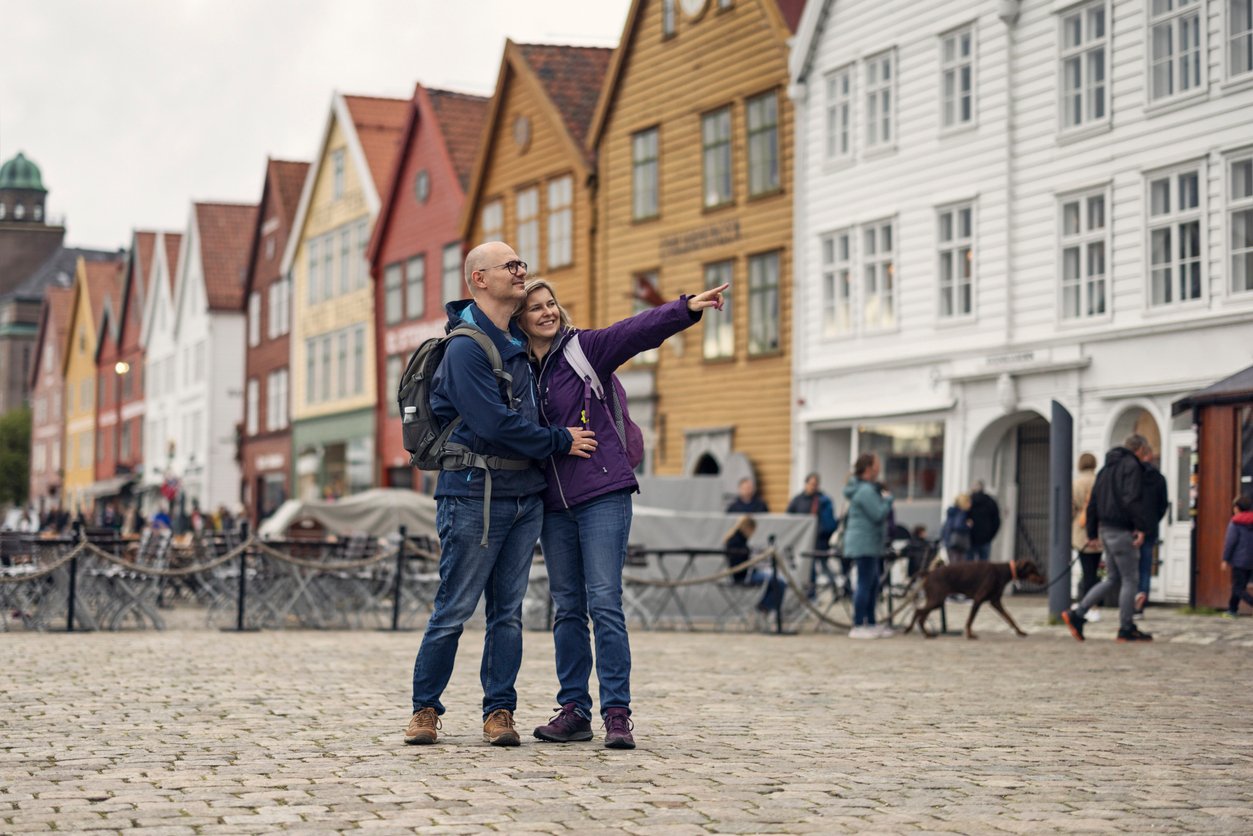
Norway regularly attracts international attention for its living standards.
High incomes, extensive public services, access to nature and an emphasis on work-life balance have all contributed to Norway's reputation as a country with a high quality of life.
Our country hits the top 10 on the Quality of Life Index every year.
That doesn't mean everyday life here is some flawless Nordic utopia.
Norway is expensive, winters can be long and dark, and complaining about the weather remains perfectly acceptable.
But the combination of economic security, infrastructure and easy access to outdoor spaces is an important part of modern Norwegian life.
And that relationship between everyday life and the outdoors brings us to something particularly Norwegian.
24. The Right to Roam
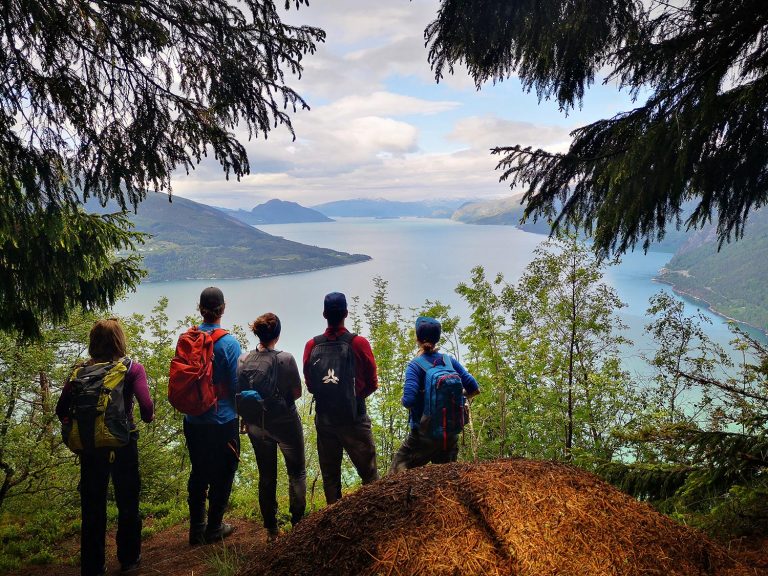
Norway's outdoor culture is supported by allemannsretten, usually translated as “the right to roam”.
Broadly speaking, it gives people significant freedom to walk, hike and spend time in uncultivated countryside, provided they behave responsibly and respect landowners, wildlife and the environment.
That freedom is one reason outdoor recreation feels so accessible here.
But "right to roam" doesn't mean "do whatever you want".
There are rules and exceptions around things such as camping, fires, cultivated land and protected areas, and visitors have responsibilities as well as rights.
The basic principle is straightforward:
Enjoy nature without leaving it worse than you found it.
It's less about having unrestricted access to Norway and more about sharing responsibility for looking after it.
25. Norway Is Known for Adventure: But You Don't Have to Just Look at It
.webp?width=2000&height=1333&name=Family_Rafting_07_03_PM-15%20(1).webp)
Fjords. Mountains. Rivers. Snow. Glaciers. Forests. Arctic wilderness.
Put all of those things into one country and adventure tends to follow.
Norway is a place where you can raft a whitewater river, kayak through a fjord, hike above the clouds, mountain bike through the mountains, ski through winter terrain, snowshoe through a silent forest, drive a snowmobile across an Arctic landscape or head north with your eyes on the sky for the Northern Lights.
That's ultimately the side of Norway we know best.
We've spent years guiding people through these landscapes, and there's one thing we've learned:
Norway is impressive from the viewpoint. It's even better when you get out into it.
You don't necessarily need to climb the biggest mountain, ski the steepest line or paddle the wildest river.
You just need to get outside.
Because the fjords, mountains and snow are what Norway is famous for.
Getting out into them is what makes a trip memorable.
Frequently Asked Questions About What Norway Is Known For
What is Norway most known for?
Norway is most famous for its fjords, Northern Lights, Viking heritage, mountains and spectacular natural landscapes. It's also widely associated with skiing, the Midnight Sun, salmon, Arctic scenery and its strong outdoor culture.
What food is Norway known for?
Salmon is probably Norway's most internationally famous food. Norway is also known for cod and stockfish, brown cheese (brunost), Norwegian waffles, Arctic char and seafood such as king crab.
Traditional food varies significantly between Norway's coastal, inland and northern regions.
What is Norway known for producing?
Norway is a major producer and exporter of oil, natural gas and seafood, particularly salmon. Hydropower is also enormously important to Norway's domestic electricity production.
Historically, fishing, shipping and other maritime industries have played major roles in the Norwegian economy.
What is Norway known for culturally?
Norway is known culturally for its Viking heritage, Sámi culture, folklore, trolls, skiing traditions, Scandinavian design and strong connection to the outdoors.
The concept of friluftsliv, or "open-air life", is particularly useful for understanding Norway's relationship with nature.
What is Norway known for in nature?
Norway is particularly famous for its fjords, mountains, waterfalls, glaciers, forests and Arctic landscapes.
Some of its best-known natural attractions include Geirangerfjord, Nærøyfjord, Hardangerfjord, Trolltunga, Preikestolen and the mountains of Lofoten.
What is Norway known for besides fjords?
Plenty.
Norway is famous for the Northern Lights, Vikings, skiing, Midnight Sun, salmon, trolls, hiking, waterfalls, Scandinavian design and Arctic landscapes.
It's also internationally known for its oil and gas industry, sovereign wealth fund, electric-car adoption and the Nobel Peace Prize.
What is unique about Norway?
Part of what makes Norway unusual is how many extreme landscapes and seasonal phenomena exist within one country.
You can kayak through enormous fjords, hike across mountain plateaus, experience the Midnight Sun, spend winter nights searching for the Northern Lights and travel into Arctic wilderness.
Norway's allemannsretten, or right to roam, also gives people considerable freedom to enjoy uncultivated countryside responsibly.
What is Norway's most famous landmark?
Norway doesn't really have one universally recognised landmark in the way France has the Eiffel Tower.
Instead, many of Norway's most famous sights are natural landscapes. Geirangerfjord, Preikestolen, Trolltunga and the fjords of Western Norway are among the country's most recognisable attractions, while Bryggen in Bergen is one of its best-known cultural landmarks.
Is Norway famous for the Northern Lights?
Yes. Northern Norway is one of the world's best-known destinations for seeing the Aurora Borealis.
Alta and Tromsø are two popular bases, particularly during the darker months of the year. However, the Northern Lights are a natural phenomenon and can't be guaranteed on any particular night.
If seeing them matters to you, give yourself several opportunities rather than relying on one evening.
Is Norway famous for skiing?
Very much so.
Skiing has an exceptionally long history in Norway and remains an important part of Norwegian outdoor culture. Cross-country skiing is particularly significant, while alpine skiing, backcountry skiing and ski touring are also popular.
What are Norwegians known for?
Norwegians are often associated with a strong outdoor culture, particularly hiking, skiing and spending time in nature.
The concept of friluftsliv captures much of that relationship. Outdoor recreation isn't necessarily treated as an extreme pursuit; for many people, it's simply part of ordinary life.
Experience What Norway Is Known For
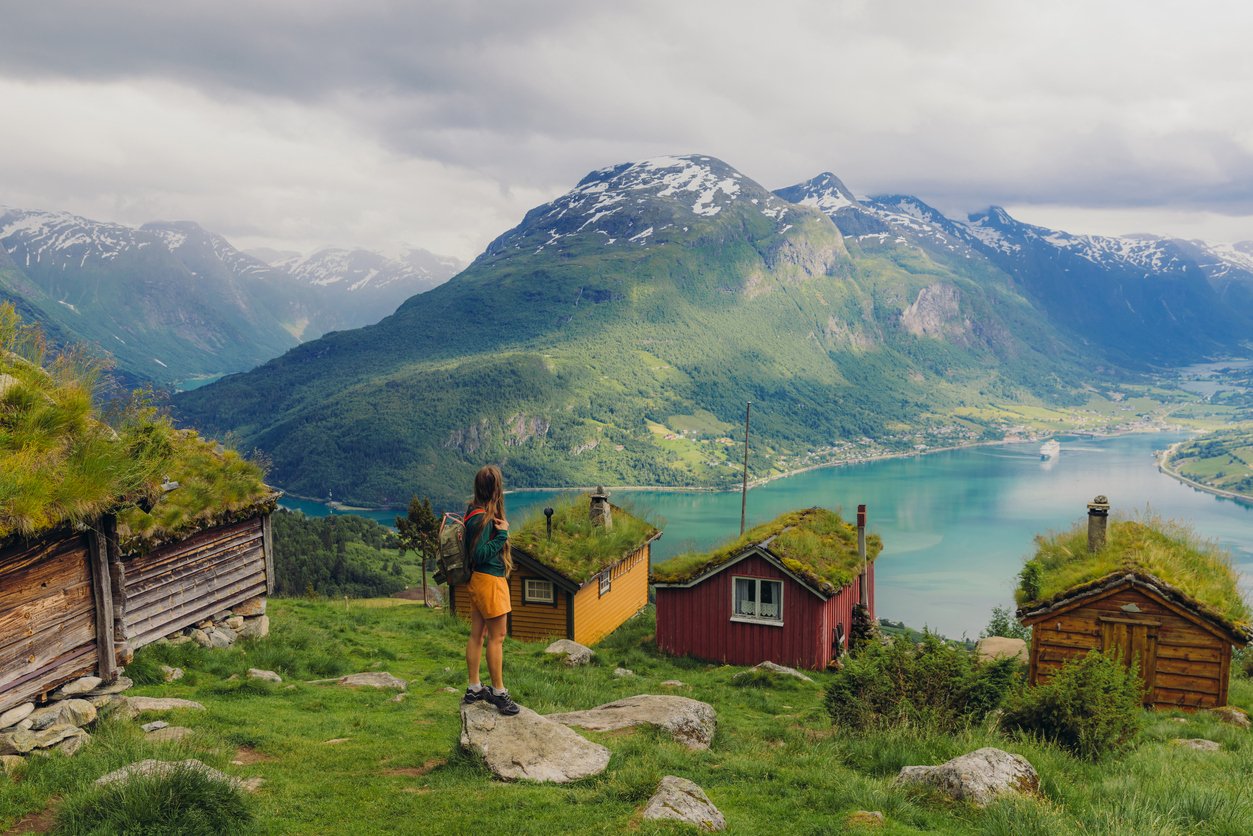
You can read about Norwegian fjords, mountains and Arctic landscapes all day.
We'd rather get you out into them.
Fjords are better from a kayak. Mountains are better from the trail. And snow is a lot more fun when you're actually out in it.
Explore Norway with local guides and turn the things you've read about into the things you'll remember.